The Versatility of Tannins
What are tannins?
Tannins are complex polymers that occur naturally in plants, which produce them as a defense mechanism against pests. In foods, they produce an astringent quality, as with wine and beer, and clarify them by binding to and precipitating out proteins. Imagine drinking an opaque glass of wine! In leather production, tannins bind to the proteins in the animal skin to prevent further decay and to impart a more flexible, stronger, bacteria-resistant product. In medicine, tannins offer anti-inflammatory benefits. And in dyeing, tannins provide a mordant, a middle man to help permanently adhere dye to fiber. The power of tannins to bind to protein and other molecules is what makes them so powerful and useful.
While tannins exist everywhere in nature, they are most concentrated in trees and within the growths they form as defense. I want to focus on one of those growths, the gall. Galls themselves come in different varieties. The most potent are Chinese galls with about 81% tannin content. The Aleppo or Turkish gall has 65-75% tannin. Third is the North American oak gall at 45-55% tannin. Comparing this with NA acorns at 5%, you can see why oak galls really pack a punch. You only need 10g of oak galls to mordant 100g of protein fiber. You can mordant with acorns but you’d need a lot of them.
But what actually is a Gall?
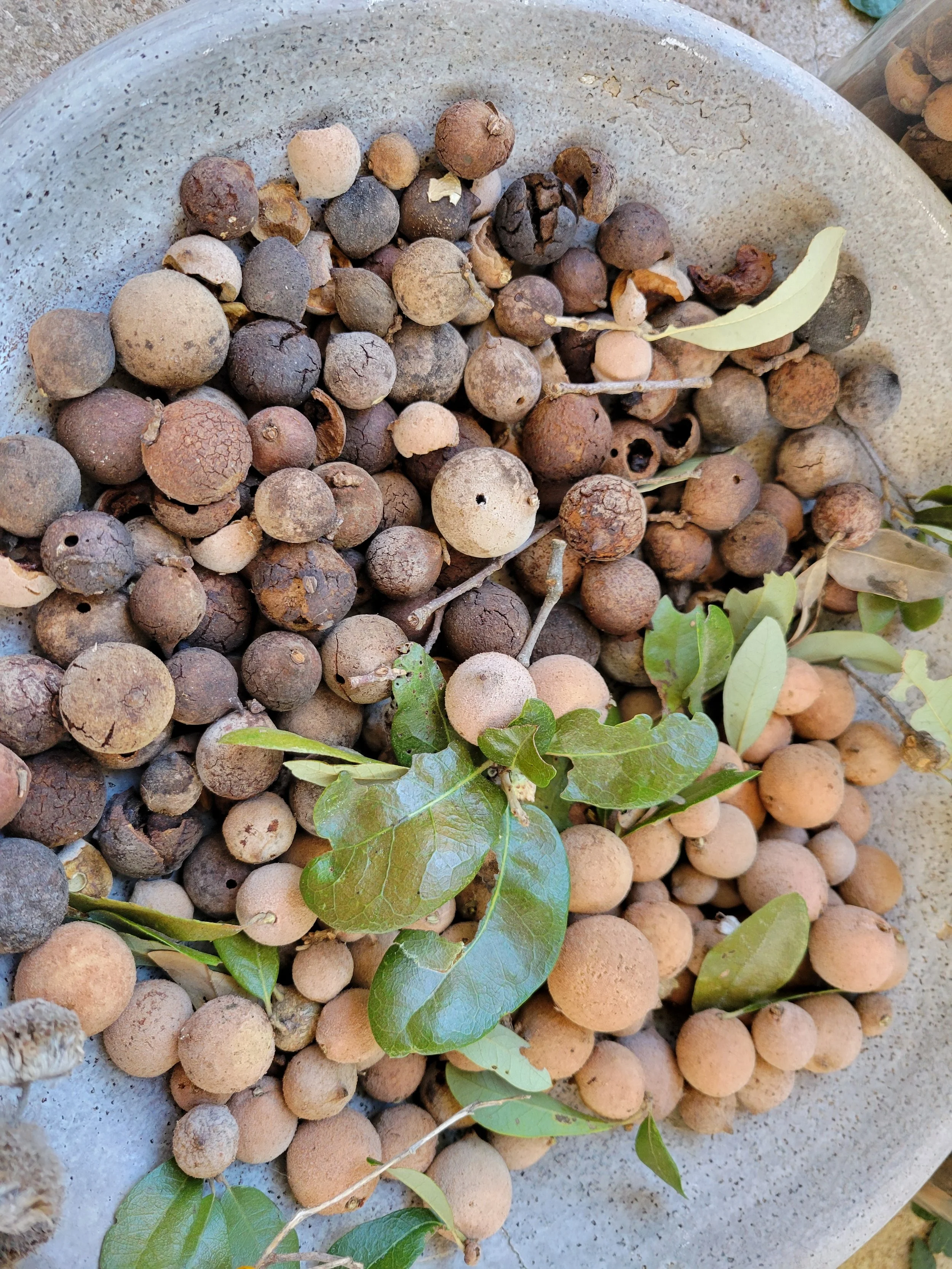
Galls are hard growths formed most commonly when an insect infects branches of a tree. The gall grows around the infection, inadvertently creating a home for the larval stage of that insect to stay protected until it’s ready to emerge, which can take a few years. The oak galls I gather are hollow, often slightly fuzzy, brown spheres, approximately an inch in diameter. The oak gall wasp is responsible for the infestation. The wasp is tiny, so tiny I’ve never actually seen one. But you can see the hole they leave behind once they emerge from their protective casing.
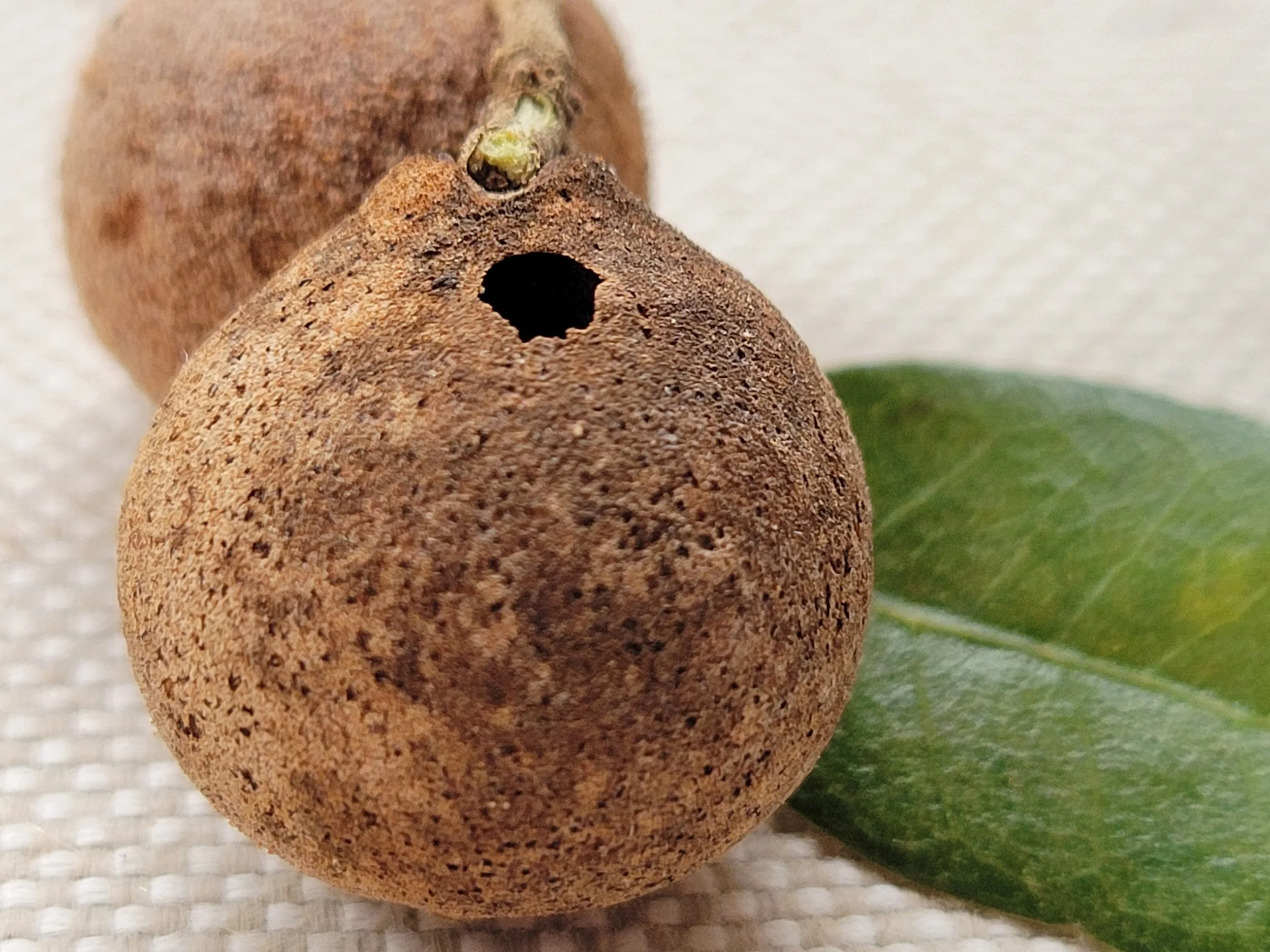
Evacuated Live Oak Gall
Dyeing with Oak Galls?
There are a lot of resources on mordanting with oak galls, and for good reason. But I wanted to see if I could dye with them! I wanted to see if the versatility of the tiny oak gall extended beyond mordanting.
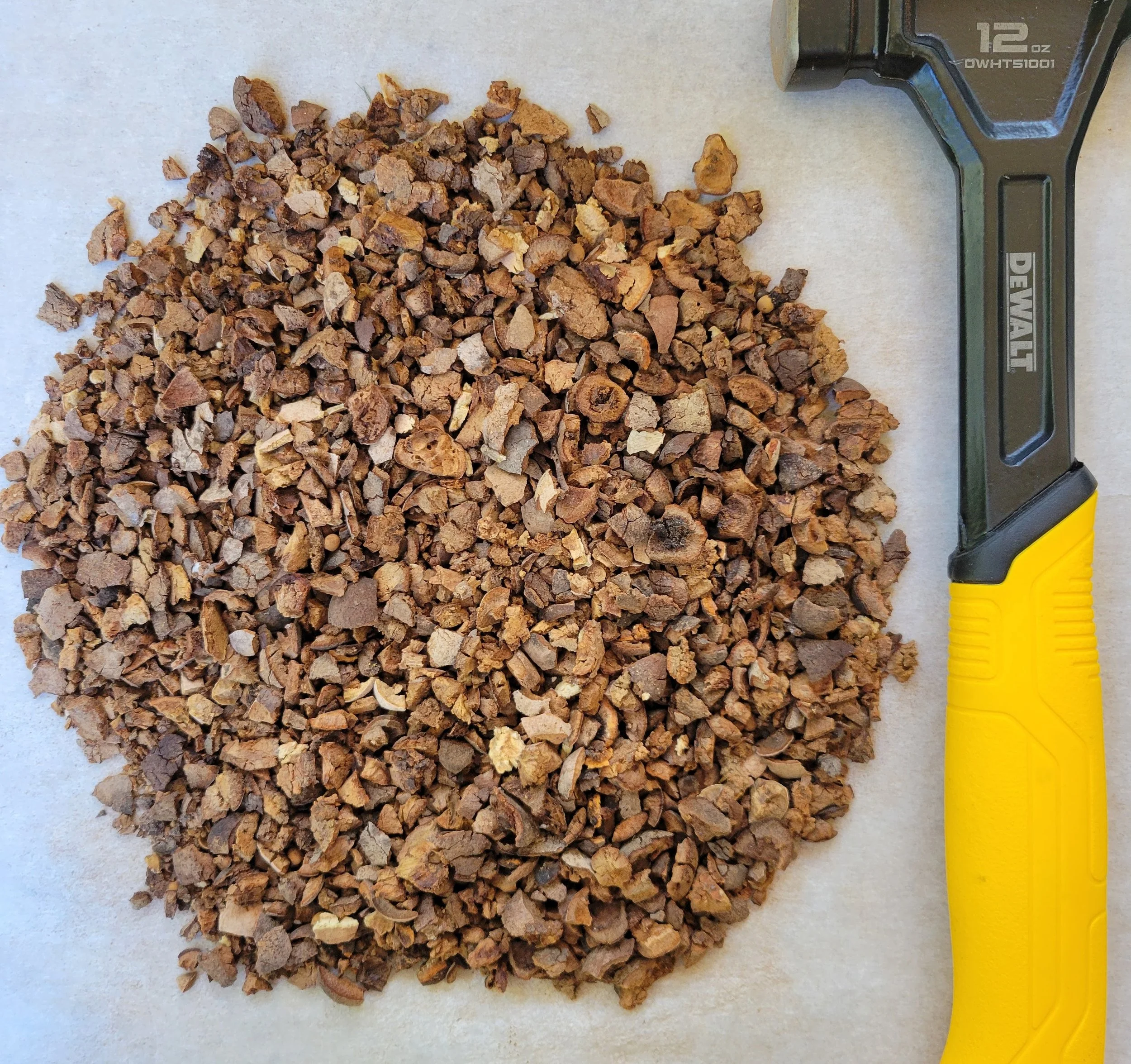
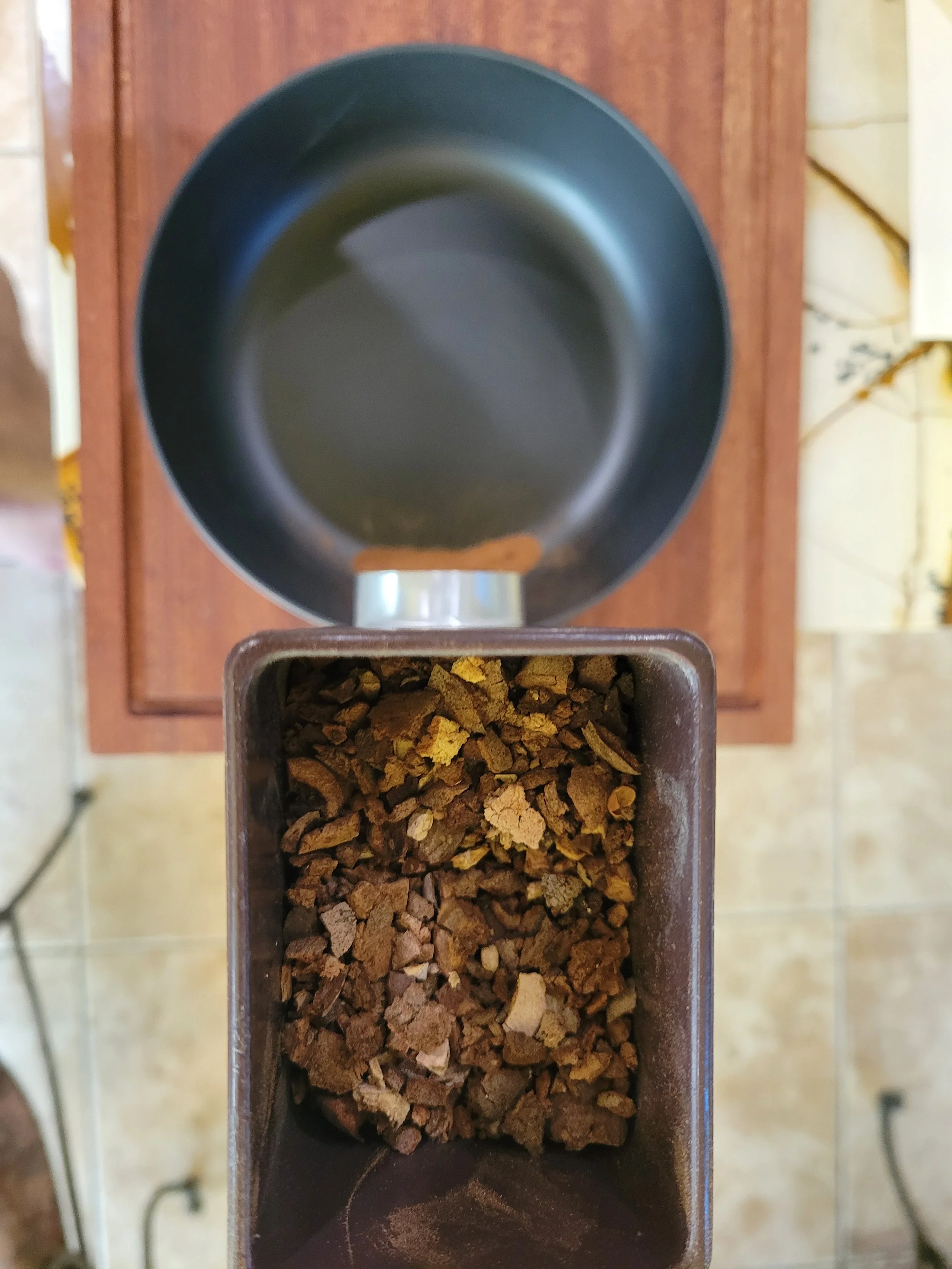
After foraging and learning the best places to find these adorable oak galls - it’s not the diseased looking trees with the best bounty, it’s the biggest, healthiest ones - I brought some inside to make a pot of mordant. These little guys are tough. I tried crushing them, smashing them with a hammer, grinding them with a mortar and pestle, then hand cranking with a flour mill. It was all slow and tedious. I rummaged for an old blender attachment that I use only for paper-making and that worked like a charm. It was messy though. Cover your blender with a moist cloth if you don’t want to be breathing gall powder!
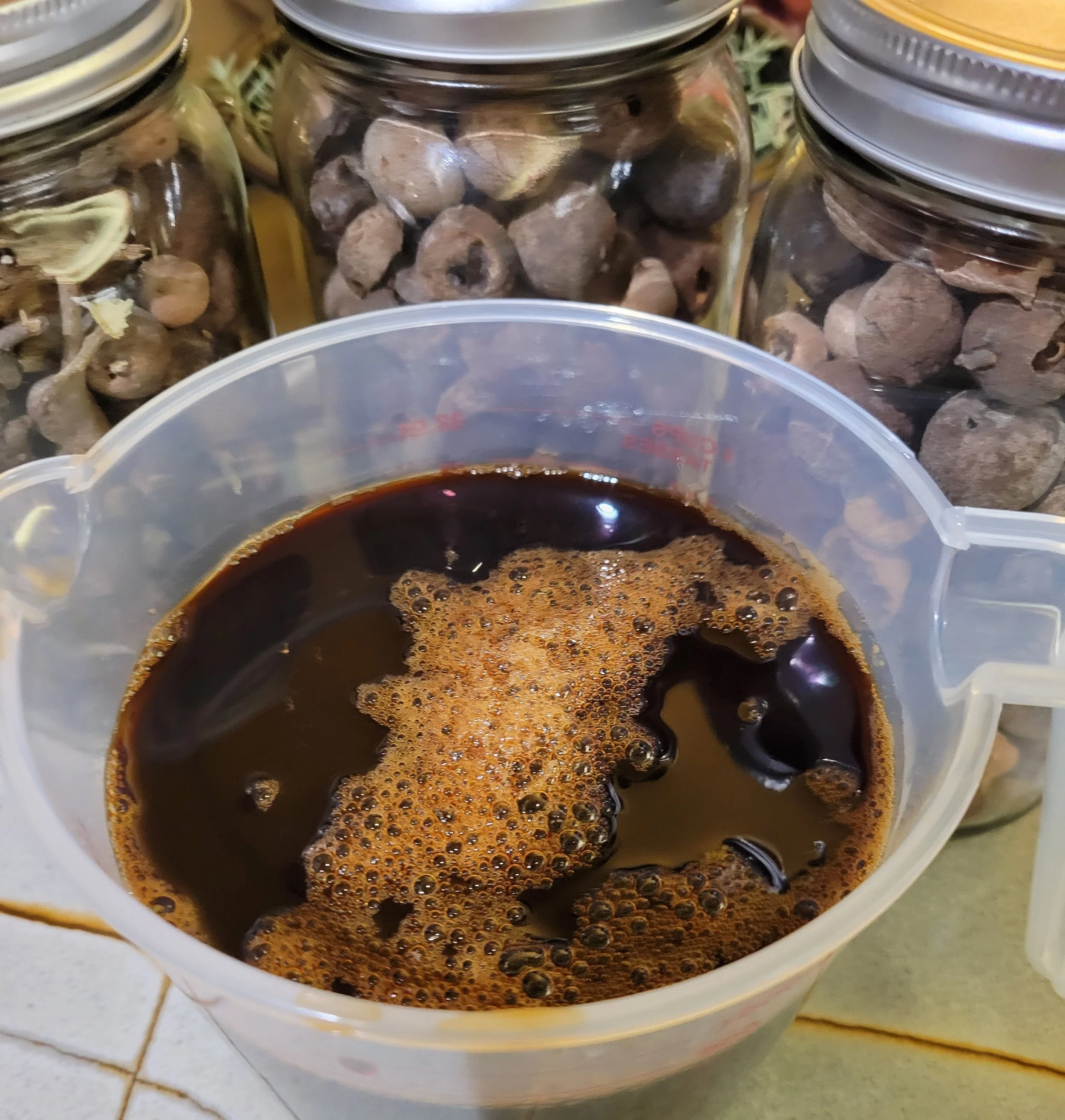
I hadn’t decided how much I’d need yet so I arbitrarily chose a third of what I’d found, 100g of oak galls, added water, and heated it up gently for about an hour before straining it. The liquid gall mordant/dye was a lovely deep brown!
Mordanting or Not
To further experiment, I chose a 50/50 mix of wool/cotton DK yarn to play with. I wondered if I could see the difference between the protein and non-protein dye uptake. I soaked four skeins and mordanted two of them with a mix of alum and tartaric acid. The other two had no mordant at all.
To avoid contamination, I made two separate dye baths. I put half of the oak gall solution into each of the pots. The unmordanted skeins went into one pot, the mordanted into the other. This amounted to about 25 grams of oak gall per skein, more than the 10 grams I’d need to mordant, but I was using this as dye so I wanted some stronger depth of shade. I gently heated them and let them soak and cool overnight.
The next day, I took a skein from each pot and saddened them with a bit or iron solution. And here were the results!
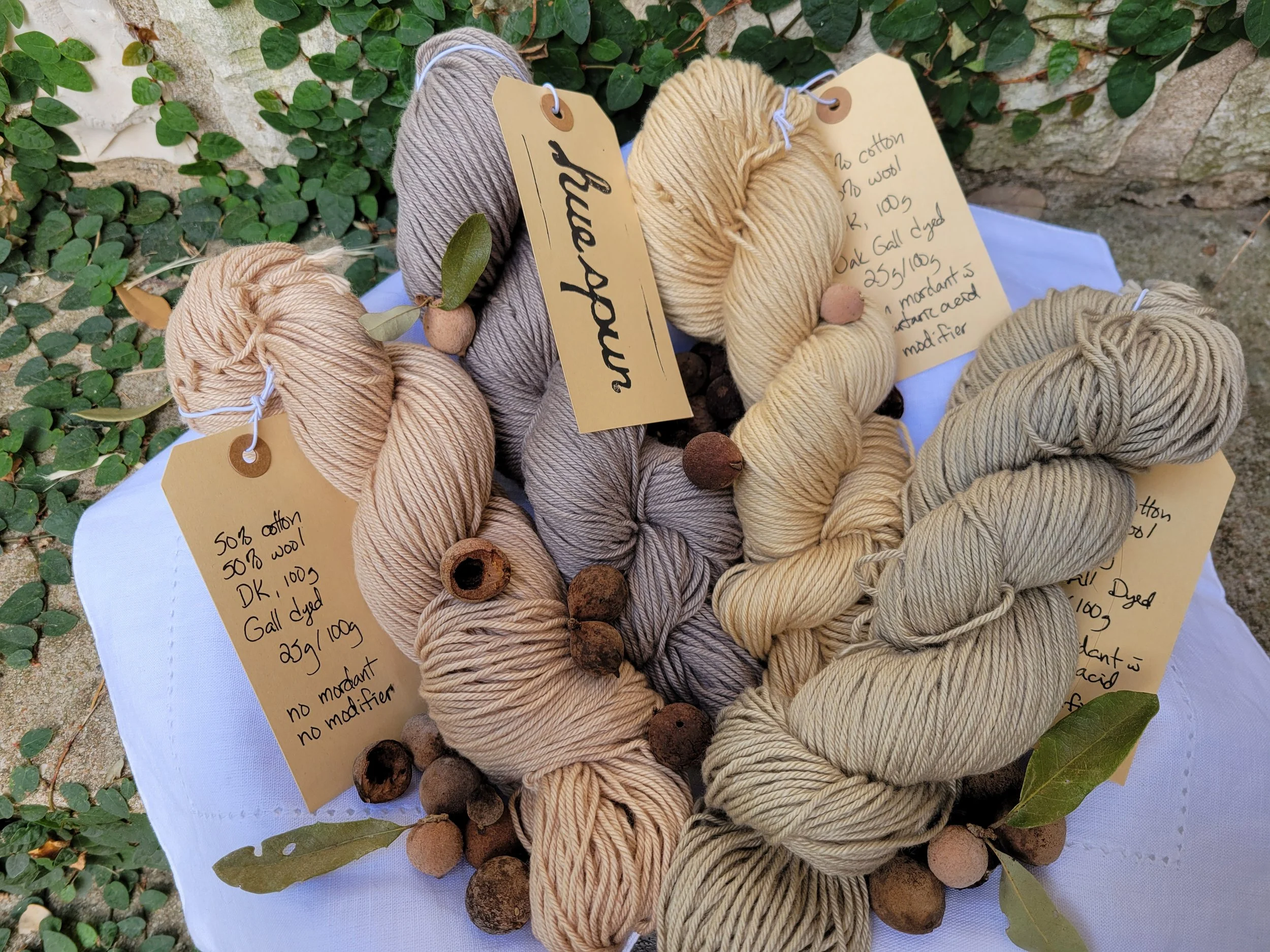
I was so happy and amazed to see the variety of colours form using oak galls as the dye source! From left to right, we have 1. just oak galls, pure and simple, 2. oak galls with an iron modifier, 3. alum mordanted and oak gall dyed, and lastly 4. all three applications: alum mordanted, oak gall dyed, and iron modified. That butter yellow surprised me the most! You can imagine how the possibilities are endless. You could vary the concentration of gall dye. You could mordant with different metals or soy. You could modify with a variety of things to sadden or brighten the yarn. You could play with pH. And you could vary the fiber. I could not tell the difference between the wool and cotton fiber in the yarn after it was dyed. Maybe the two are very well blended in the fiber.
A Bit of Follow-up
Not wanting to waste the dye baths and seeing some potential to experiment a little further, I soaked four more skeins of cotton/wool and 4 skeins of just wool. I combined the dyes into a single pot so this would have contained the oak gall dye, some iron modifier, and maybe a trace of alum. I dyed two skeins at a time, one of each fiber type. I repeated this process until all 8 skeins were dyed. The results showed a consistent colour across all four skeins of wool but a clear gradient across the wool/cotton! This makes me wonder if I would have had the same colour results above had I just used wool. I’m thinking not. The cotton seems to be absorbing much more than the wool. Perhaps using oak galls to dye pure wool is not a good option after all. But that’s an experiment for another day.
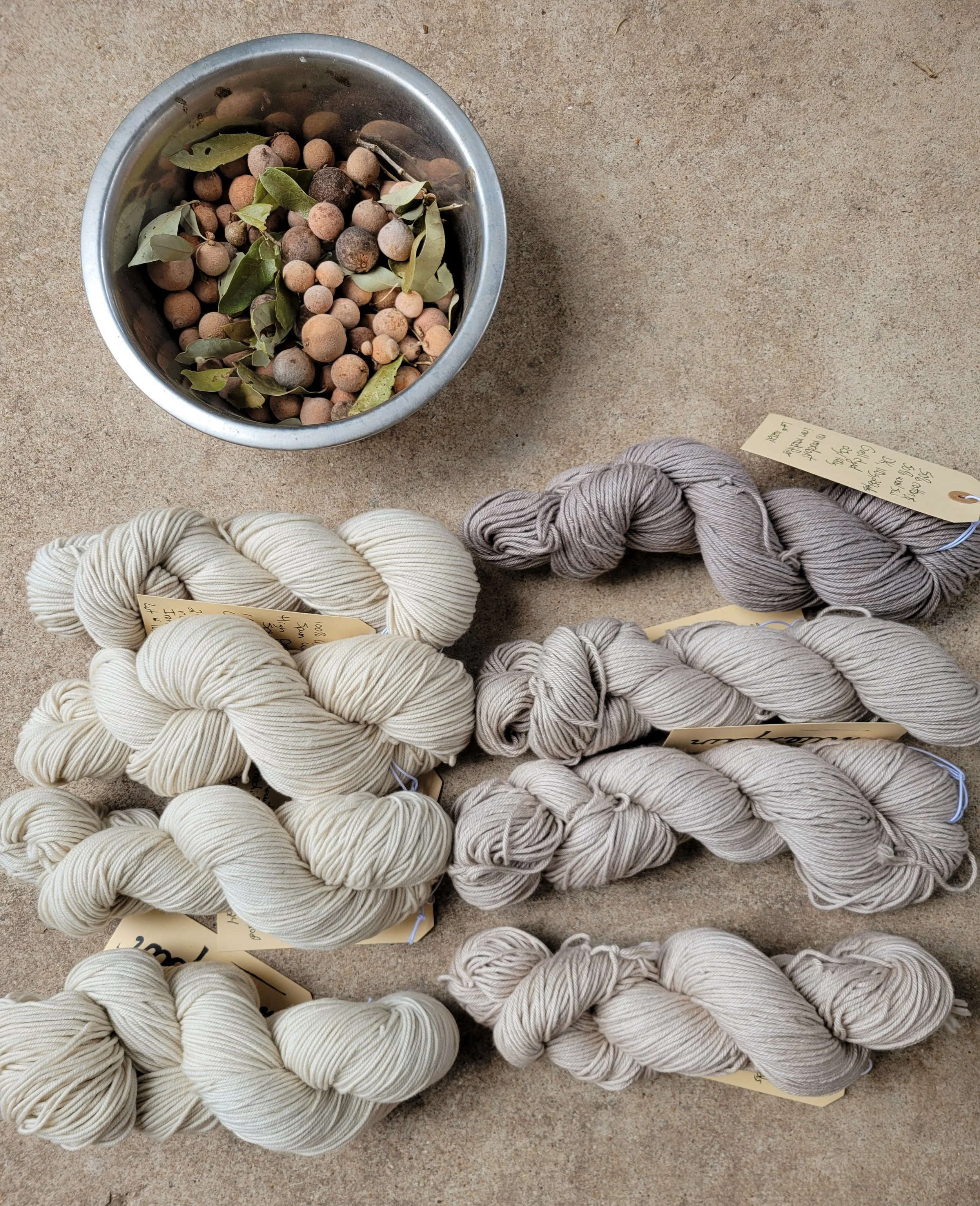
Wool on the left, wool/cotton on the right. Each row was dyed together in the same pot, one row after another from top to bottom.
