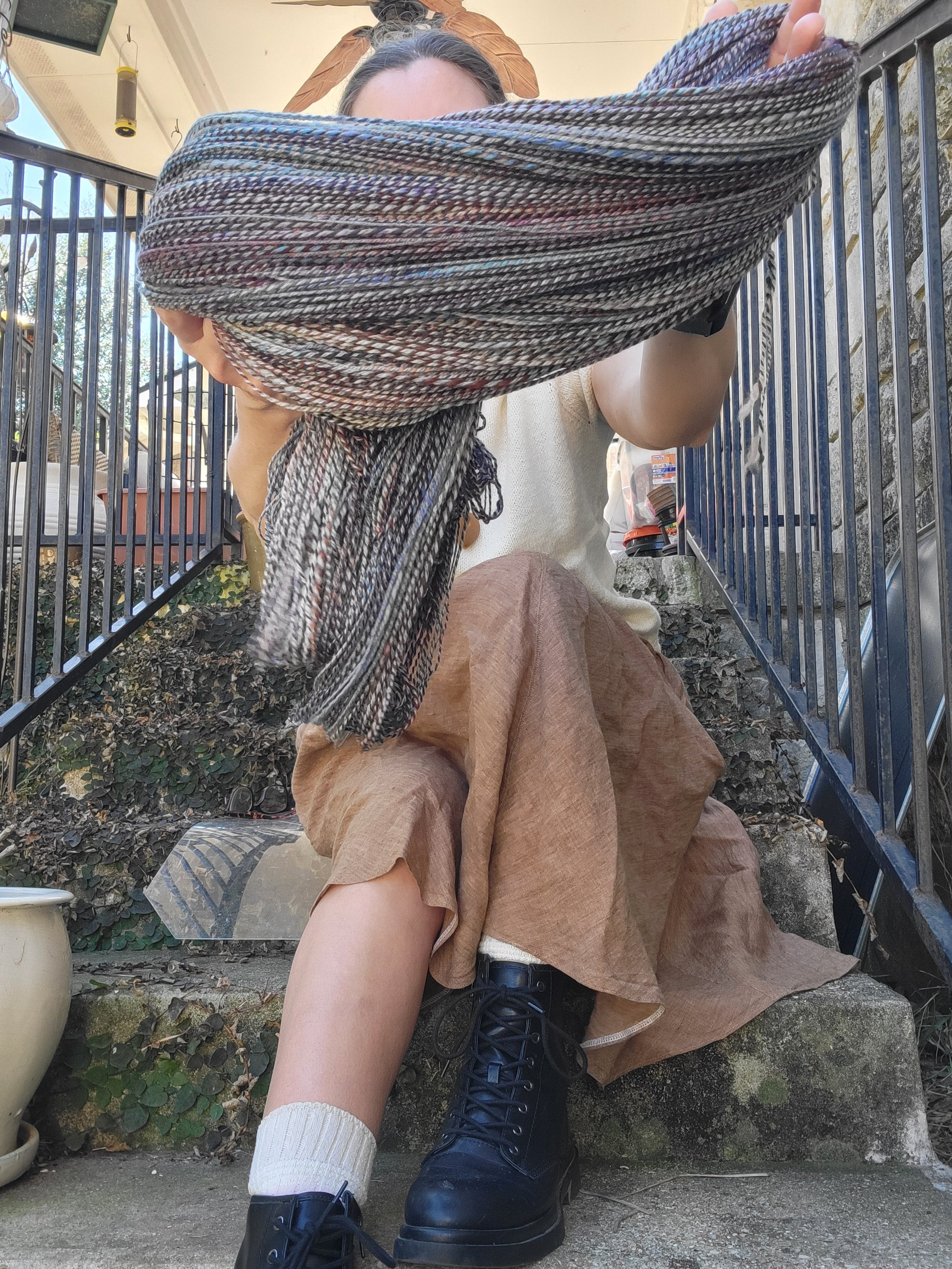
Combination Spinning/Plying
The depth, complexity, and visual interest of a combo spin/ply was calling to me. Combination yarns can be made with a variety of individual singles plied together or a variety of yarns spun together as singles then plied. I tried both.
For colour, I chose two braids that I hand-dye for Huespun, Blue Cypress and Kitchen Sink. They have the same colours in them but are different depths of shade. I knew these would work well together because of that. Then I looked for something that would add a pop of another colour. I had a braid of commercial Malabrigo Cloud, also in merino, in the colourway #247. This braid had a similar light blue that was already in my other two skeins plus it had vibrant blues and purple. Perfect for that pop of colour!
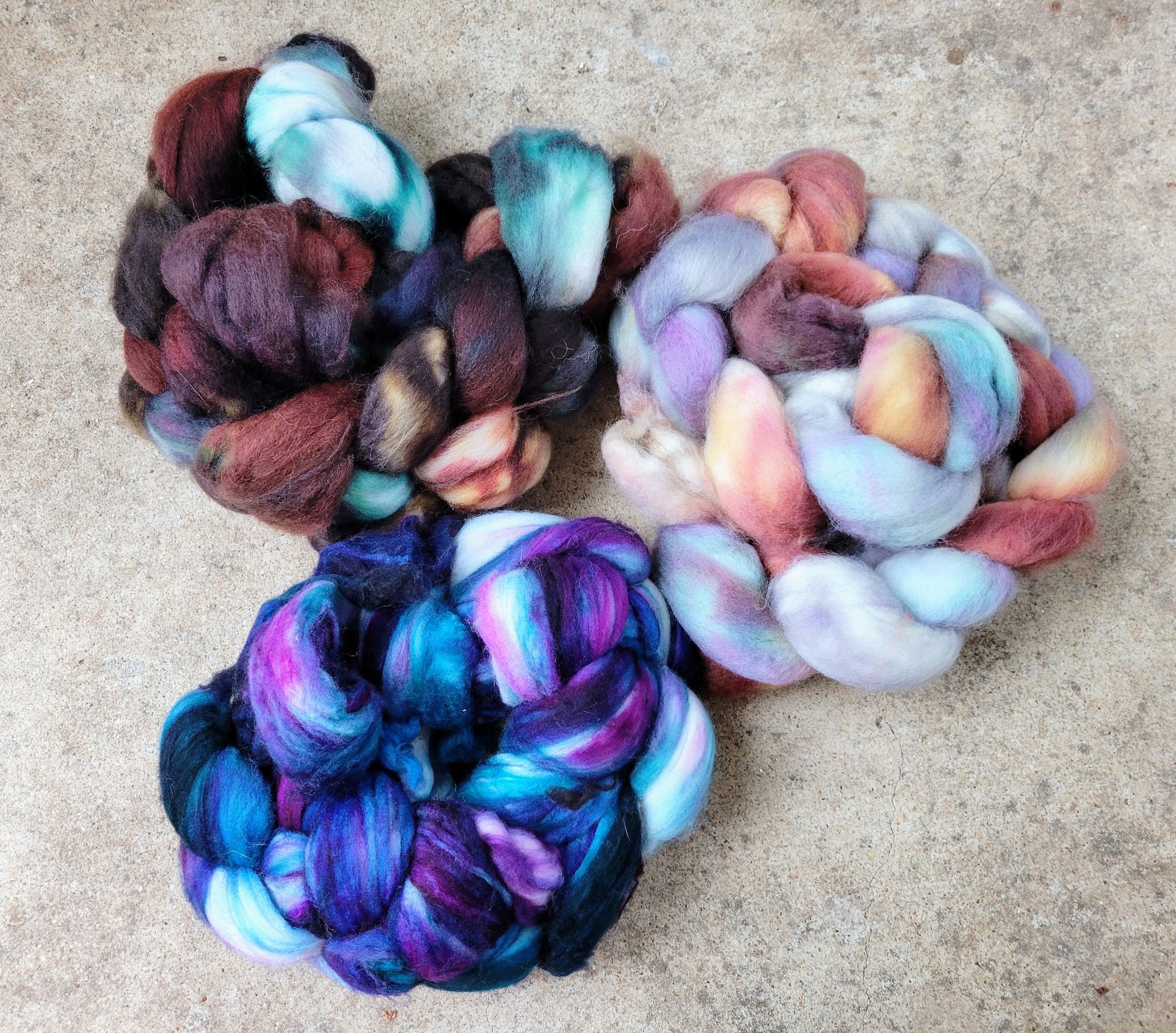
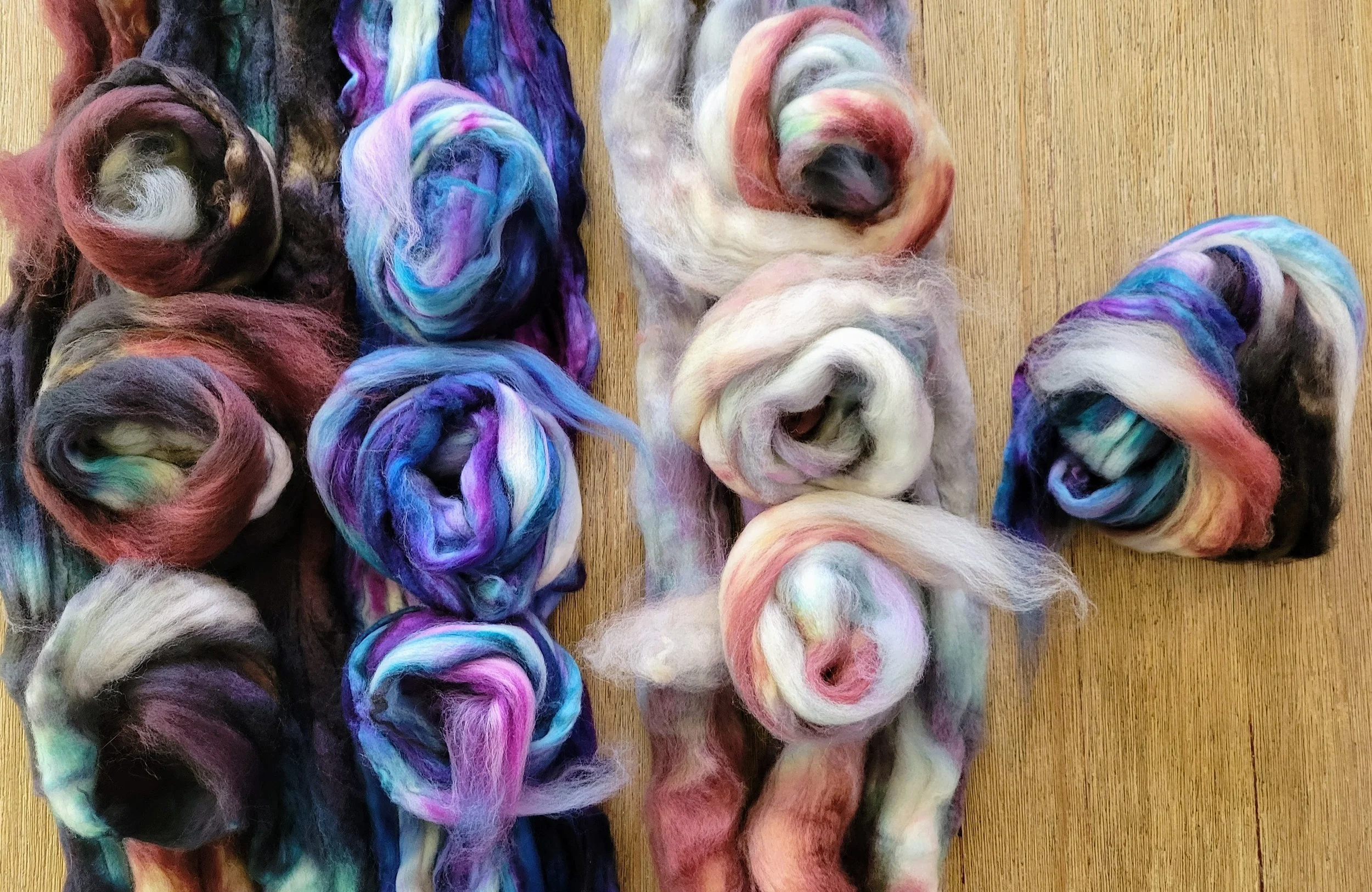
Clockwise from top, Kitchen Sink, Blue Cypress, Malabrigo Cloud #247
For fiber prep, I split each of the three braids in half lenghtwise again and again until I had 8 (or maybe 16 - it was a while ago) strips of each Then I separated colour repeats in each of those strips, keeping them all in the same direction. I used Kim McKenna’s method of dizzing everything ahead of time. Pulling strips of fiber from a blending board or hand card through a hole in a diz really does make the spin more consistent and enjoyable. It was especially useful with the commercial braid because it had become quite compacted over time.
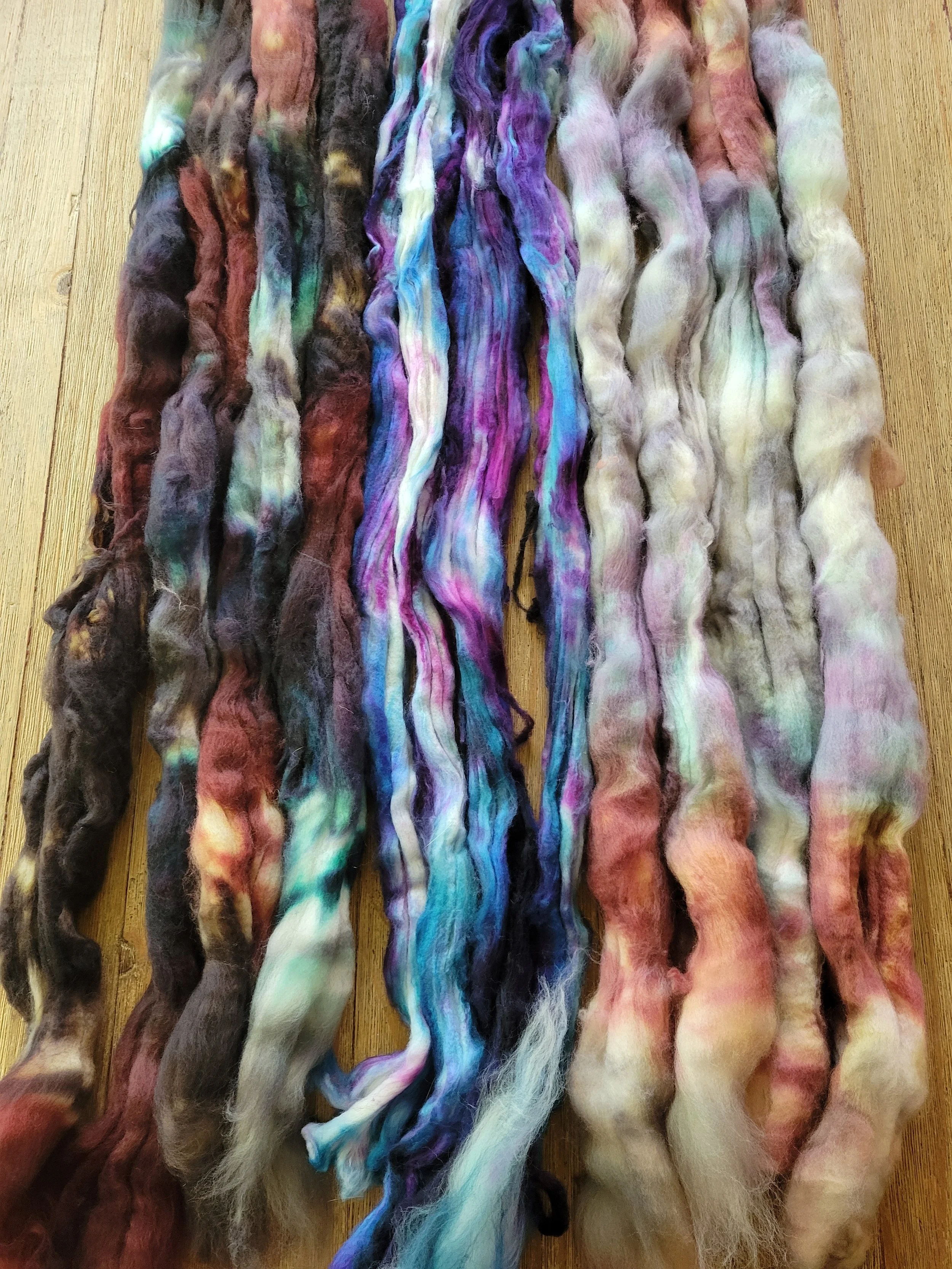
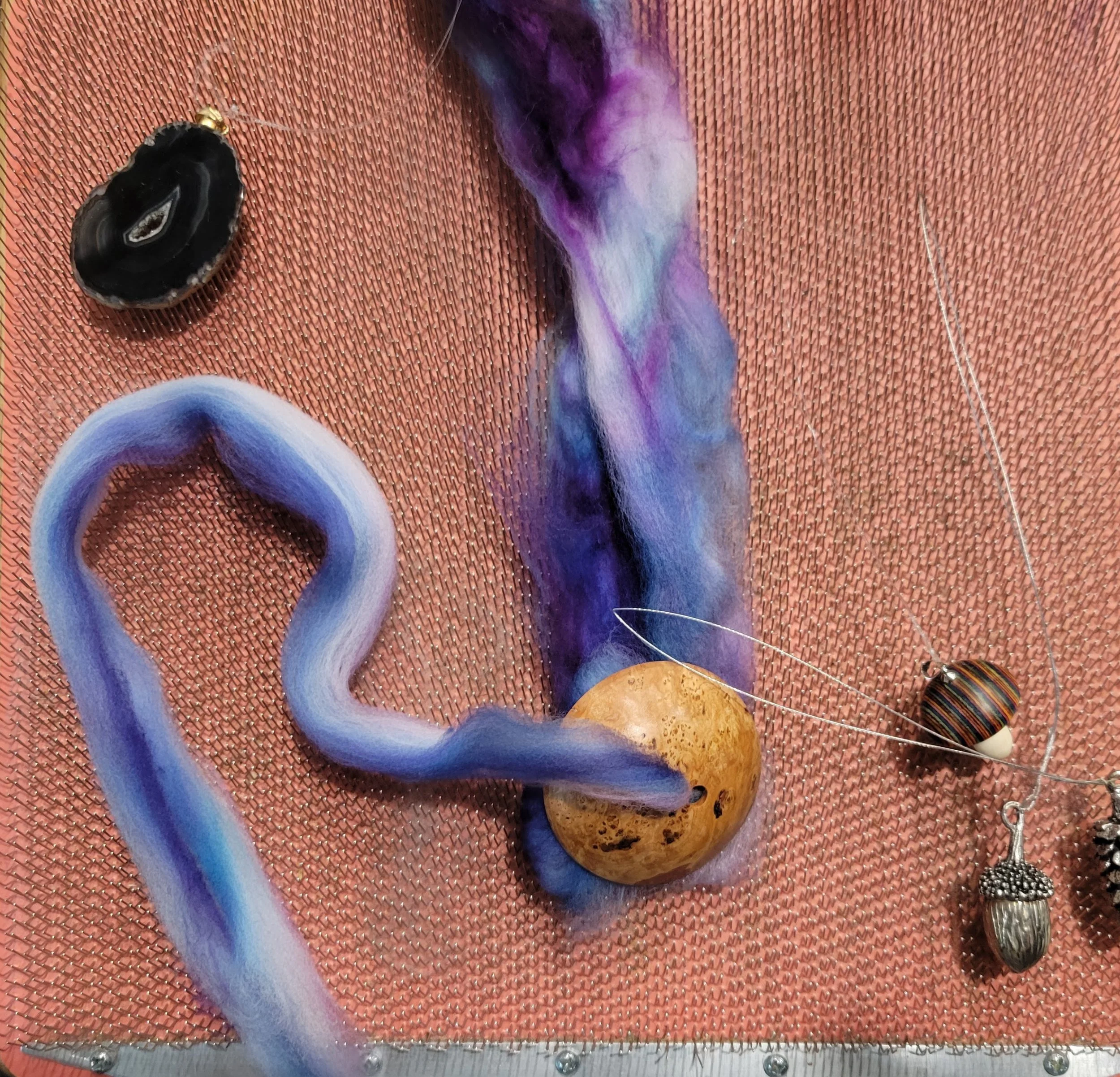
The dizzed fiber is so much smoother, aligned, and spin ready. I gently knotted the final end of each strip as it came out of the diz to keep track of the direction and rolled the fiber into little nests.
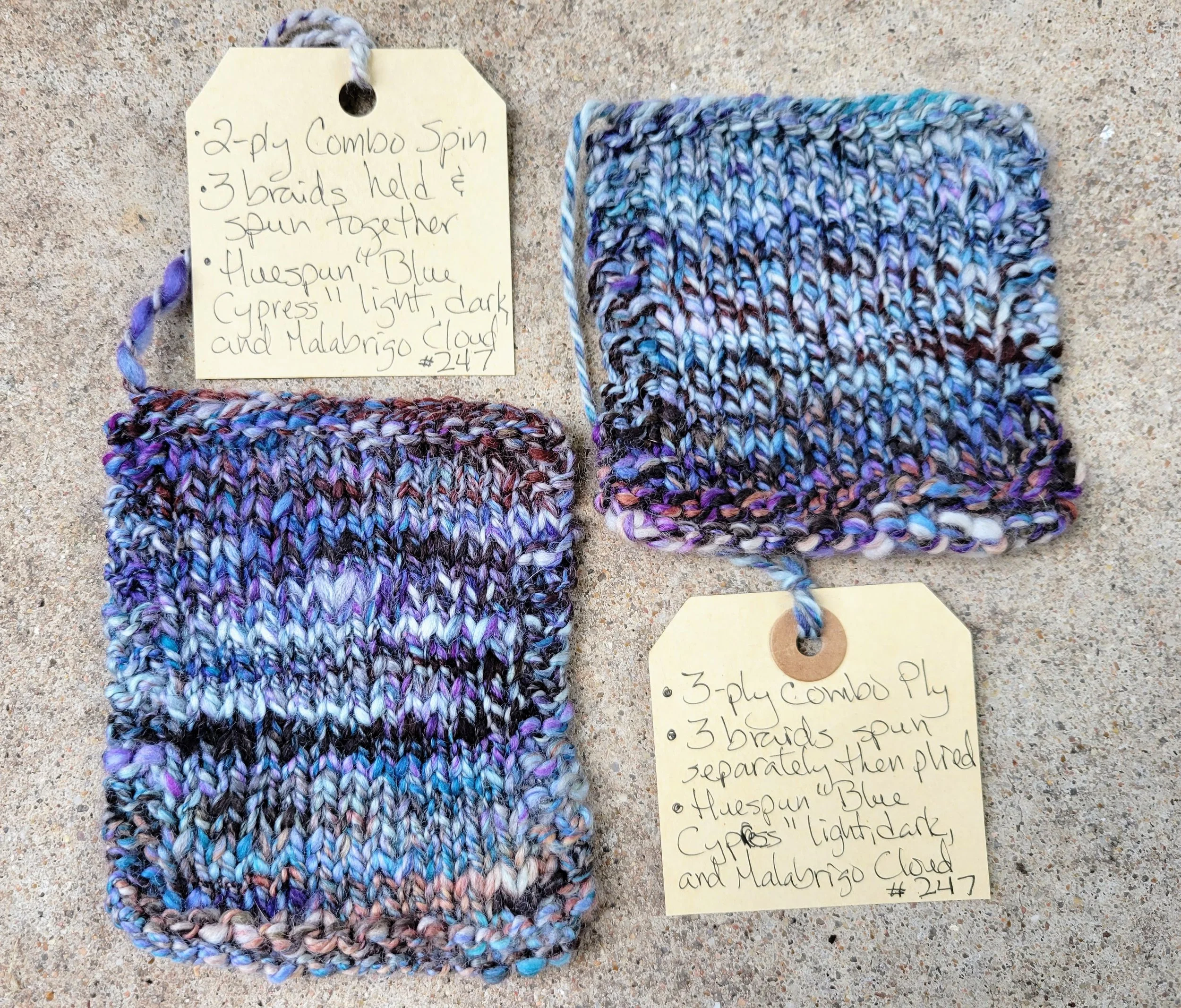
Combo spin: Taking a nest of each colour, I opened them up and laid them together in a line. I dizzed them together all over again -time consuming, yes, but helpful. I spun two singles from this using a continuous backward worsted draft and plied them together for a quick and dirty 2ply “combo spin” sample.
Combo ply: For the other sample, I spun a nest of each colour separately in the same manner and plied them together into a 3-ply “combo ply”.
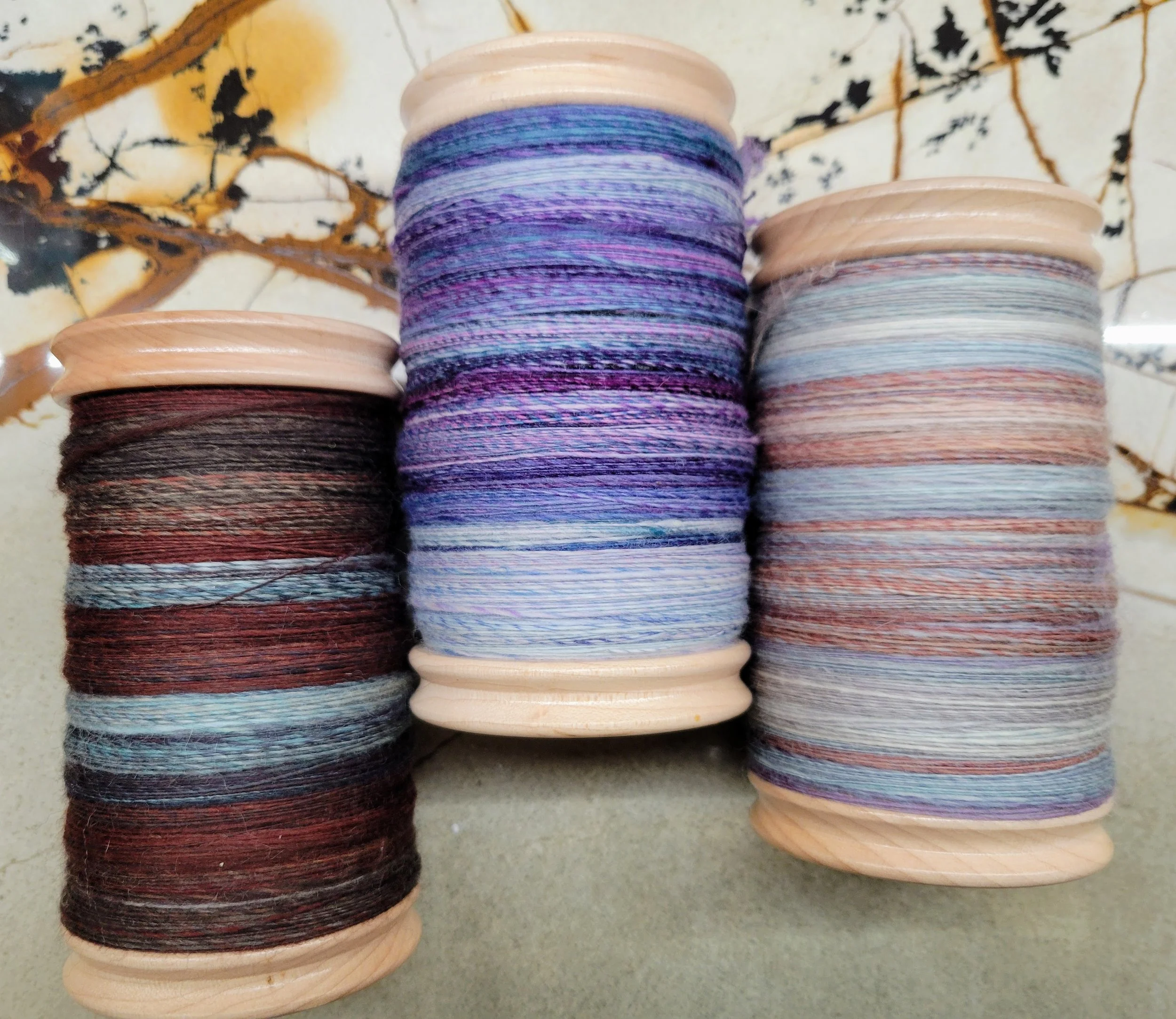
Left to right singles of Kitchen sink, Malabrigo, and Blue Cypress
And here are the results of my quick and dirty samples. Honestly, I liked them both and had a hard time deciding which to pursue. The combo ply looked more uniform and the combo spin more stripey. I don’t think the combo spin is a true representation of what a skein would look like though because I split a colour repeat in half for the singles. Ultimately, I chose the easier path of the combo ply. I wasn’t up for dizzing all that fiber again!
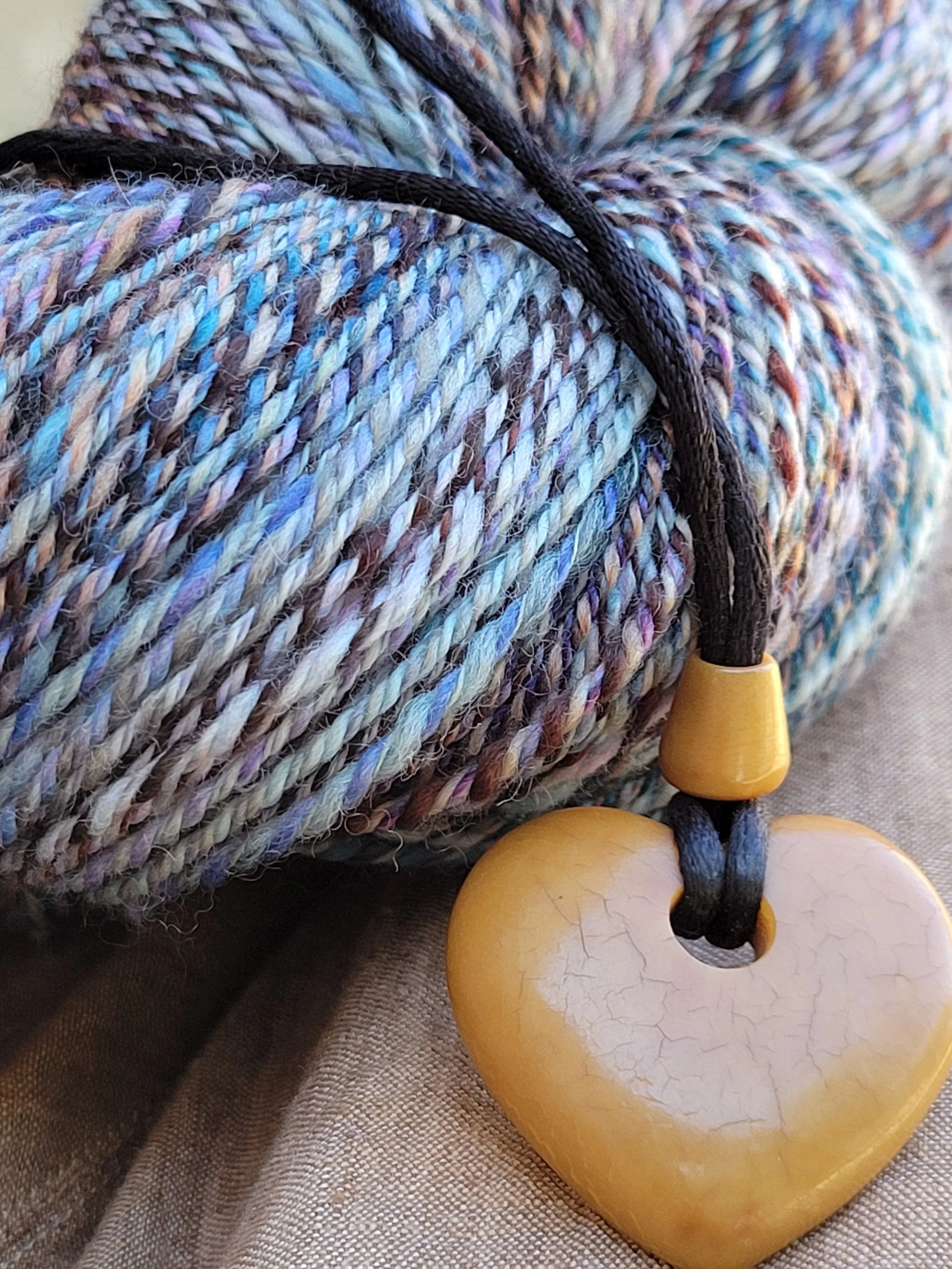
I will definitely revisit this technique in the future and maybe be a little more playful with colour choice. As long as there’s something cohesive in your fibers, the choices are limitless!