Colour Management isn’t Always Obvious
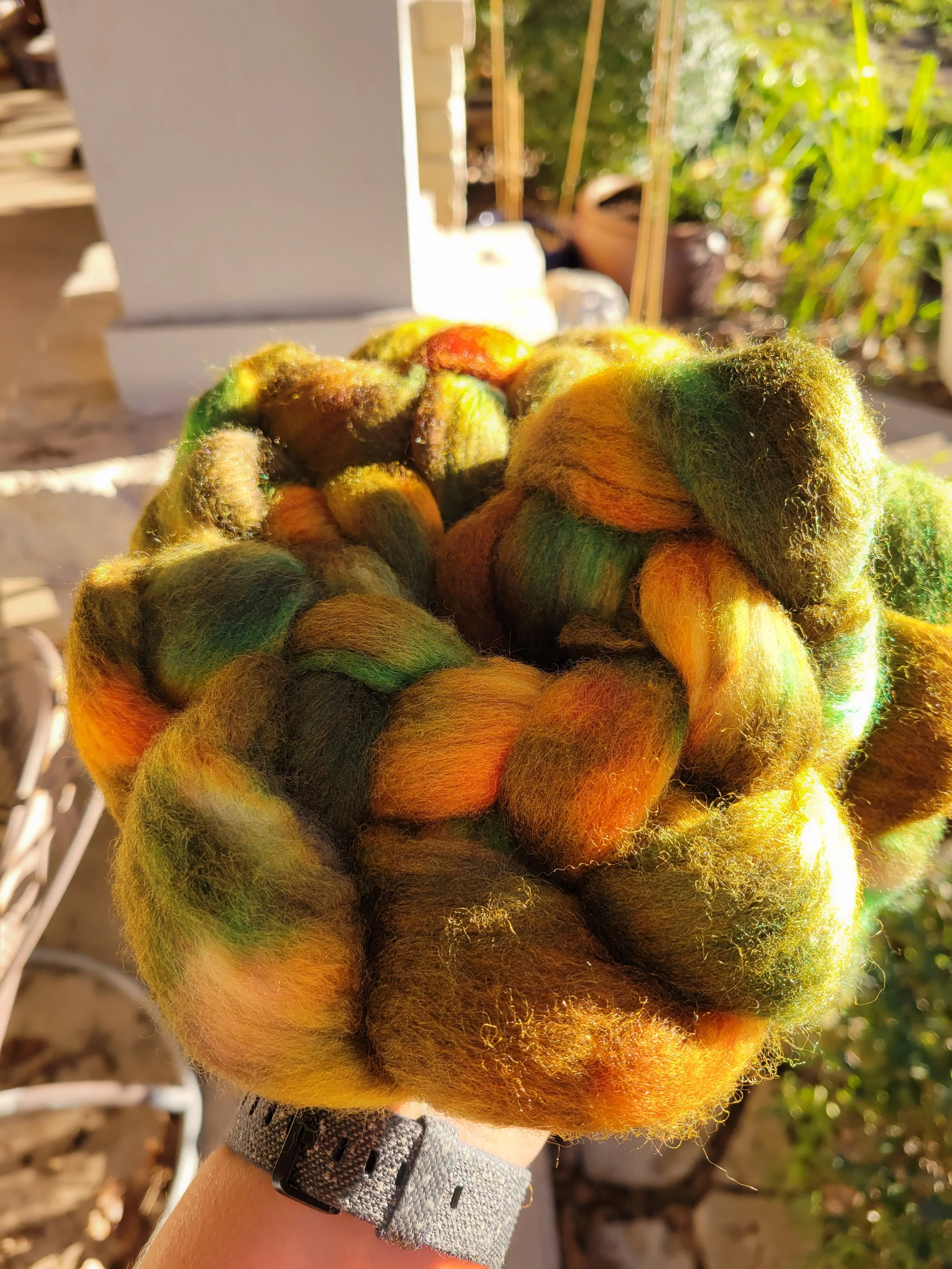
Sometimes you can look at a braid of fiber and see how to break up and manage its colours. Sometimes it’s less obvious and takes a little faith and lots of patience. When I began choosing yarn and colours for an Andrea Rangel test knit through School of Sweet Georgia, I saw an opportunity to make and use some handspun. The sweater, Falling Leaves, has a leaf motif in the yoke and I happened to have some hand-dyed fall leaves-inspired fiber in an 80/20 merino/silk blend. It was shiny and gorgeous! But it was not obvious to me how to build a fall gradient because the colour repeats were short and blended.
I began playing with the braid, splitting it lengthwise and pulling it into small tufts of fiber. At first glance, they really all looked so similar! Sometimes stubborness pays off though. I kept going until I had the entire braid dismantled and could finally see some variation.
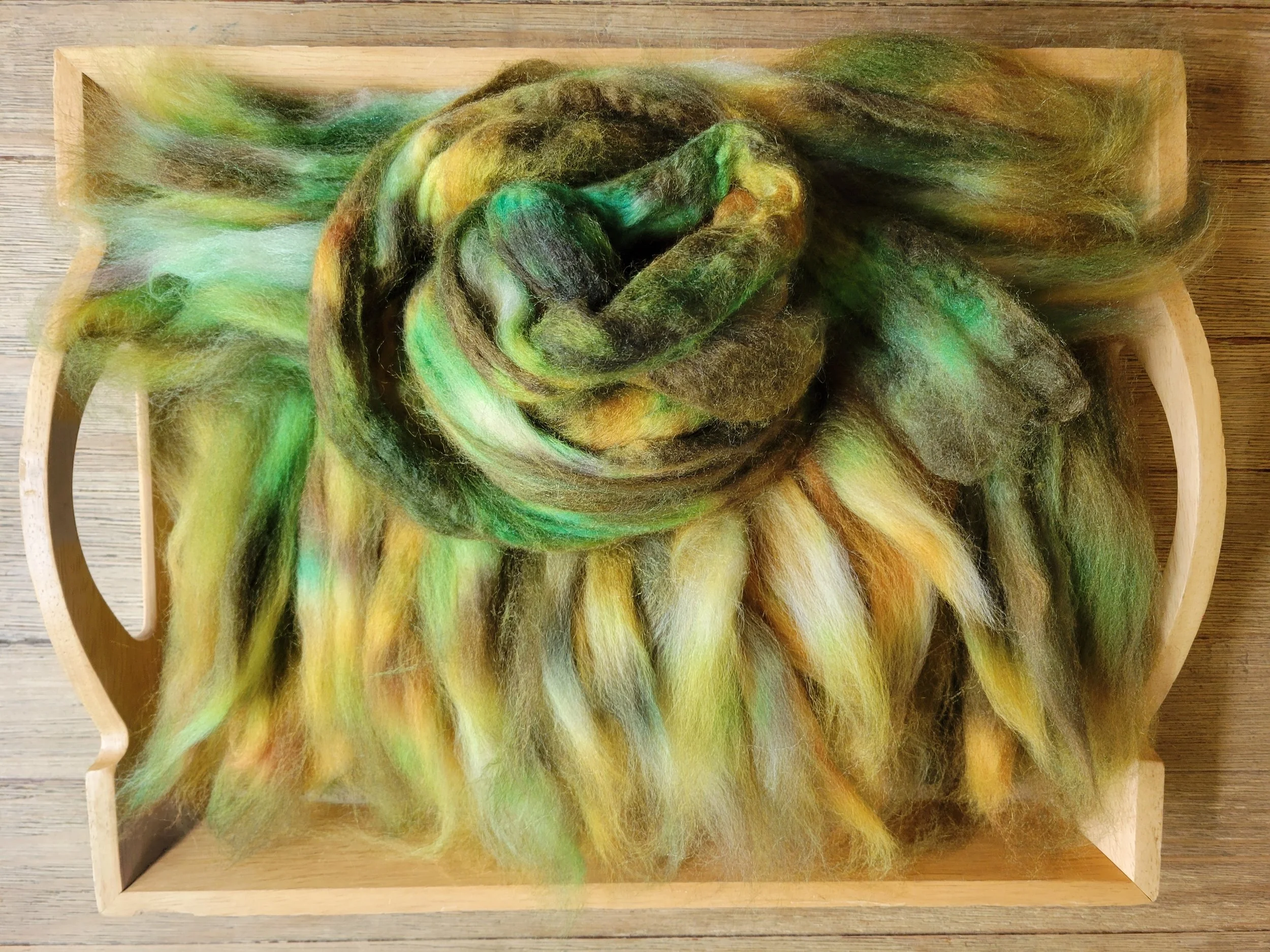
Clearly, pulling the fiber apart was not going to give me a colour gradient on its own but I could see some extremes in there. Green on the one end and orangey-brown on the other. I decided to focus on those and try to separate out those colours with the blending board. Unfortunately, I didn’t take any photos of the blending board work but perhaps you can imagine taking each of these tufts to the board and gently combing out and dizzing the colour I was trying to gather. It was laborious but fiber prep is so enjoyable to me that I did not mind at all.
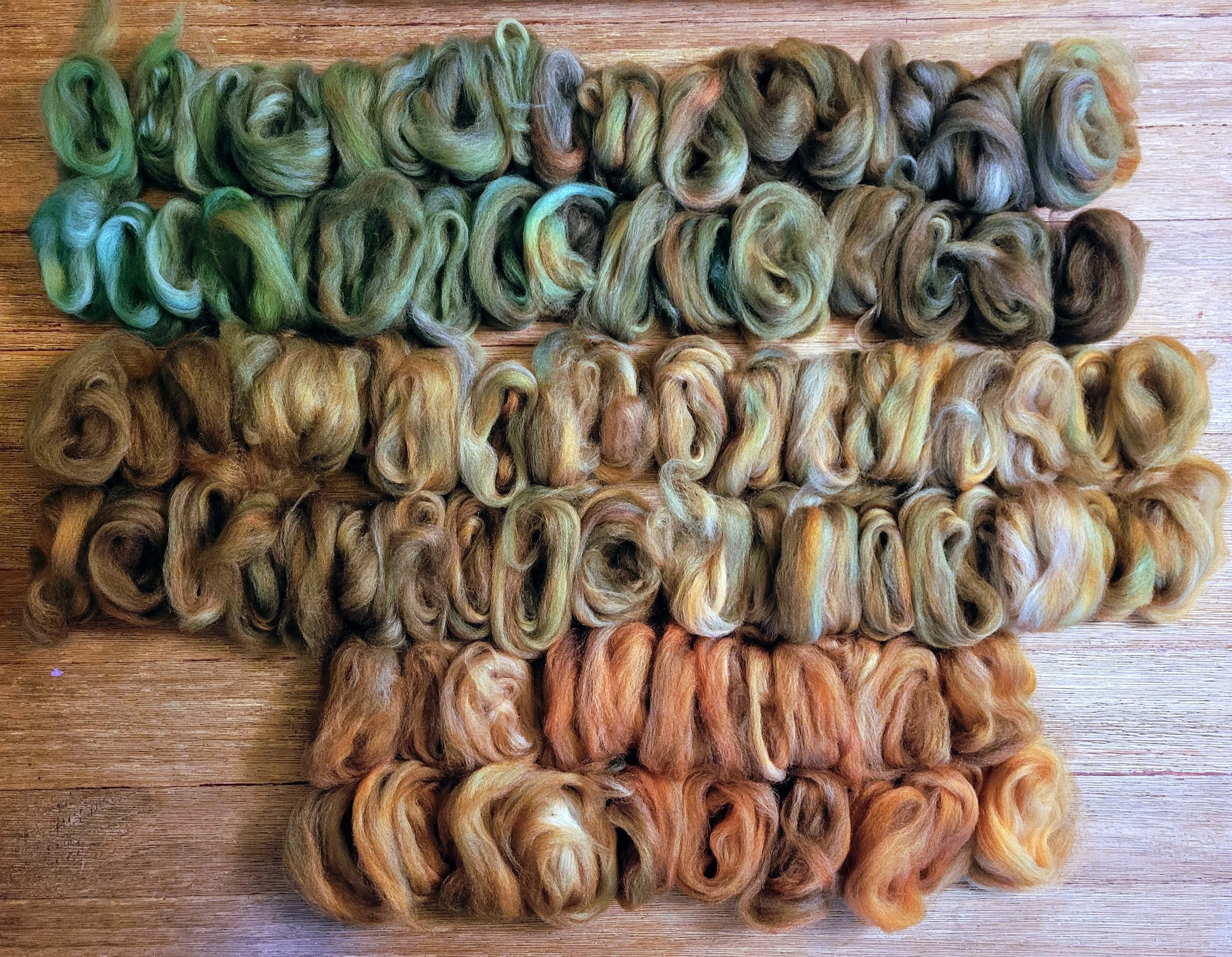
Once I’d dizzed each of these adorable nests, I rearranged them as best I could to get a gradient. Then I spun them in that order and began the process all over again with a second braid for the second ply,
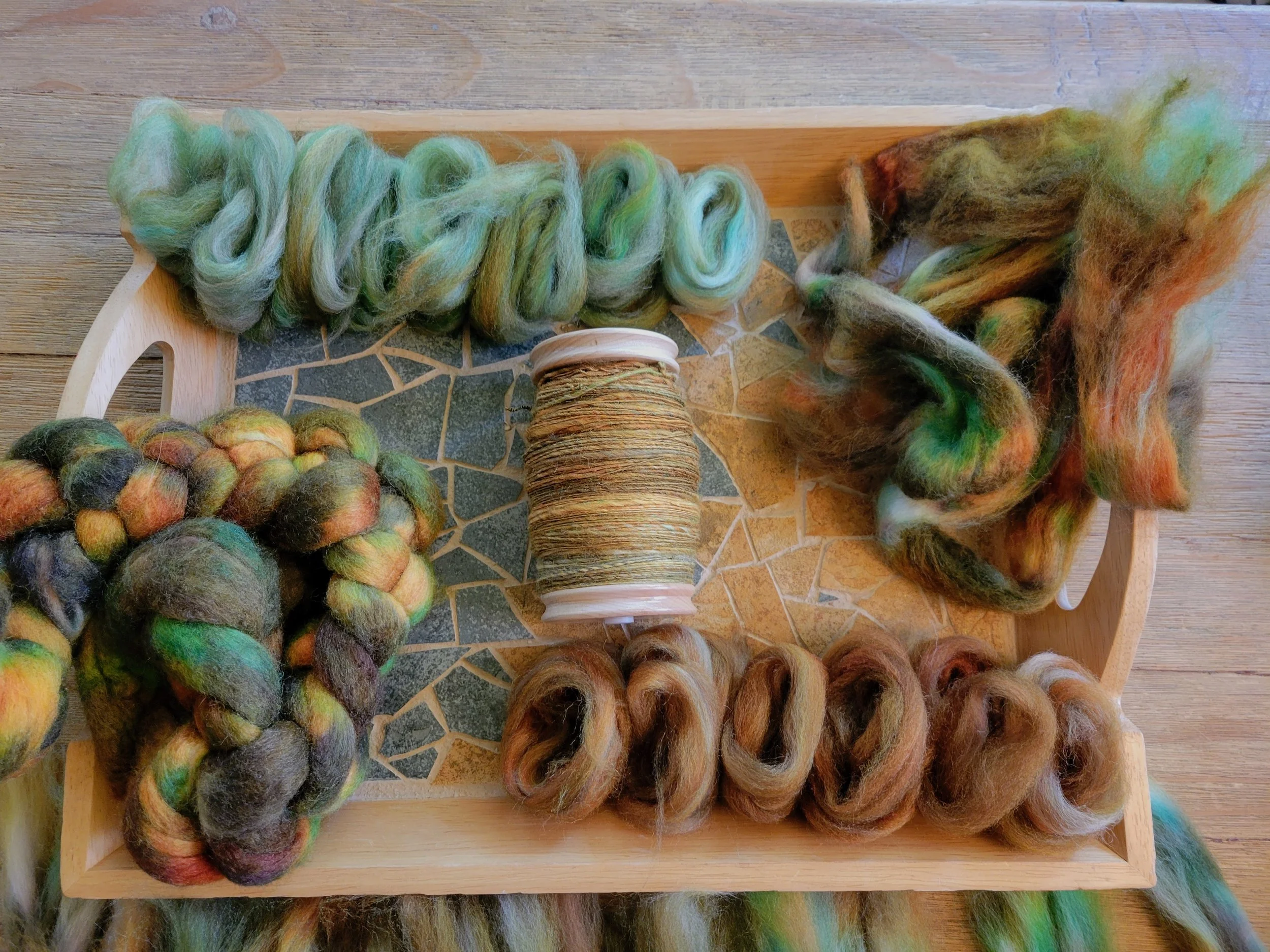
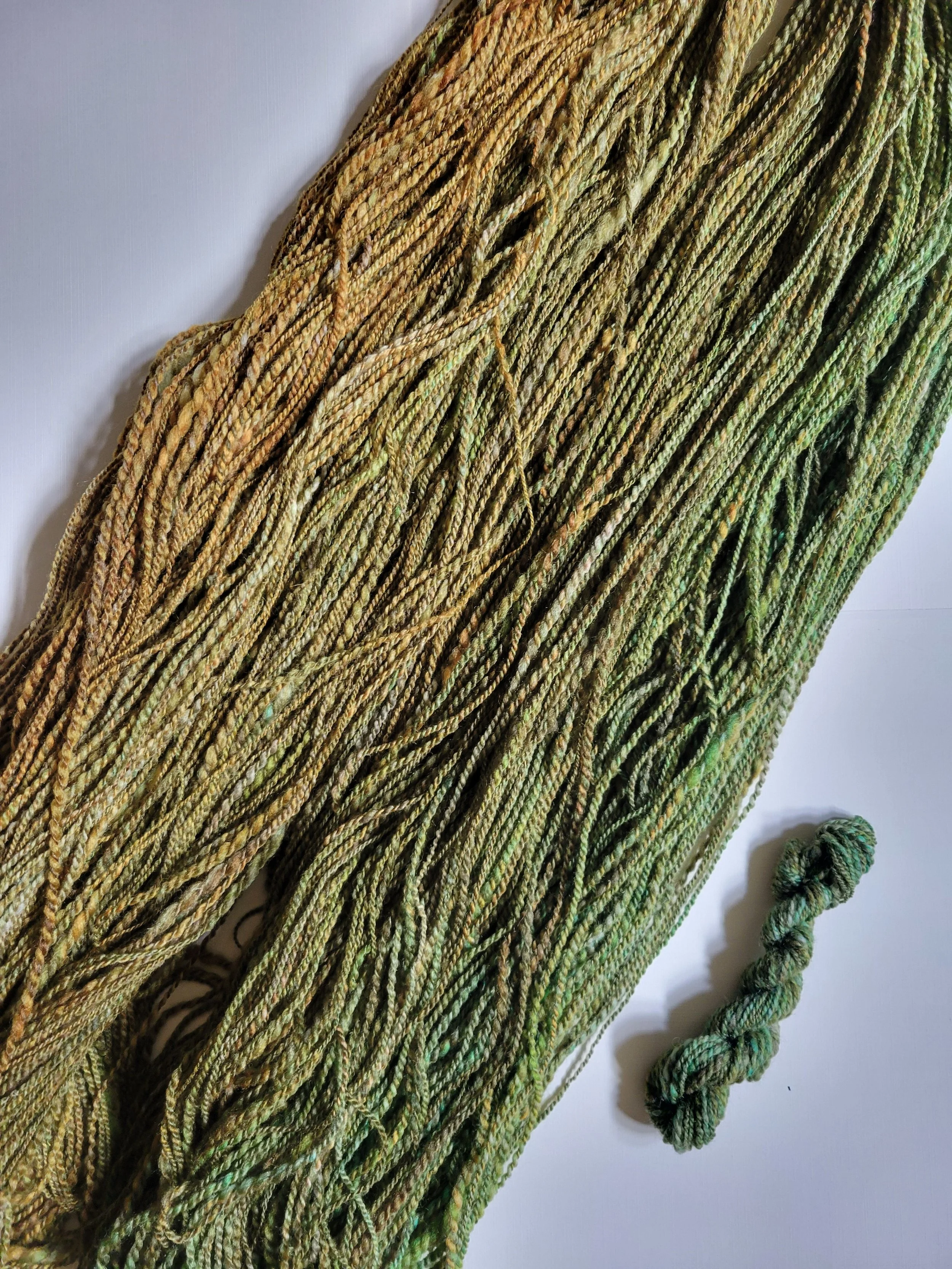
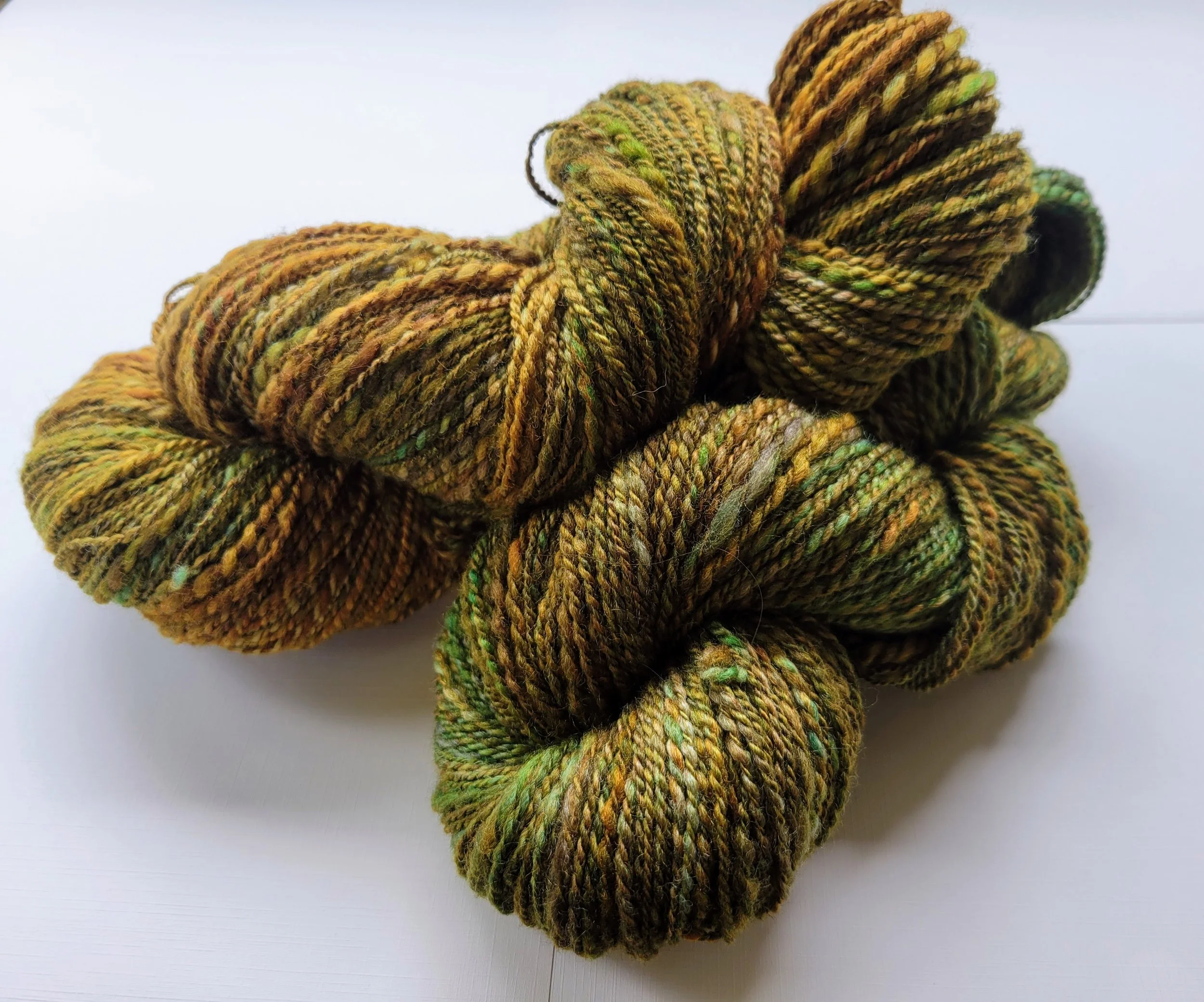
The second braid was a little easier and quicker but still a lot of work to diz all those individual nests and rearrange them to match. The final 2-ply DK yarn was a marled gradient, perfectly subtle. I had to ply it onto two bobbins, hence the two skeins. And I made note of which end flowed into the other. Andean plying the remaining singles made a lovely mini skein for a gauge swatch.
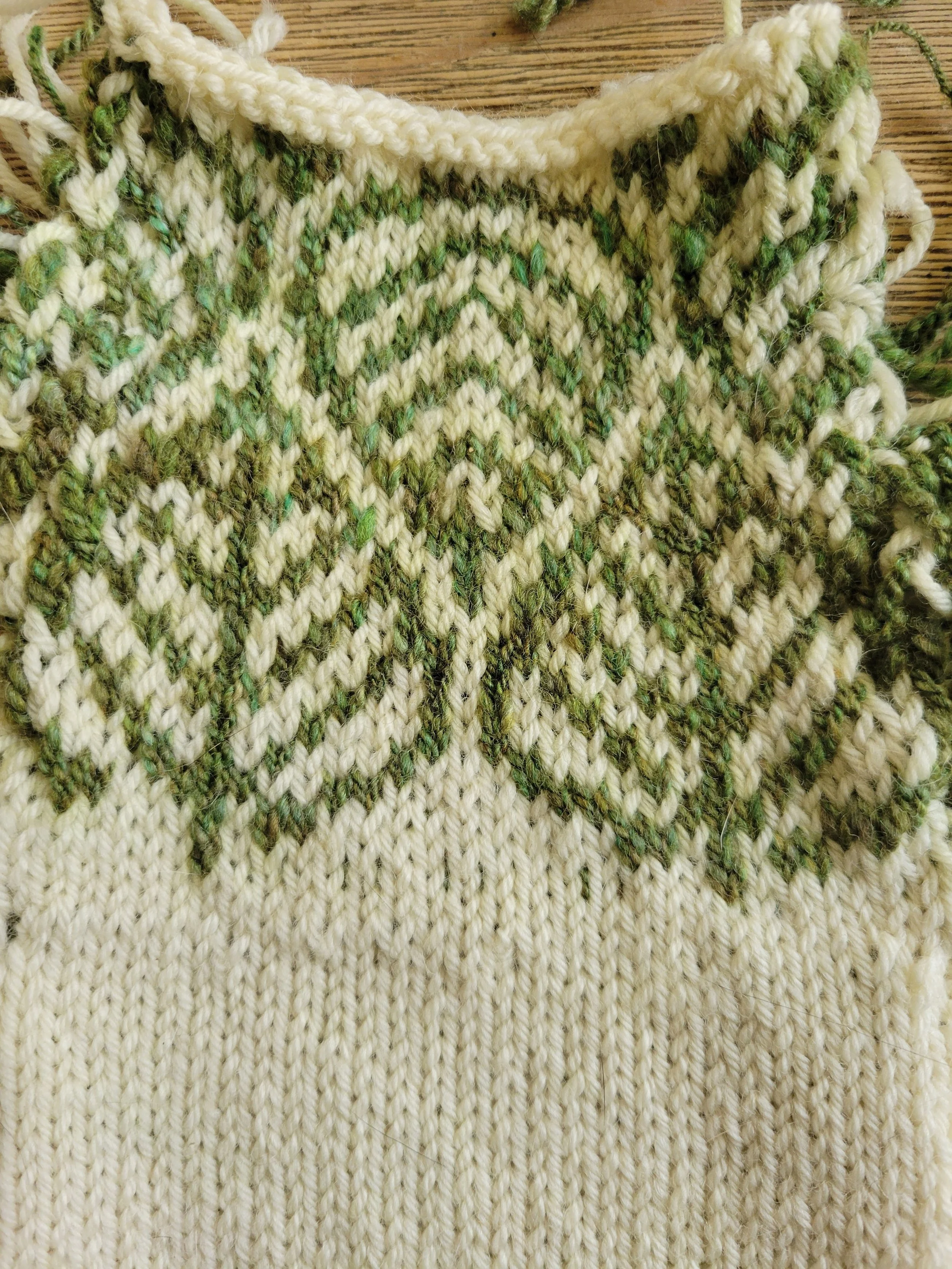
I met gauge in pattern with my mini skein and an undyed DK BFL base. My caught floats showed though so I decided not to catch them in the final sweater. Swatching is useful for more than just gauge!
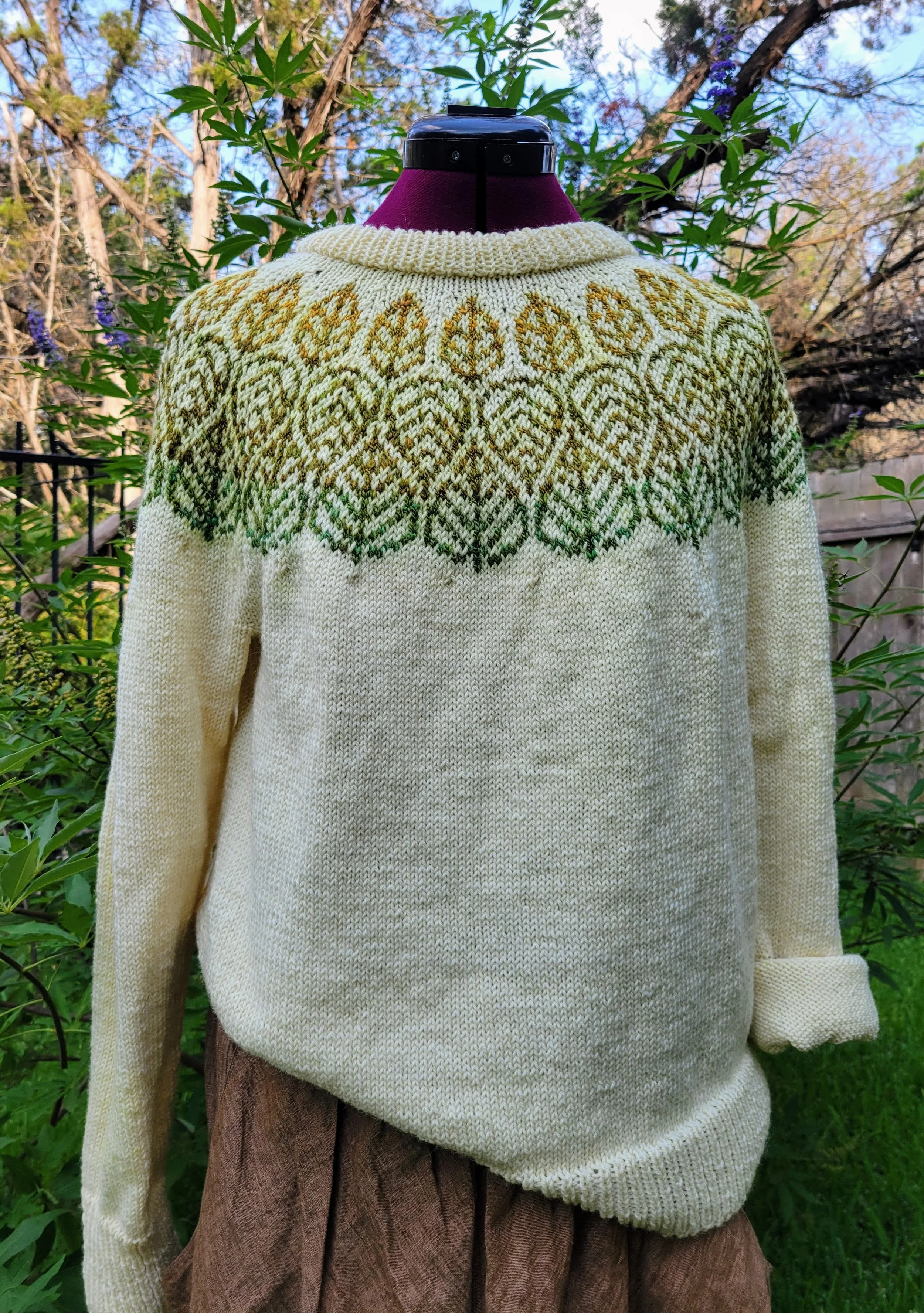
Falling Leaves was my first bottom-up sweater and I quite enjoyed the process. Getting the sleeves and hem out of the way first then savouring the colourwork and that squishy folded collar worked for me. I made much more yarn than I needed though so I had to manage the colours to make sure some of that shiny gold was in the yoke. You can see the demarcation at the top of the green area where I cut the yarn and started using another part of the skein. This sweater might be my best-fitting hand-knit sweater! Andrea Rangel is an excellent designer and her pattern and chartwork were clear. Unfortunately, BFL is a little itchy for me, even though this is a very soft BFL. It’s great over long sleeves though and is quite warm and cozy for a winter walk. And BFL has such a lovely bounce and squish factor!
Even if you have a braid you think you can’t play with, give it a try. You might find there’s more you can do with it than you think.
