Creating a Gradient with Rolags
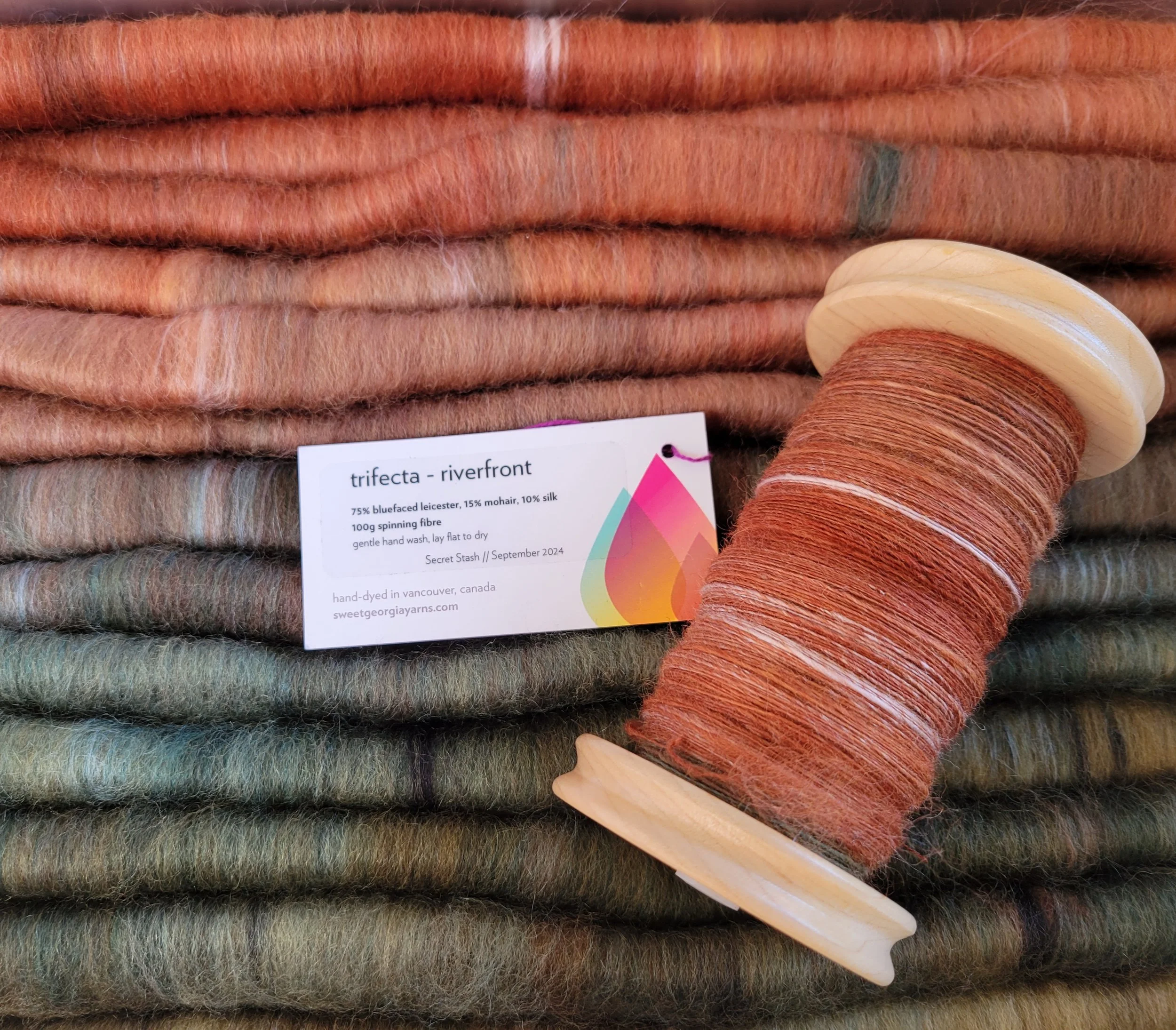
It’s always exciting to receive a mystery braid of fiber. This fiber club installment is a Sweet Georgia Trifecta blend in the colourway Riverfront. It’s a stunning blend of 75% BFL, 15% mohair, and 10% silk. Greta Cornejo leads a fun, active fiber prep class at School of Sweet Georgia where she had been sharing lots of beautiful, inspiring examples of rolag prep in our meetings for “fiber prep February”. It inspired me to make rolags with Riverfront. The colours were already gorgeous but I wanted to pump them up a little with some subtle highlight and shadow in the form of light and dark silks. That blue Kale silk is my absolute favourite mix-in! If you’ve purchased any of my rolags, you’ll probably find some in there!
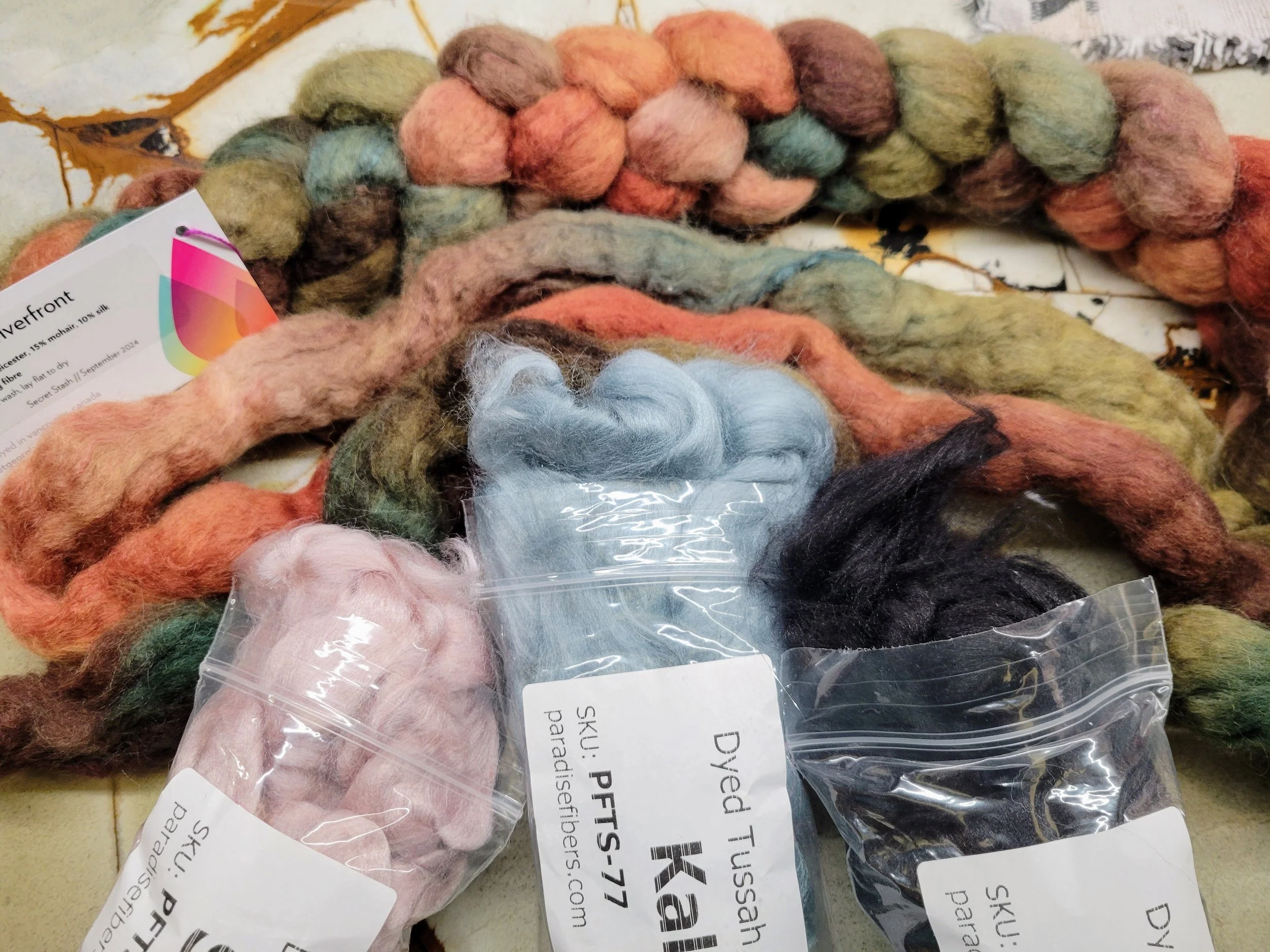
Planning a 2-ply, I split the braid in half lengthwise. As I pulled the colour repeats into smaller lengths of fiber, I decided to arrange them into a colour progression from greens to reds. The greens would get a bit deeper and the reds a bit brighter.
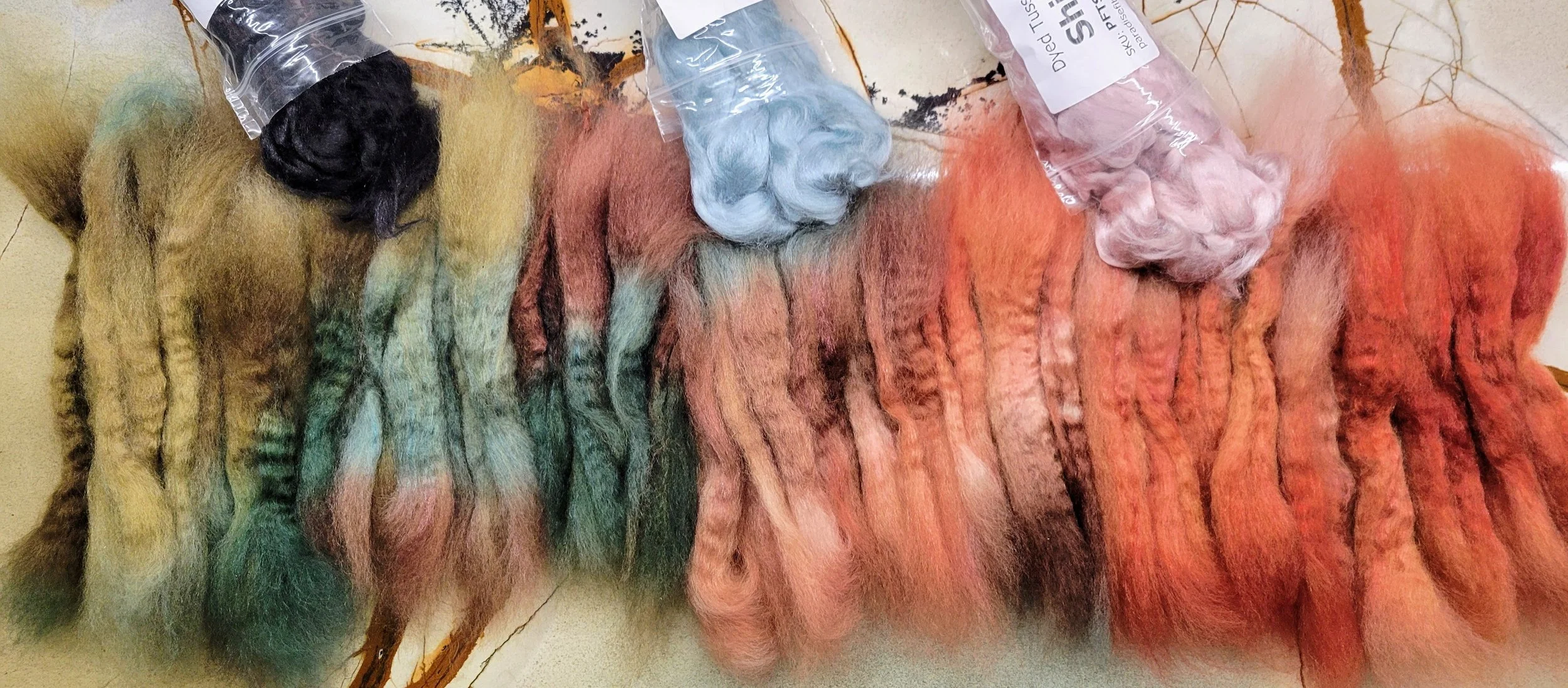
Starting with the greens and working to the right in the order above, I placed about 10 grams of fiber at a time on the blending board and added shots of silk. Each board yielded 3 rolags.
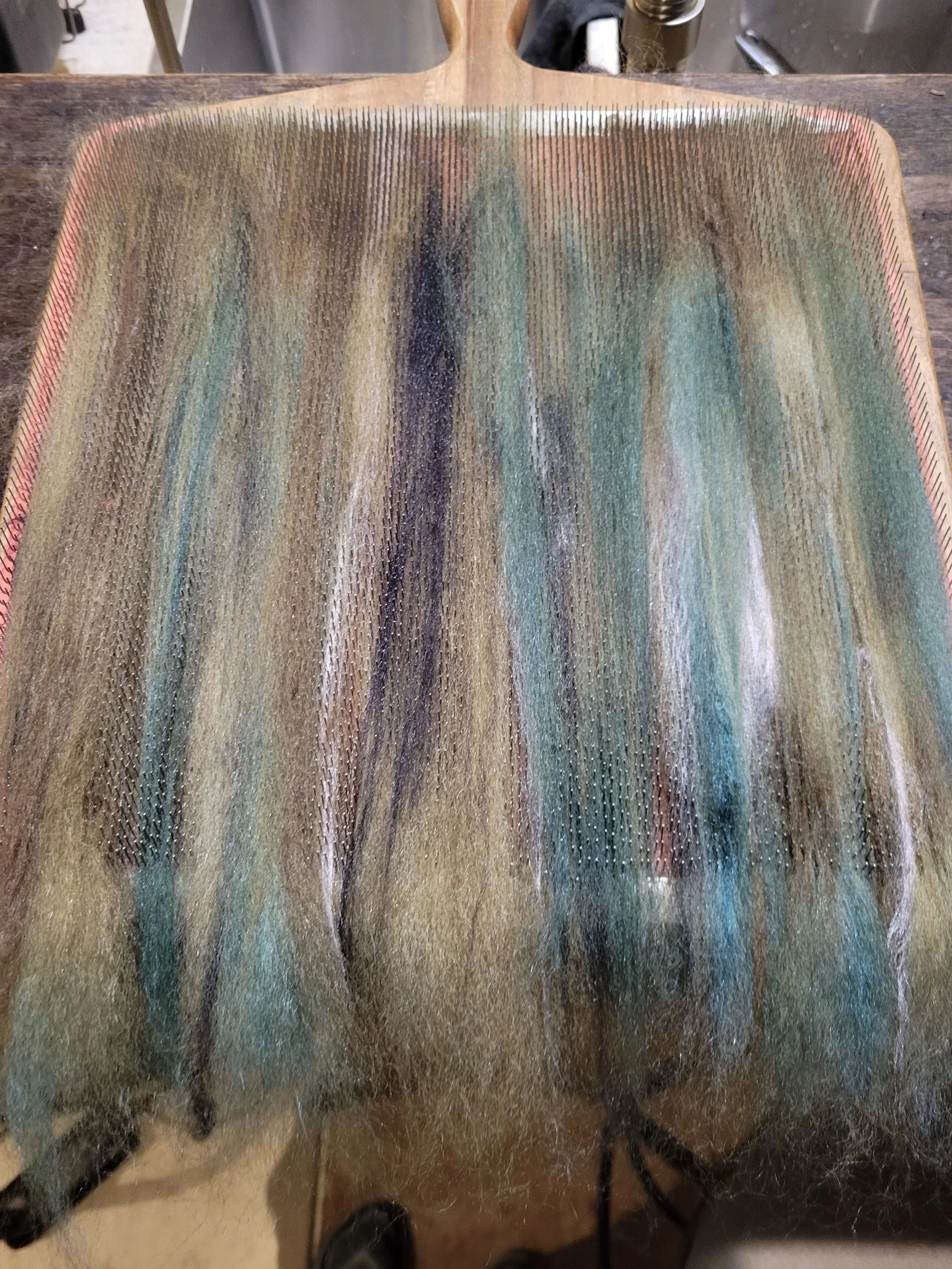
A little black and pink silk added to the green fiber.
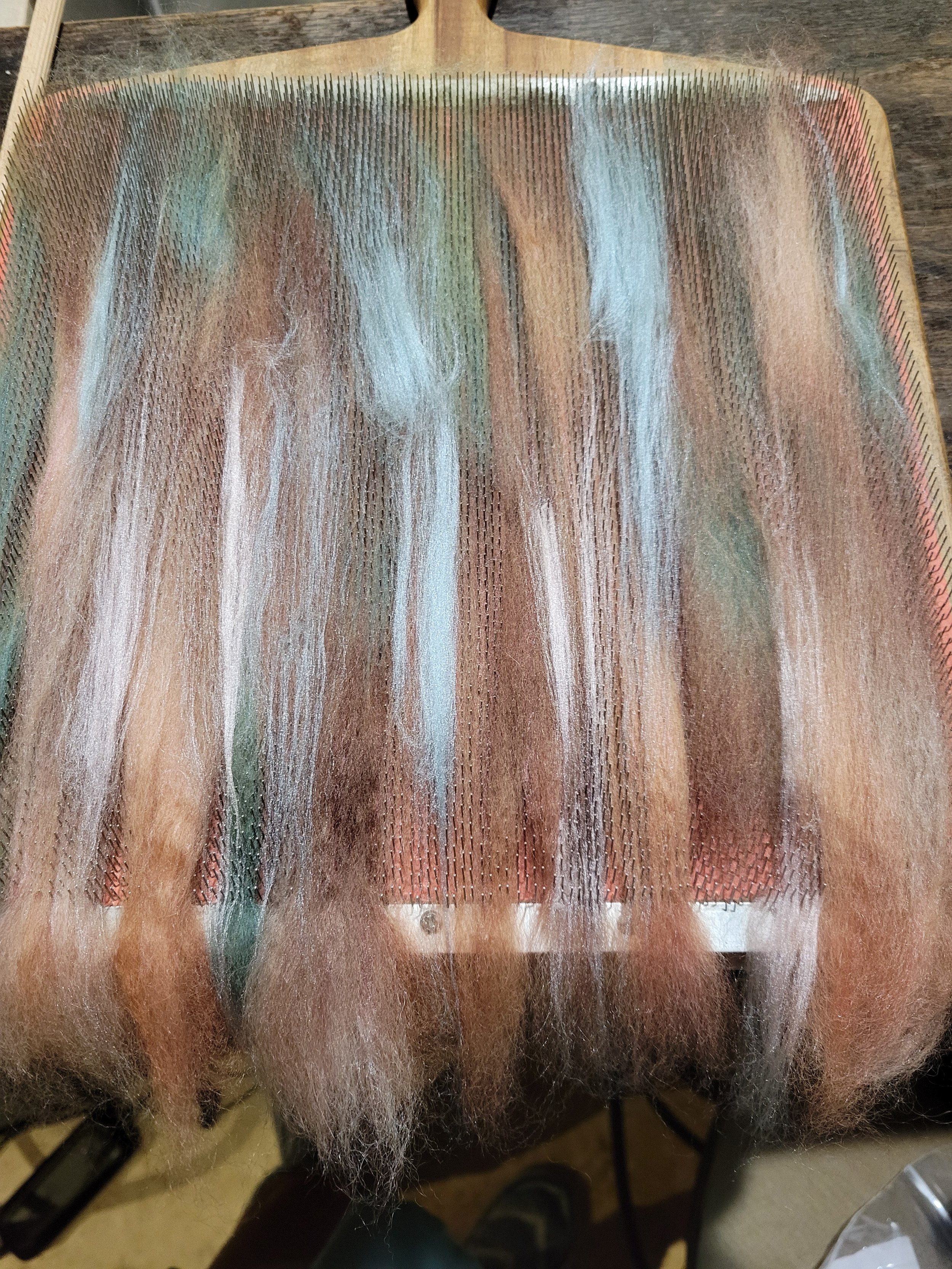
Blue and white silk added to the reds.
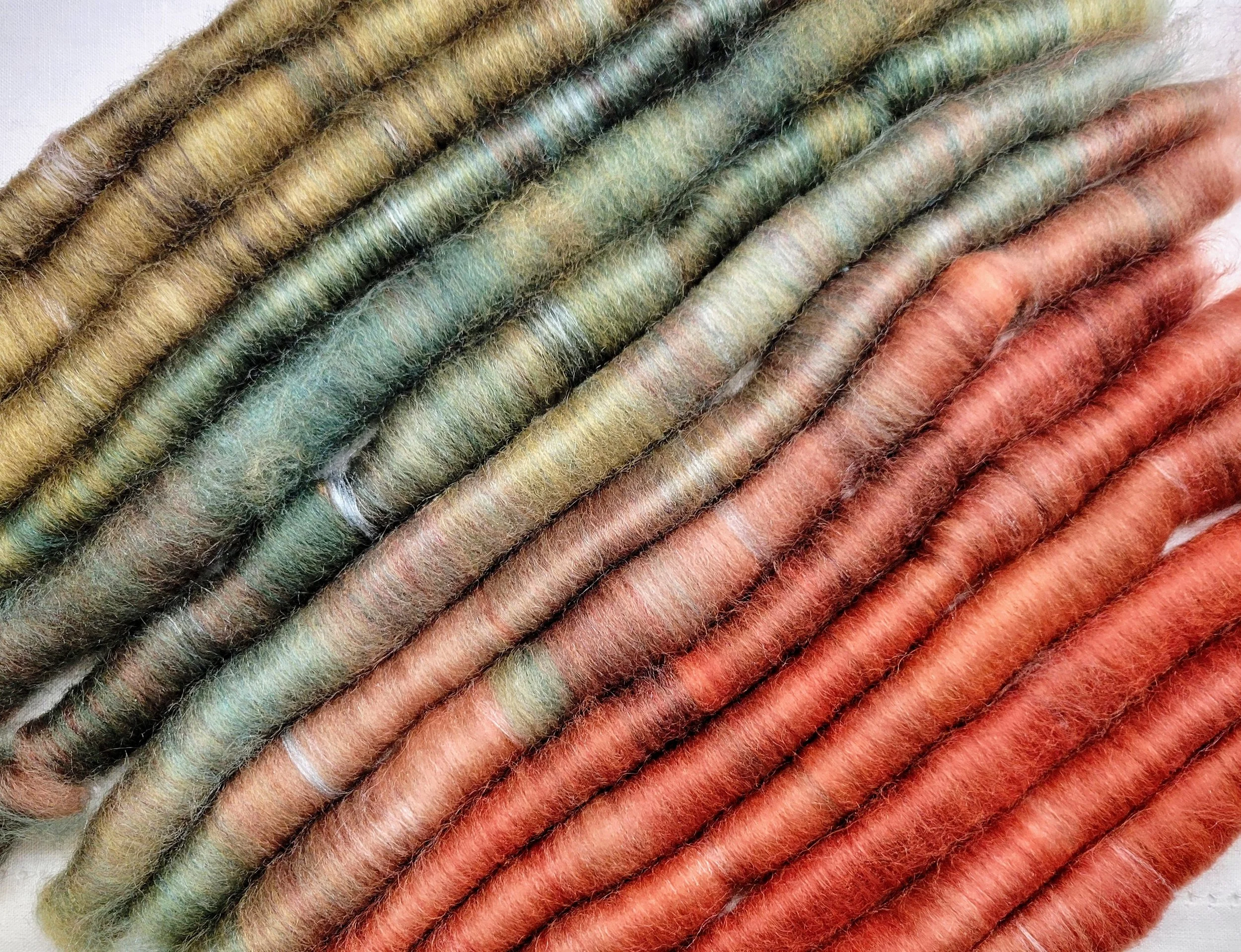
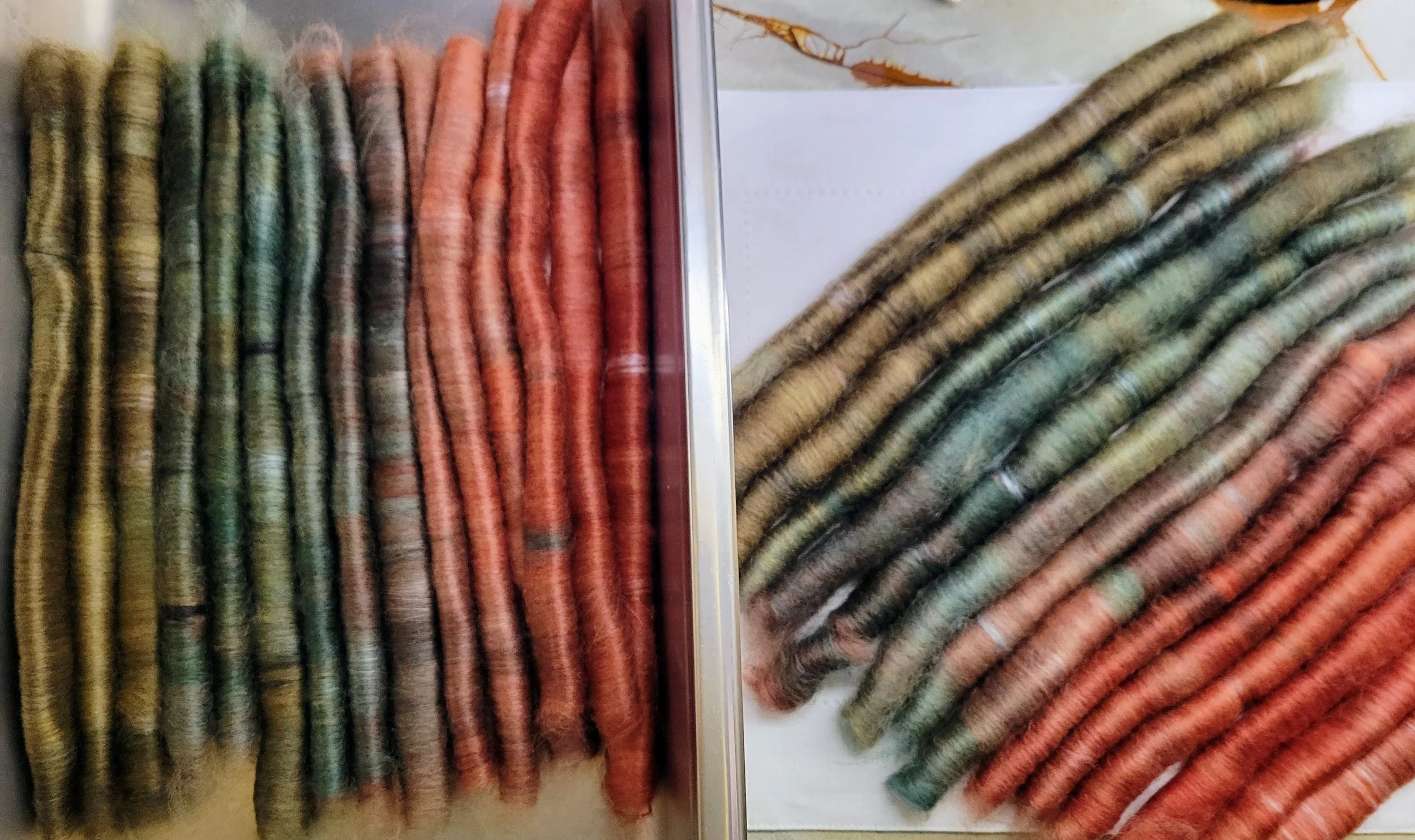
The first half braid yielded 15 rolags and I was happy with the colour progression. I repeated the process with the second half, matching my steps to the photos and notes I’d taken. The two sets of rolags turned out fairly consistent in both number and colour progression.
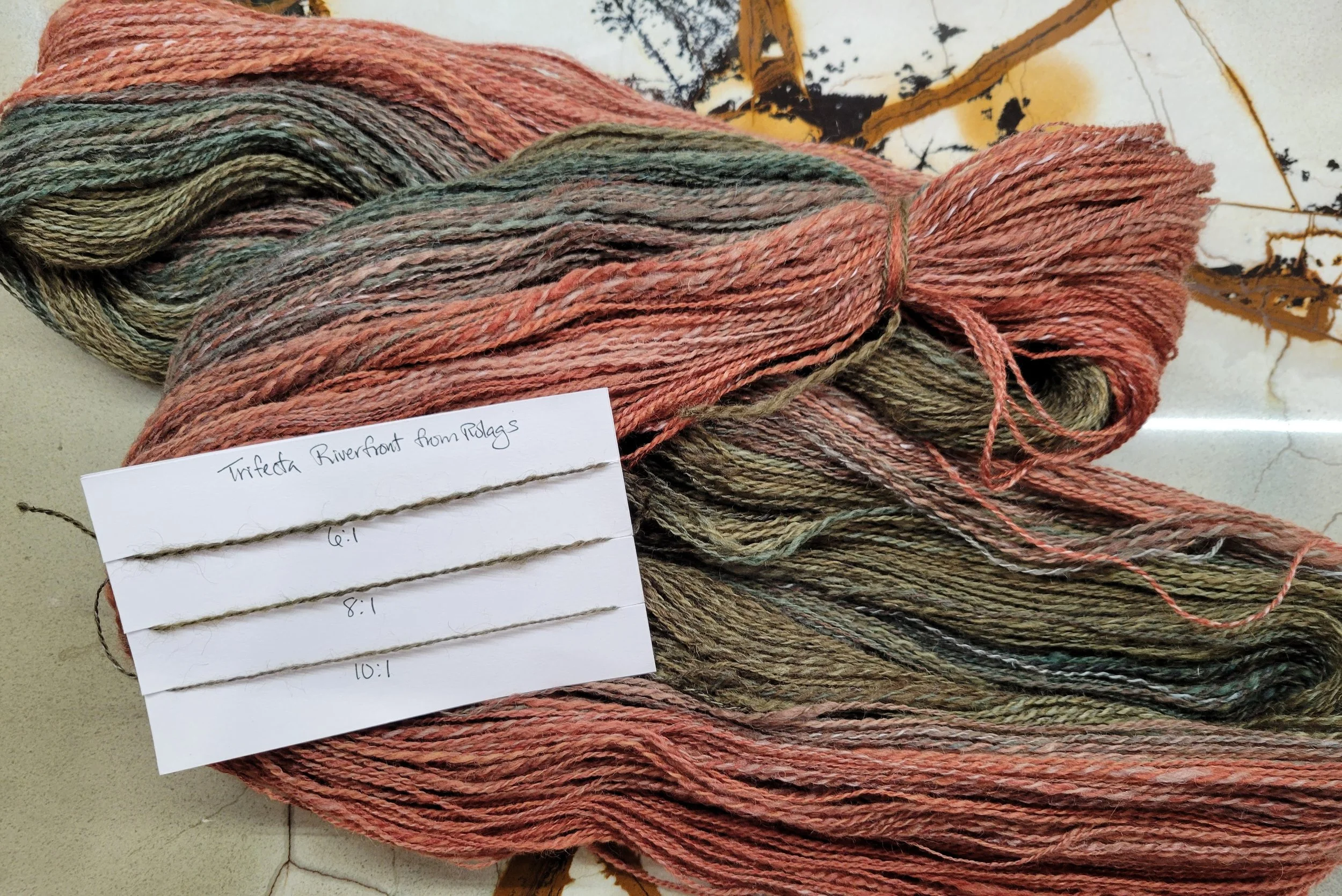
Having never spun this blend before, I made some ply-back samples with a bit of green on my Lendrum double treadle wheel. The 10:1 ratio in a continuous backward draw gave the smoothest result so I chose that for the rest of the spin.
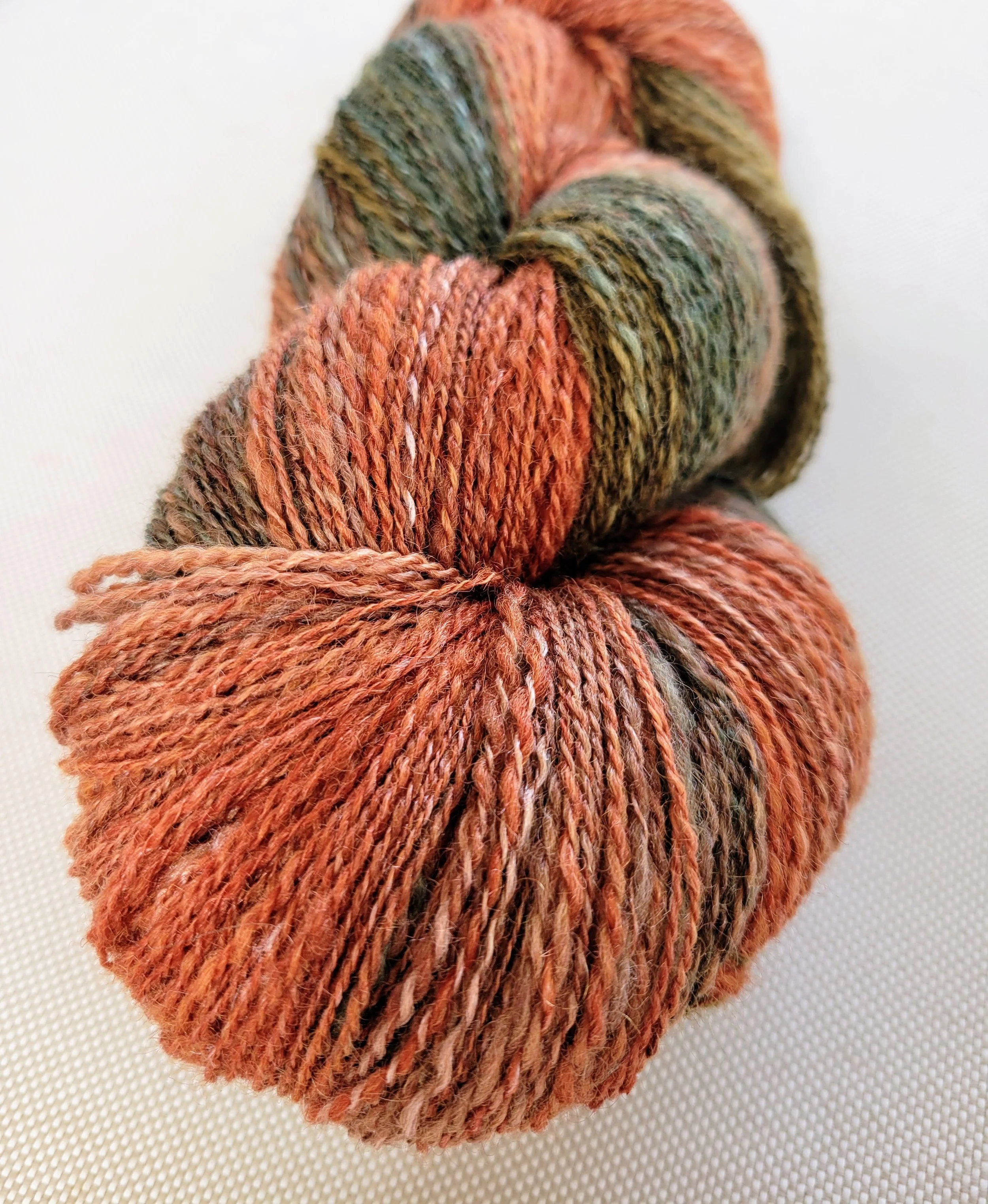
The resulting washed and dried skein is about 450 yards of fingering weight yarn. I have a sweater pattern in mind with colourwork stripes and I’m excited to see how this gradient plays out!
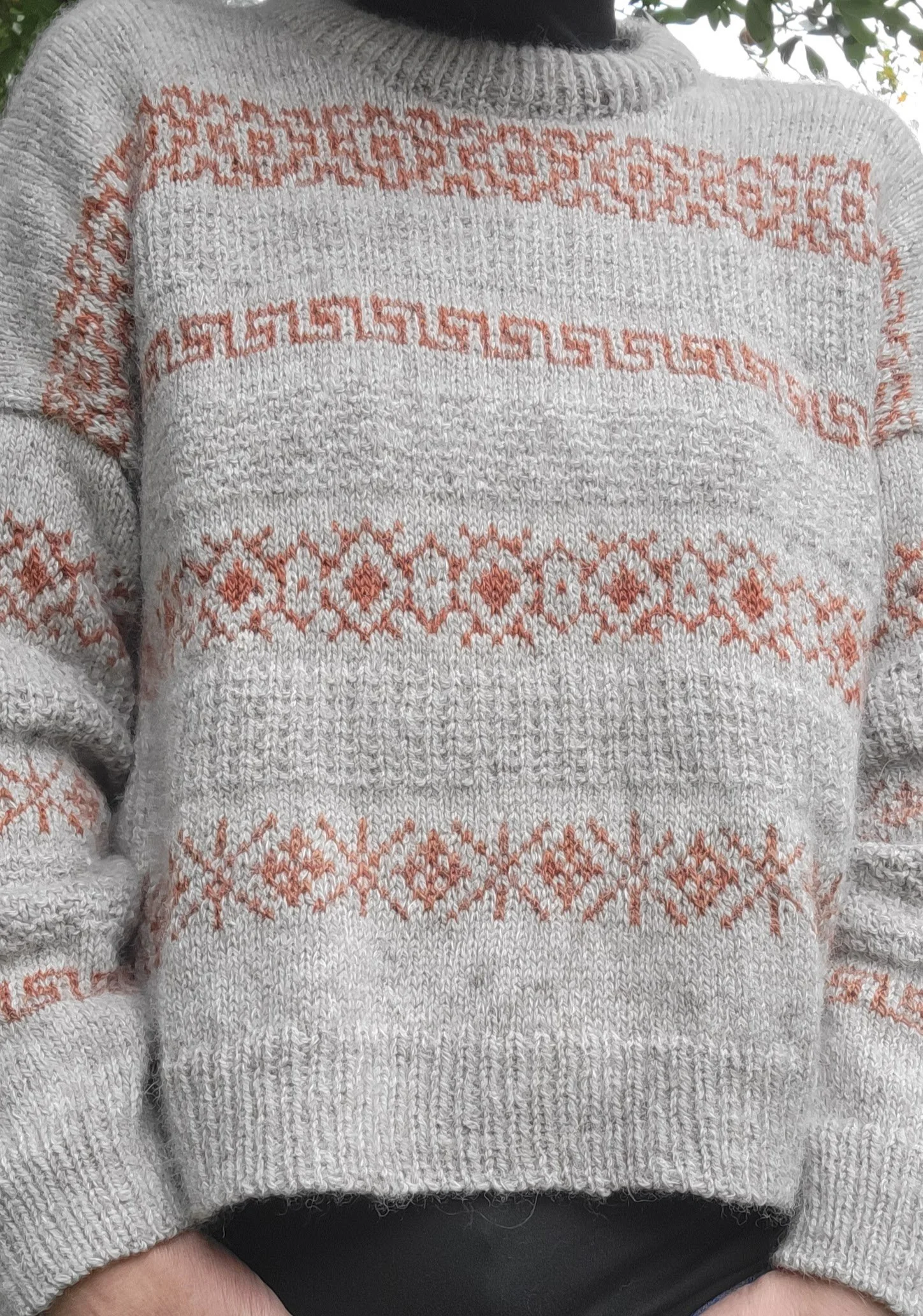
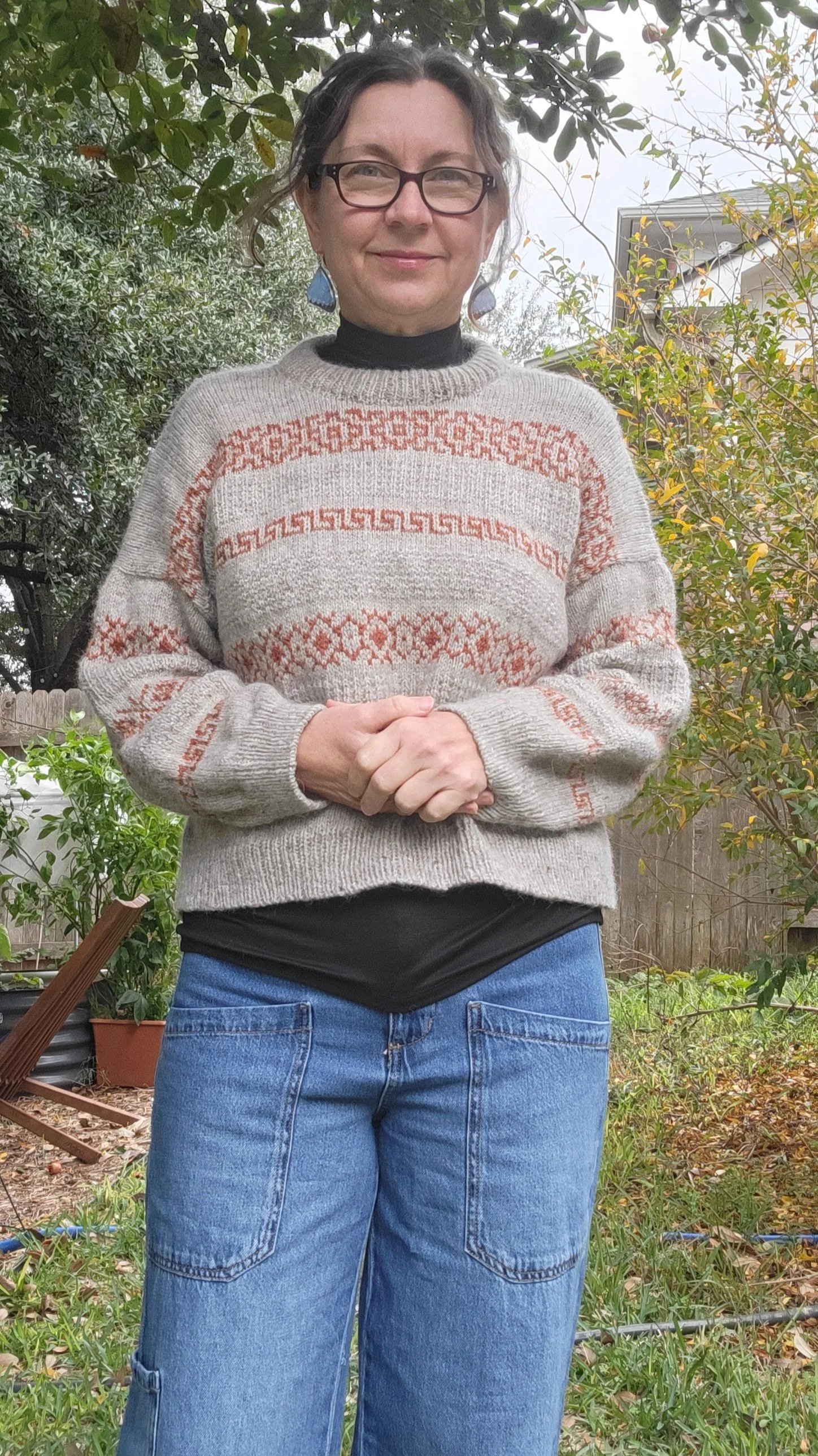
Update! The Terracotta sweater by LeKnit was a great fit for this handspun. I never reached the greens in the yarn though so I’ll need to find another project for the rest of the yarn.