Dyeing with Lichen
Lichen is a composite organism of photosynthesizing algae or cyanobacteria and protective, structural fungi living in beautiful, elegant symbiosis. Lichen is very slow-growing and, because of this, shouldn’t be collected from live plants. I collect lichen from fallen branches, where it can no longer survive, or as patches that have fallen cleanly from a tree. Its slow growth also makes it a poor candidate for large batch dyeing.
The green leafy lichen below is Parmotrema perforatum and grows on our local oak trees. It’s a “foliose” variety named as such for its leaf-looking structure. The tiny yellow lichen is less common, or maybe just harder to spot because of its size. Its name is Teloschistes exilis and it’s a “fruticose” type that resembles a tiny shrub with branches.
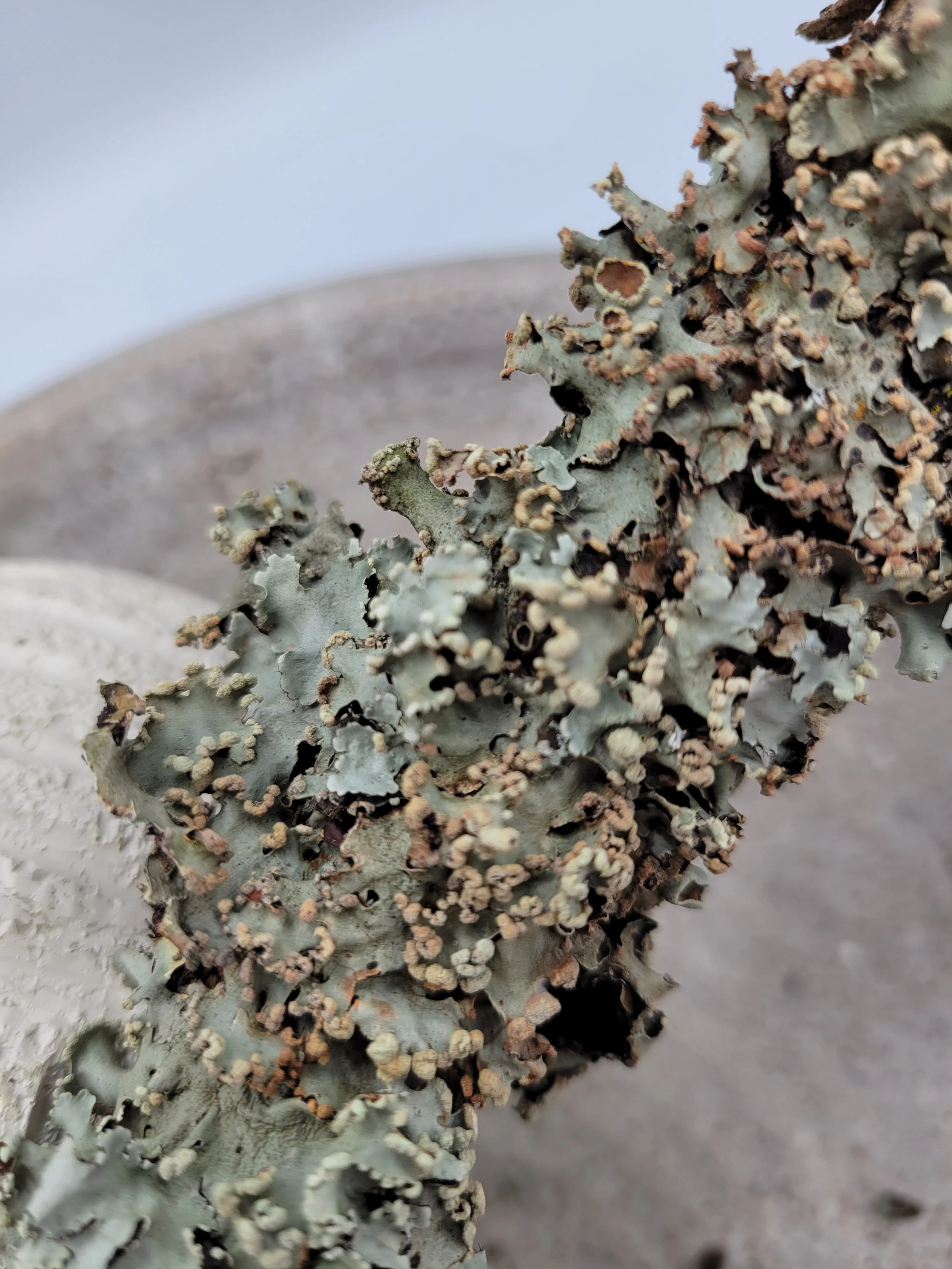
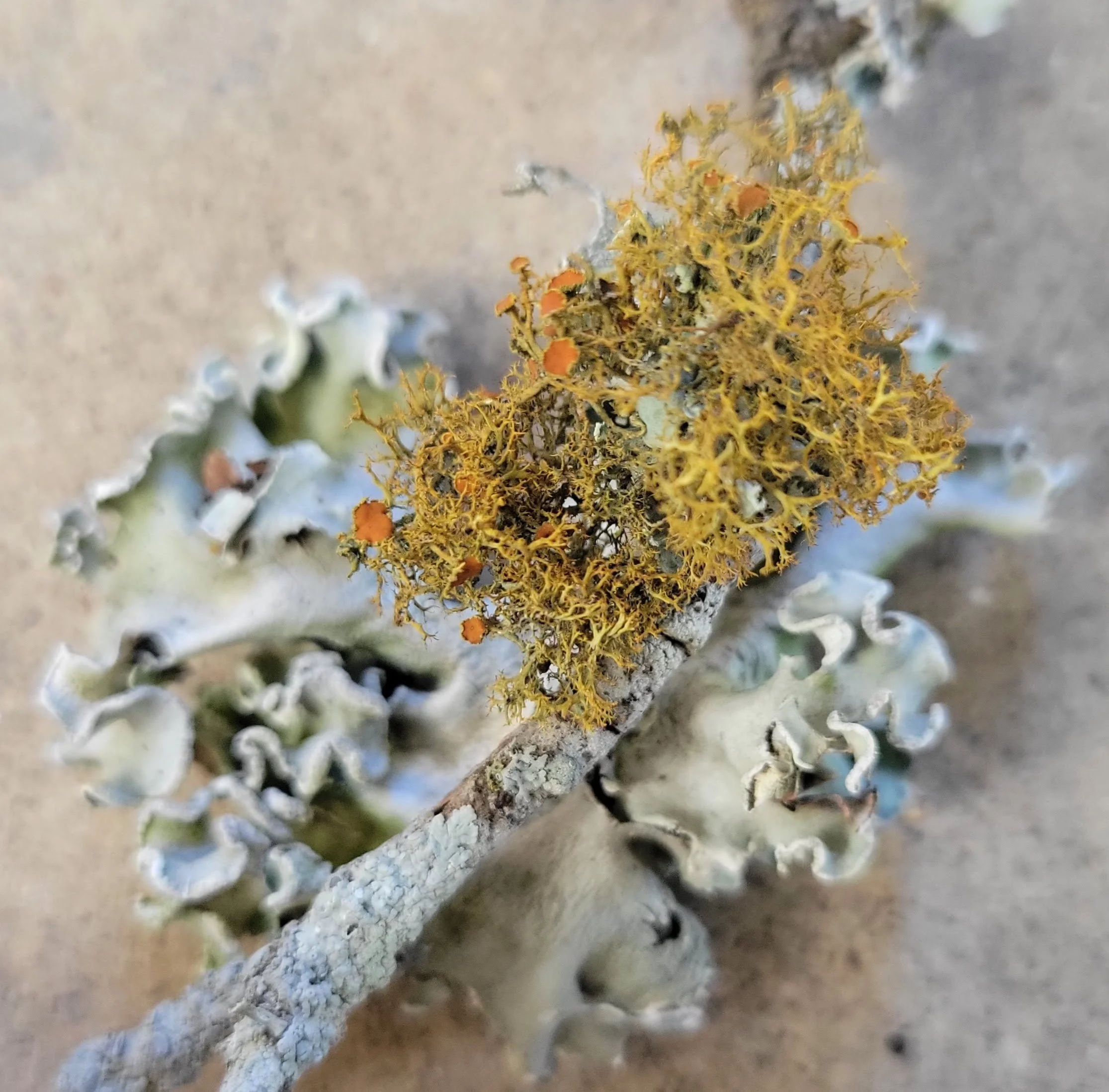
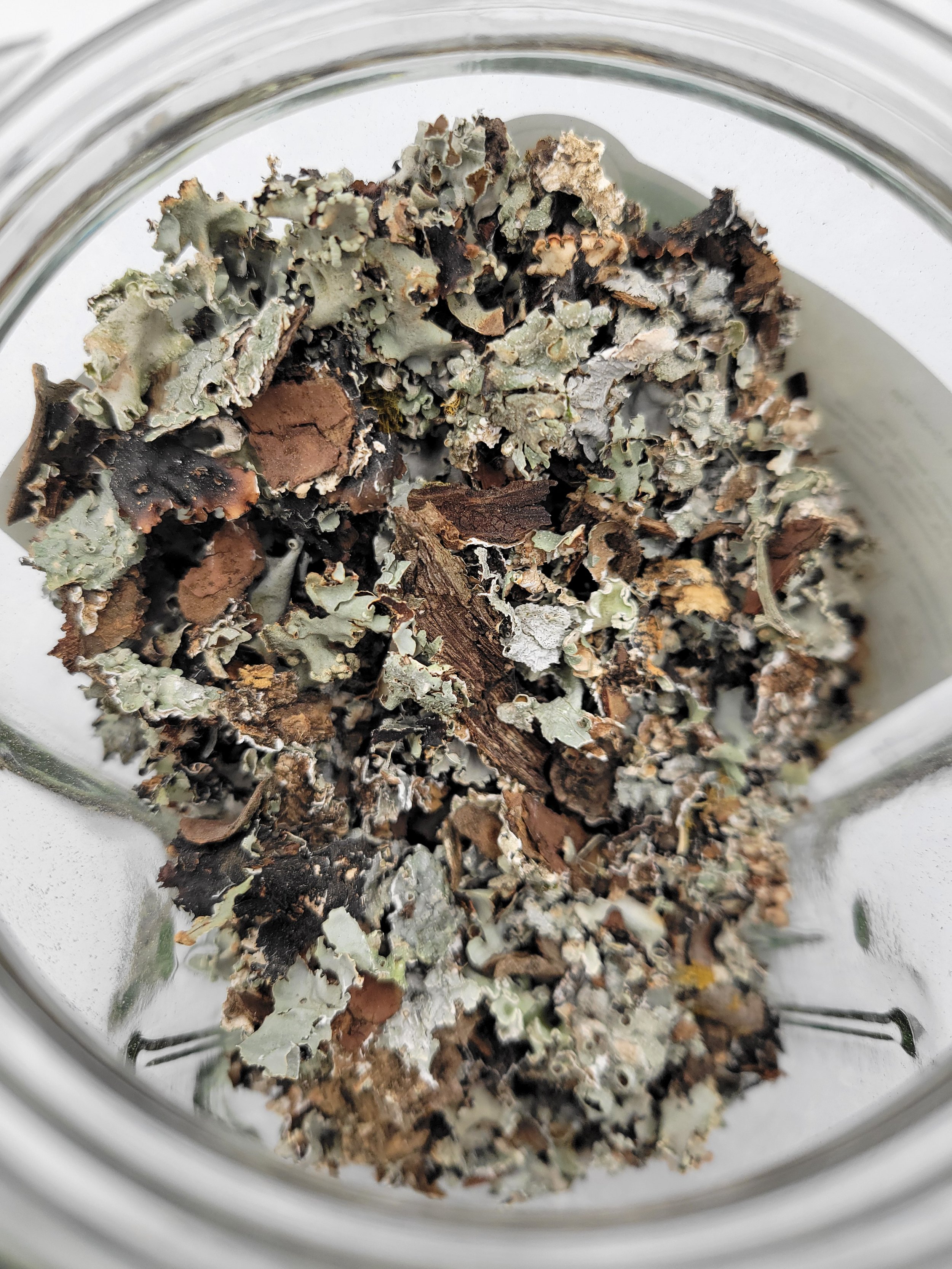
I’ve been opportunistically gathering these two types of lichen on trail walks with my dog. On some walks, we’ll find none at all. Other times, I’ll fill a grocery bag. Once home, I strip off the lichen with a small knife. It’s difficult to extract it cleanly from the bark but that’s fine. Leaving a little bark in the mix provides tannins that act as a mordant so there’s no need to premordant your yarn.
Some lichen can be fermented in ammonia for weeks to produce a purple dye. I didn’t think these varieties would produce purple and I’m not willing to work with smelly ammonia. I did a bleach test to be sure. If adding a drop of bleach turns your lichen pink, it contains chemicals that will react with ammonia to produce a purple dye. Mine did not react.
Fun fact, these lichen are actually edible and beneficial once prepared the correct way. Again, not really interested in that.
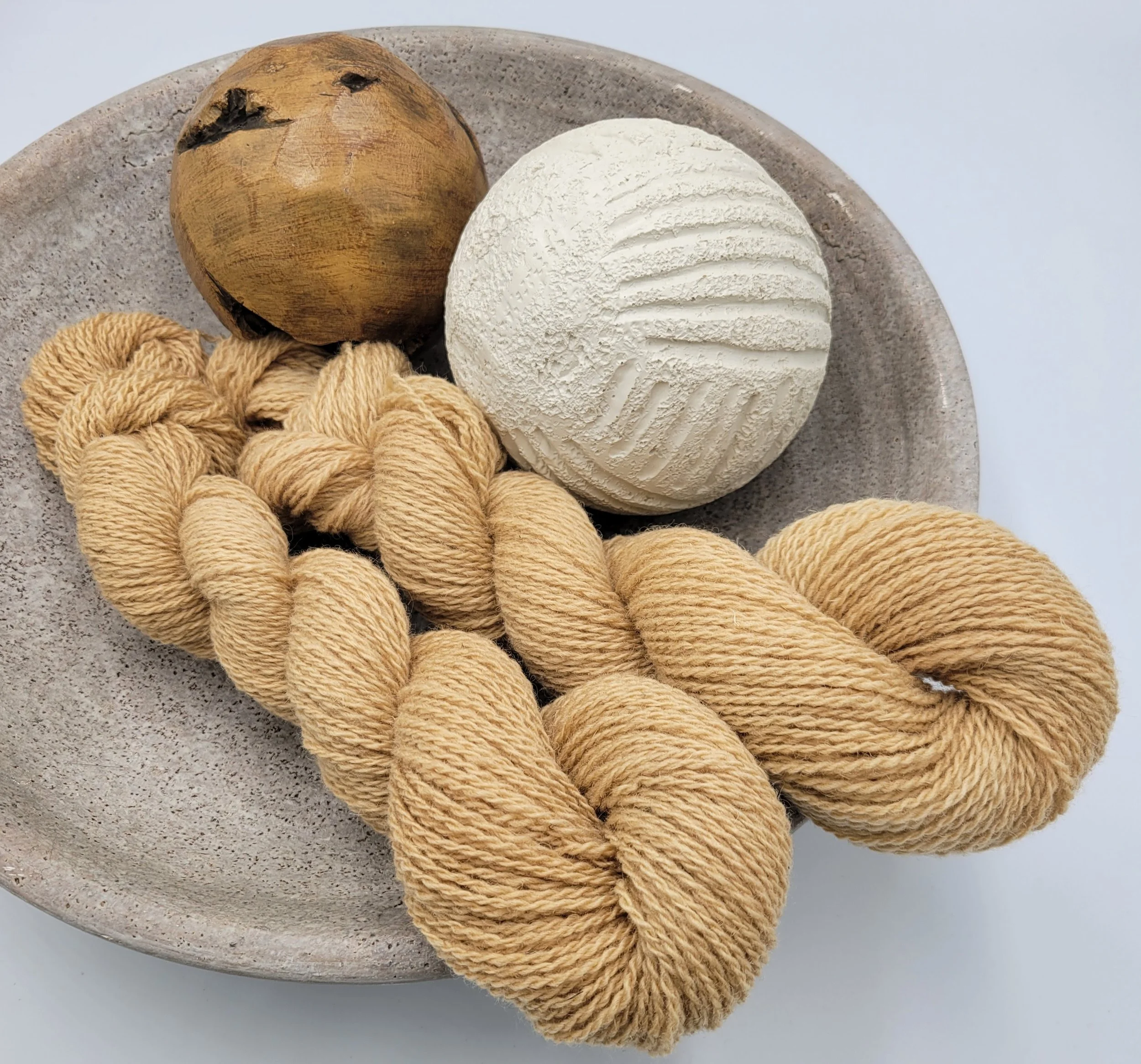
Here’s a batch I collected and covered in hot sodium bicarbonate solution with a pH of about 10. I let it steep for a few days to get that gorgeous caramel colour.
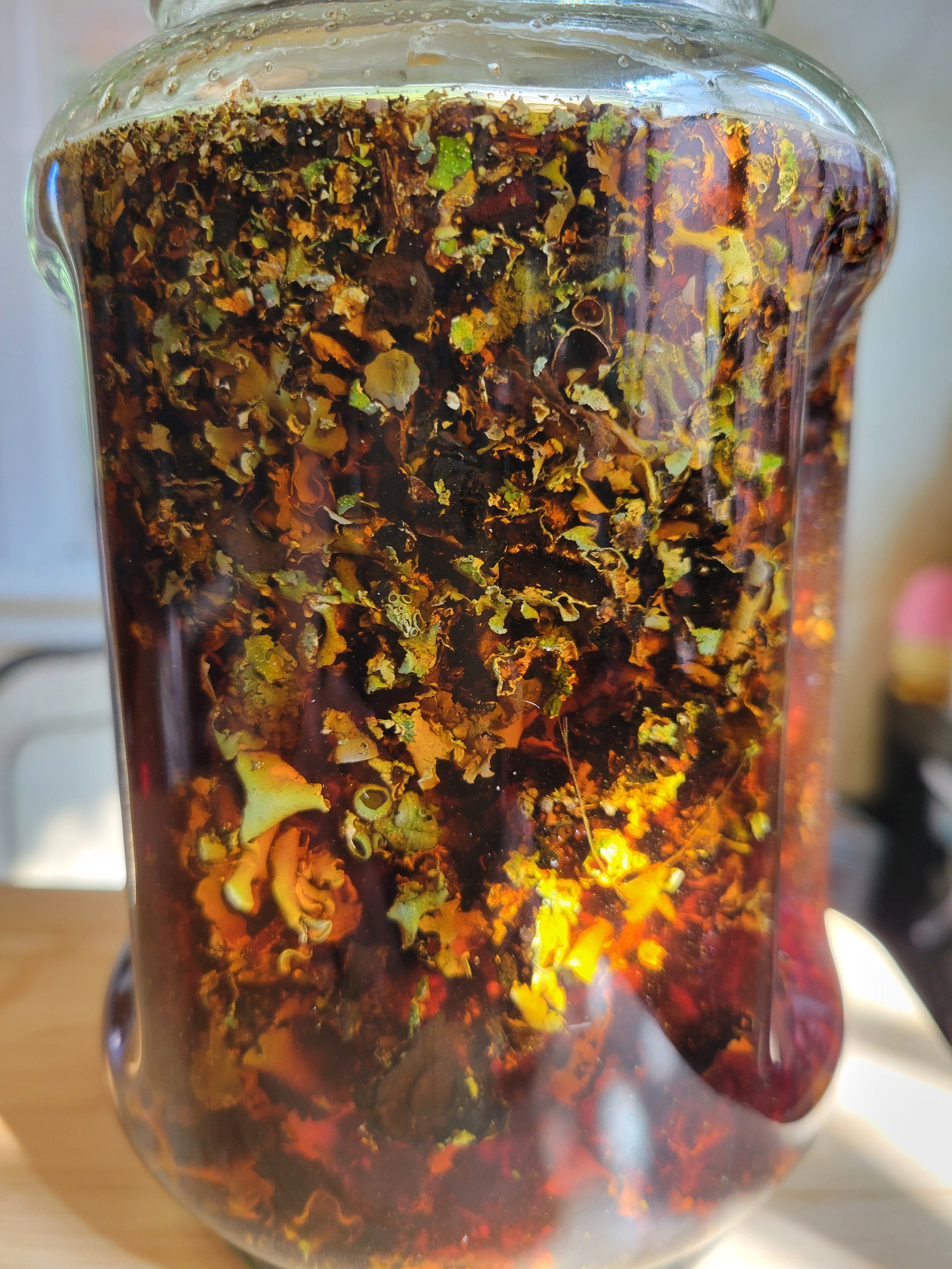
Once steeped, I filtered the dye into a dye pot, added two skeins of natural Eriu BFL/Romney, and gently heated the bath for about half an hour. I let it cool completely before removing the yarn and rinsing the excess dye. The resulting caramel colour is lighter than the solution but still very pretty. Knowing the base colour these lichens produce, it will be fun to mix them with other natural dyes and modifiers in the future to explore more potential colours.