Tour de Fleece 2026 Fibre Prep
I don’t have any particular spinning goals this year other than spinning softer, bouncier superwash. Instead, I’m focussed on colour play, using up some stash, and having fun.
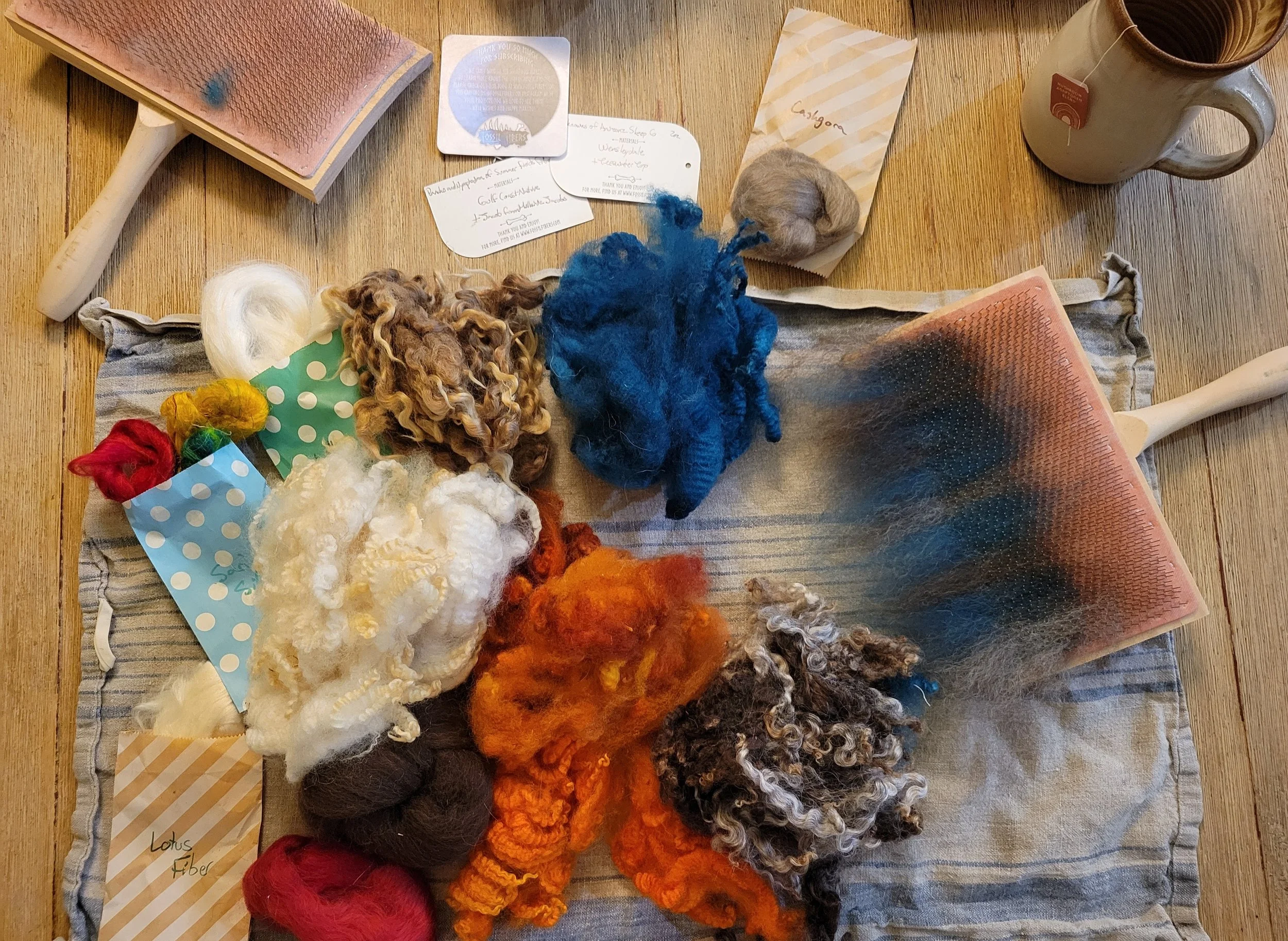
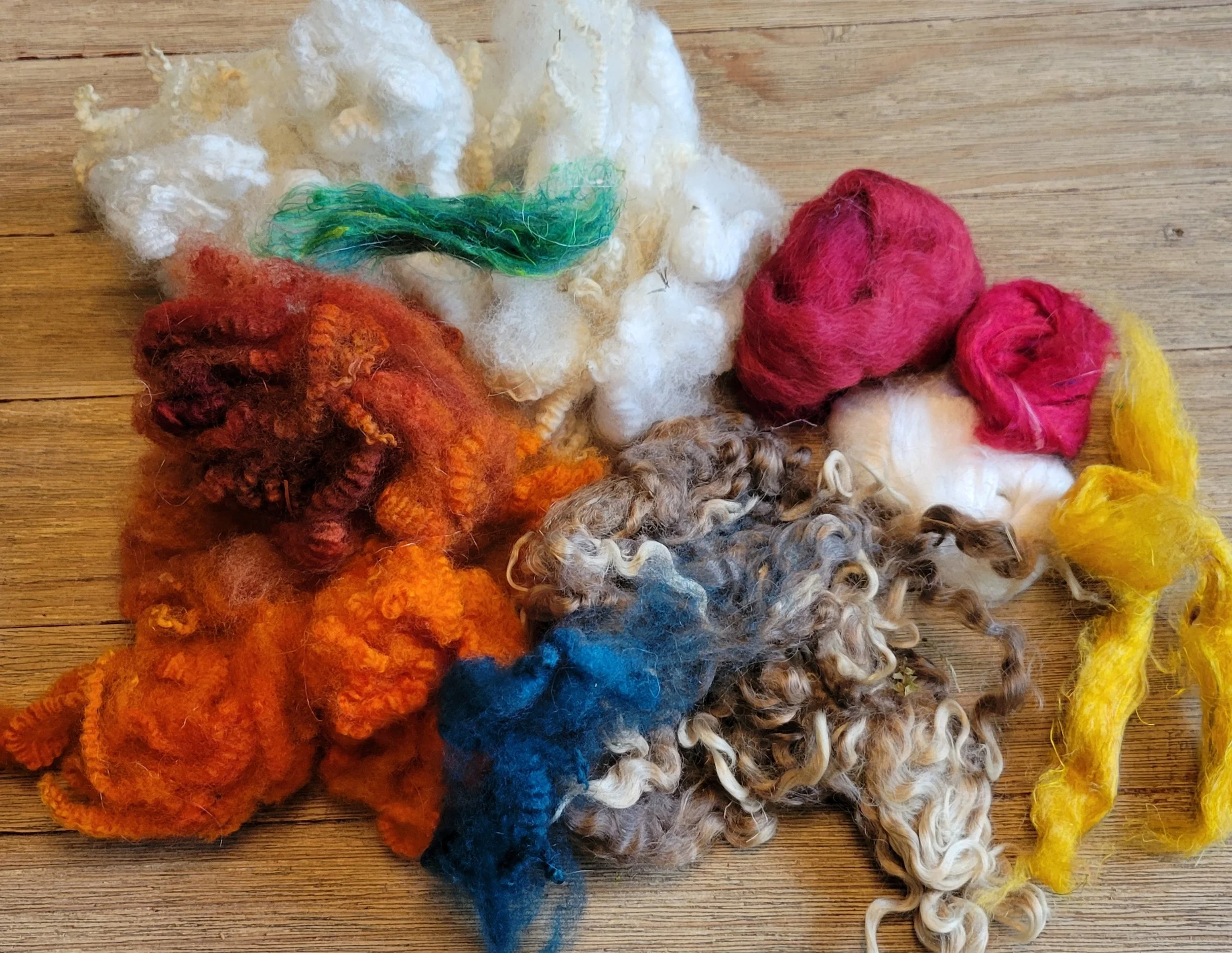
I have some leftover bits, a hot mess really, from Fossil Fibers; they have a super fun mystery fibre subscription, btw. I couldn’t tell you what’s what in this photo but I can tell you it’s a mix of Gulf coast native, Jacob, Wensleydale, Teeswater, Lotus, Sari silk, Nettle, and Cashgora. And what a rainbow! I’ve had absolutely no idea what to do with all of this for quite some time now but I’m determined to use it up this TdF. So I spread it all out, carded a little, and let it sit while I sorted some other fibre prep.
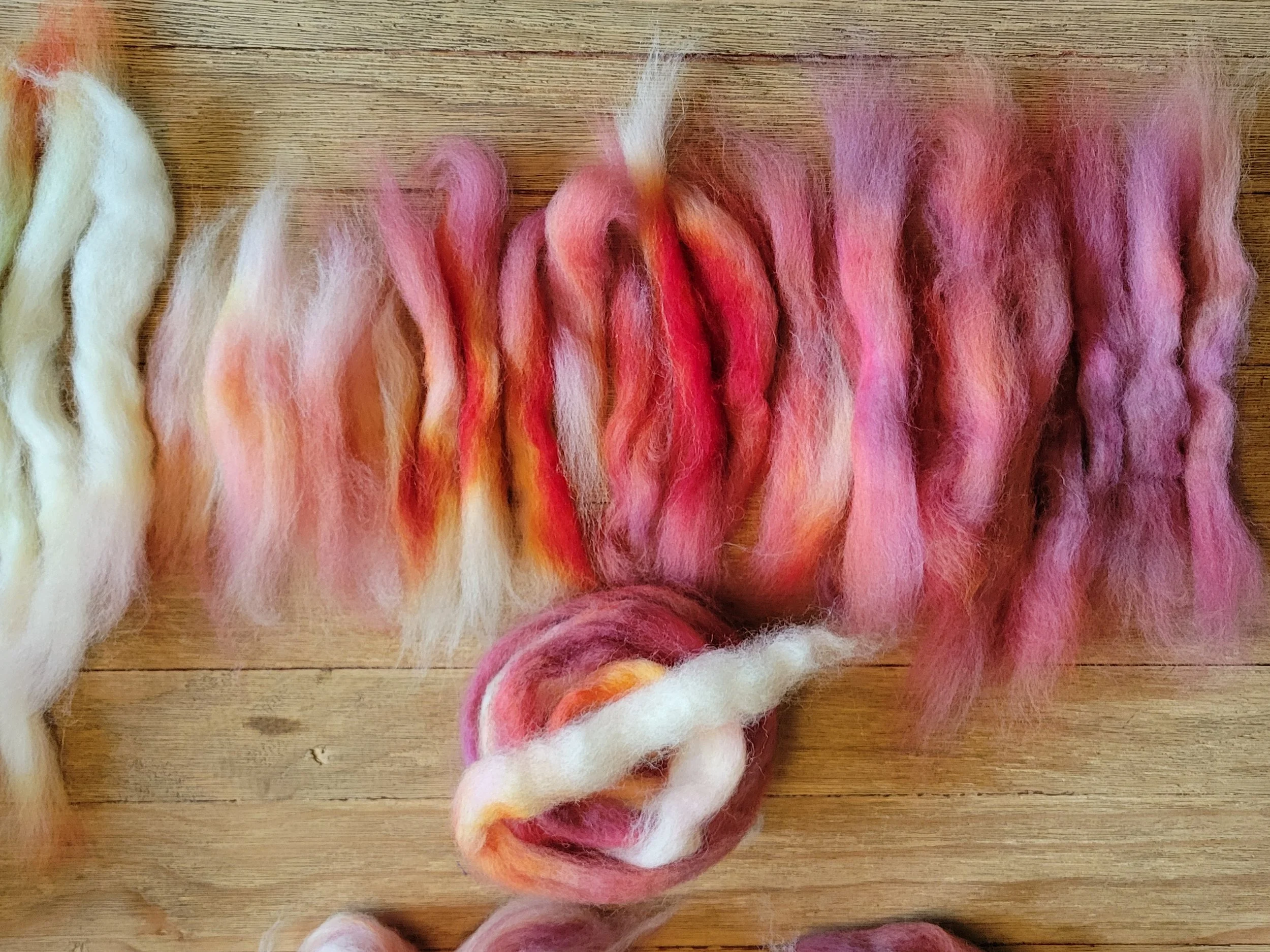
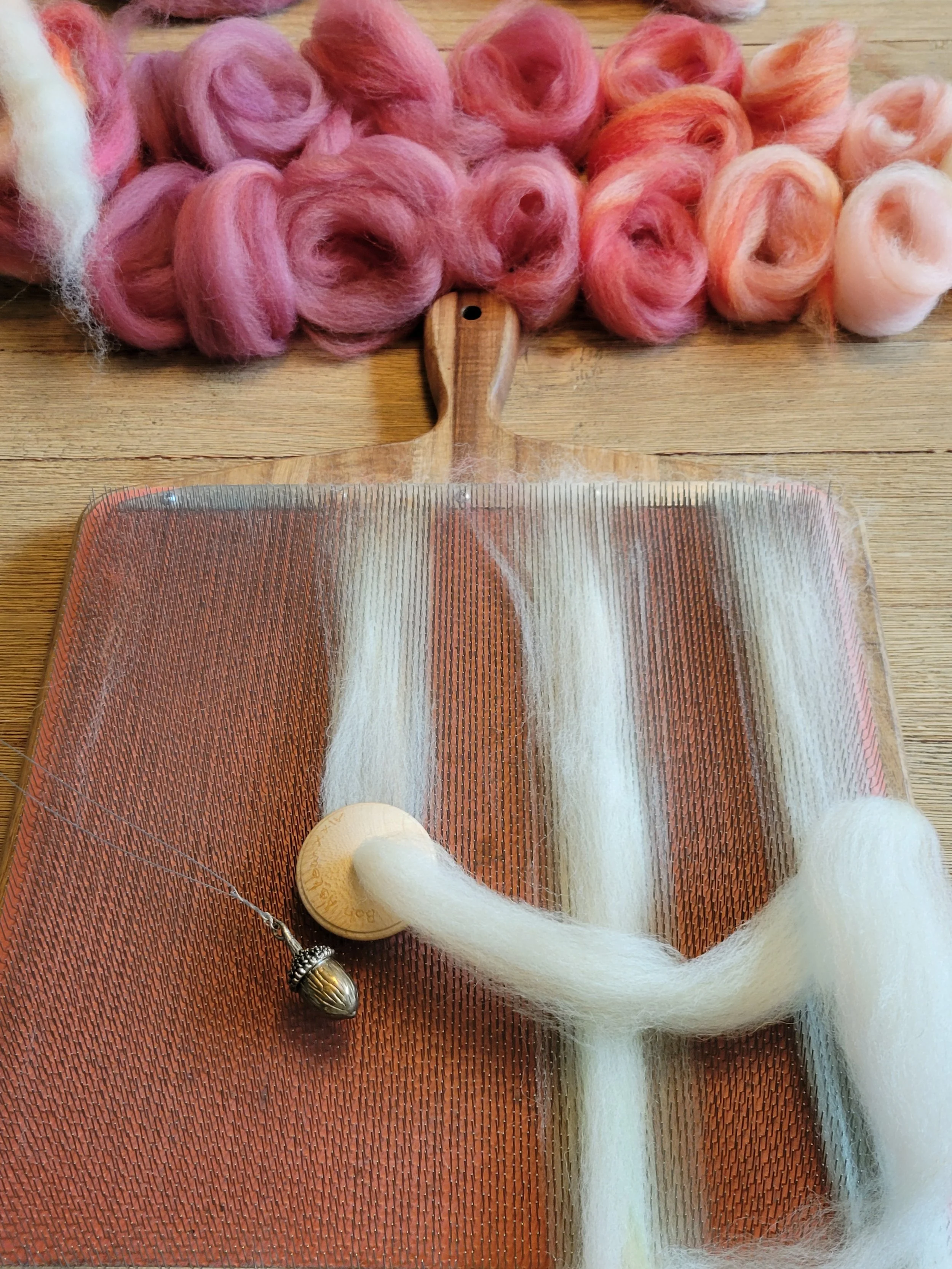
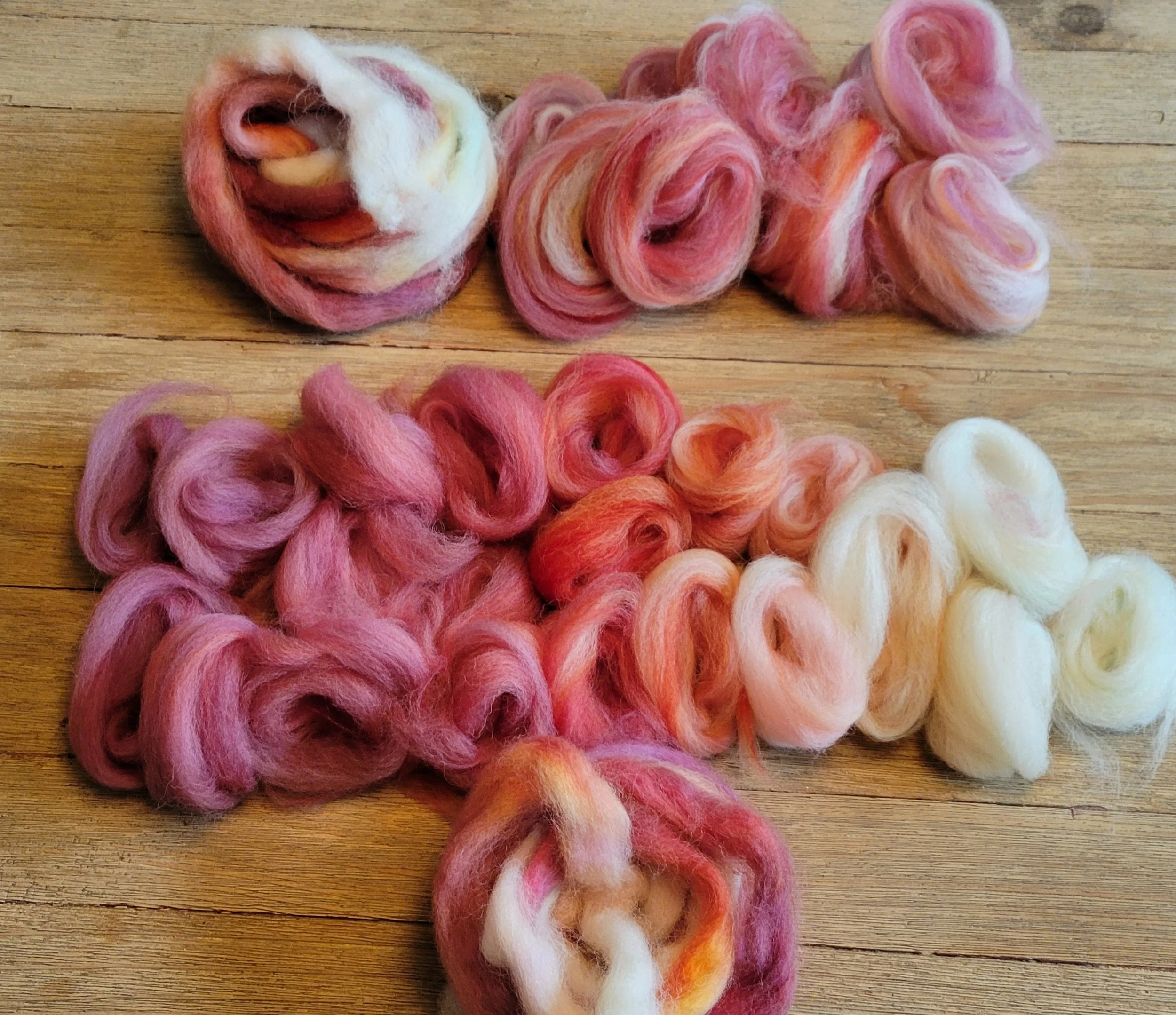
I have an uneven number of the two colourways for Fiber Study Club #2. I split the extra braid of orange Shetland into four long strips. I had no plan yet, I was just trying to get an idea for what to do with this colourway. I pulled apart one of those strips into shorter bits , left photo, and isolated about five colours at the blending board. Some strips were mostly one colour, the purply red for example, and were easy to lay down on the board and diz off. Others were a mix. For those, I laid down as much of one colour as I could then put that strip aside and picked up another. The center photo shows the progression of the colour nests from purply red through red, orange, light orange, then hint-of-blue white. I’ll spin this fade as one singles and a length of fiber as is as the other for a 50 g 2-ply skein.
For the second 50g, I separated one strip into shorter bits again but blended these as evenly as I could on the blending board and dizzed these off, top of right photo. These will be plied with a length of fiber as is.
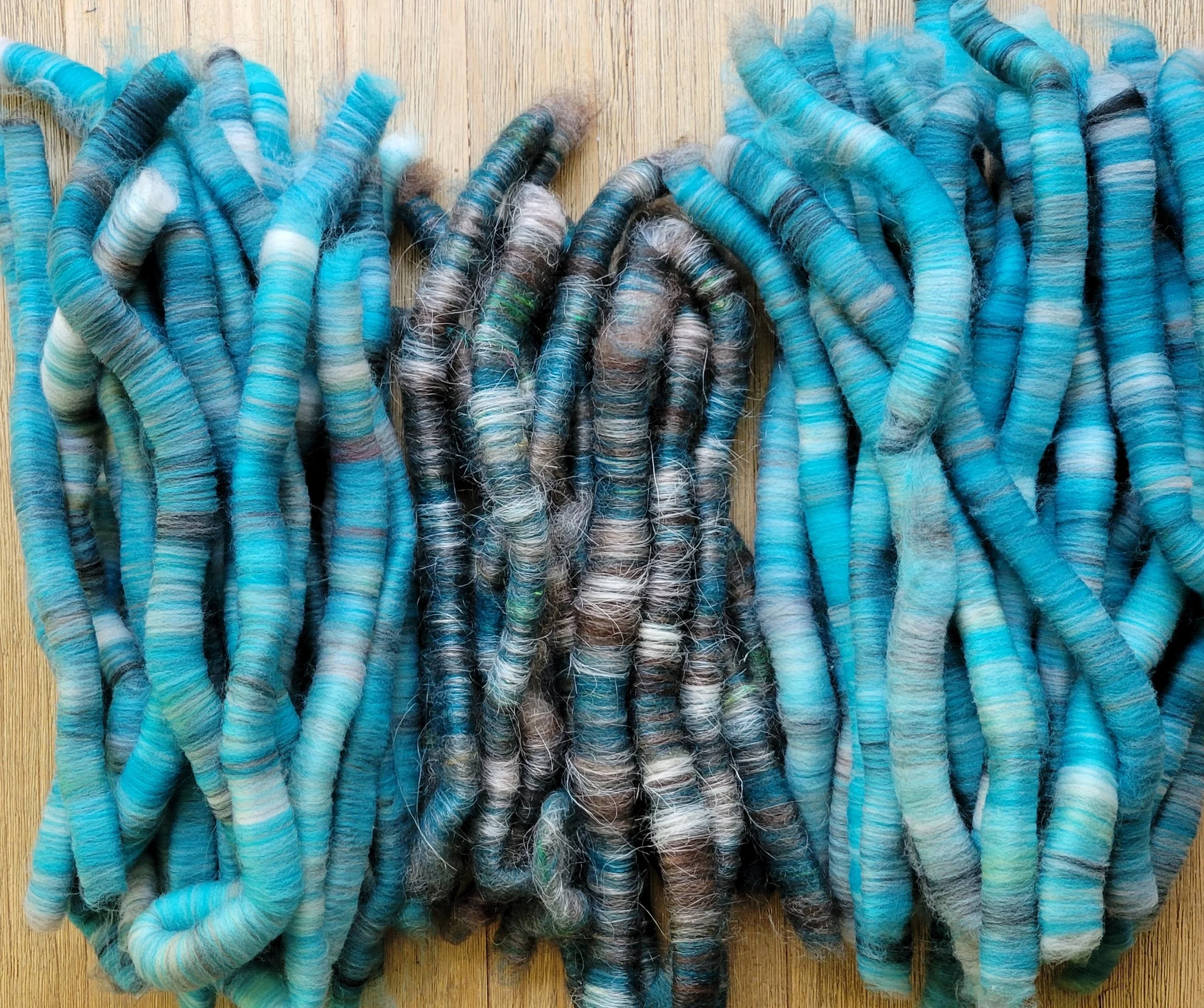
Next, I chose a braid of Lily Pond and Lily Pad and a bit of black corriedale. I tried dizzing these fibers together but, when I spun them, the black corrie was not well incorporated. I liked how the black gave the colours more dimension though so I took this to the blending board and made rolags instead.
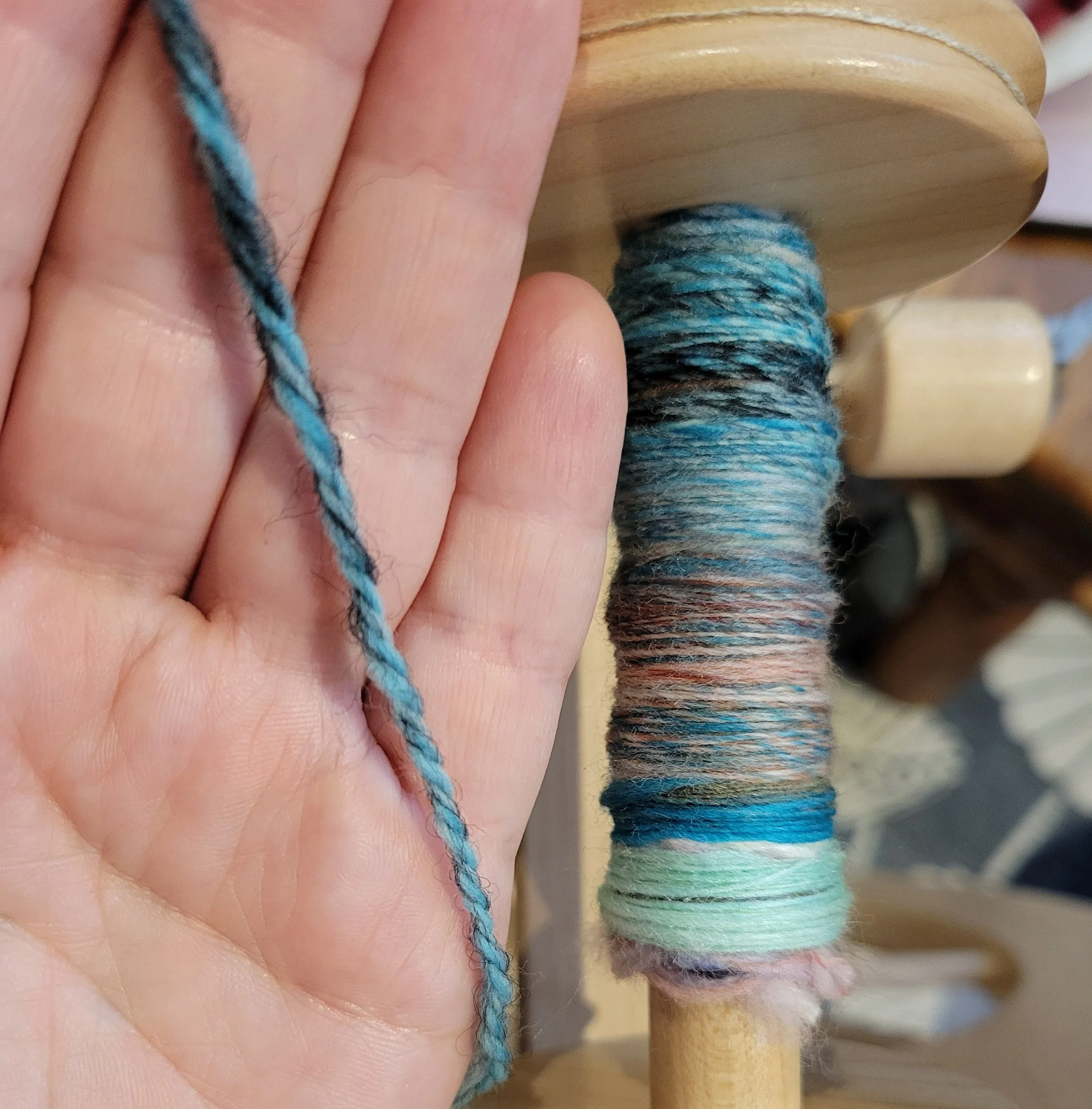
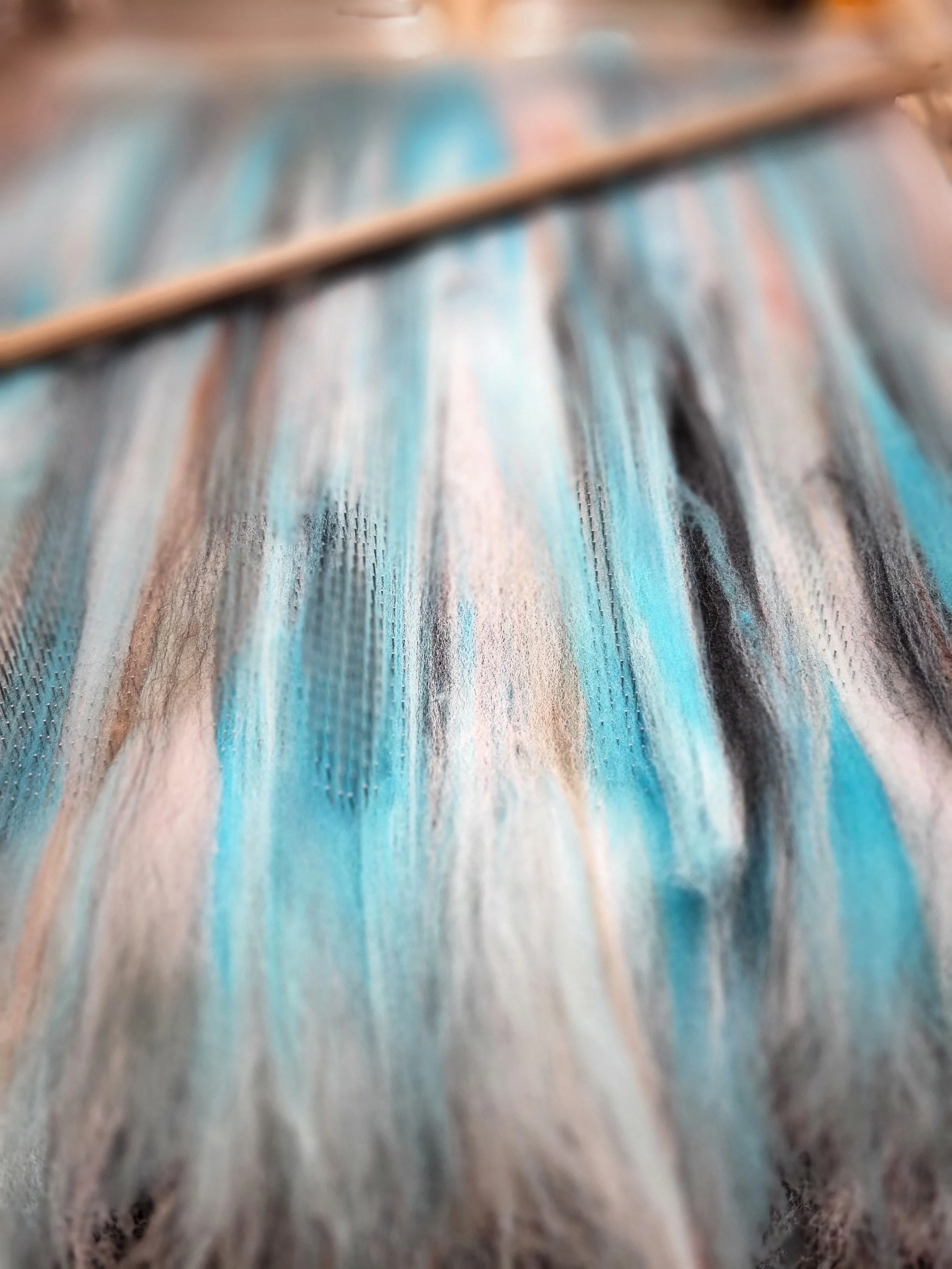
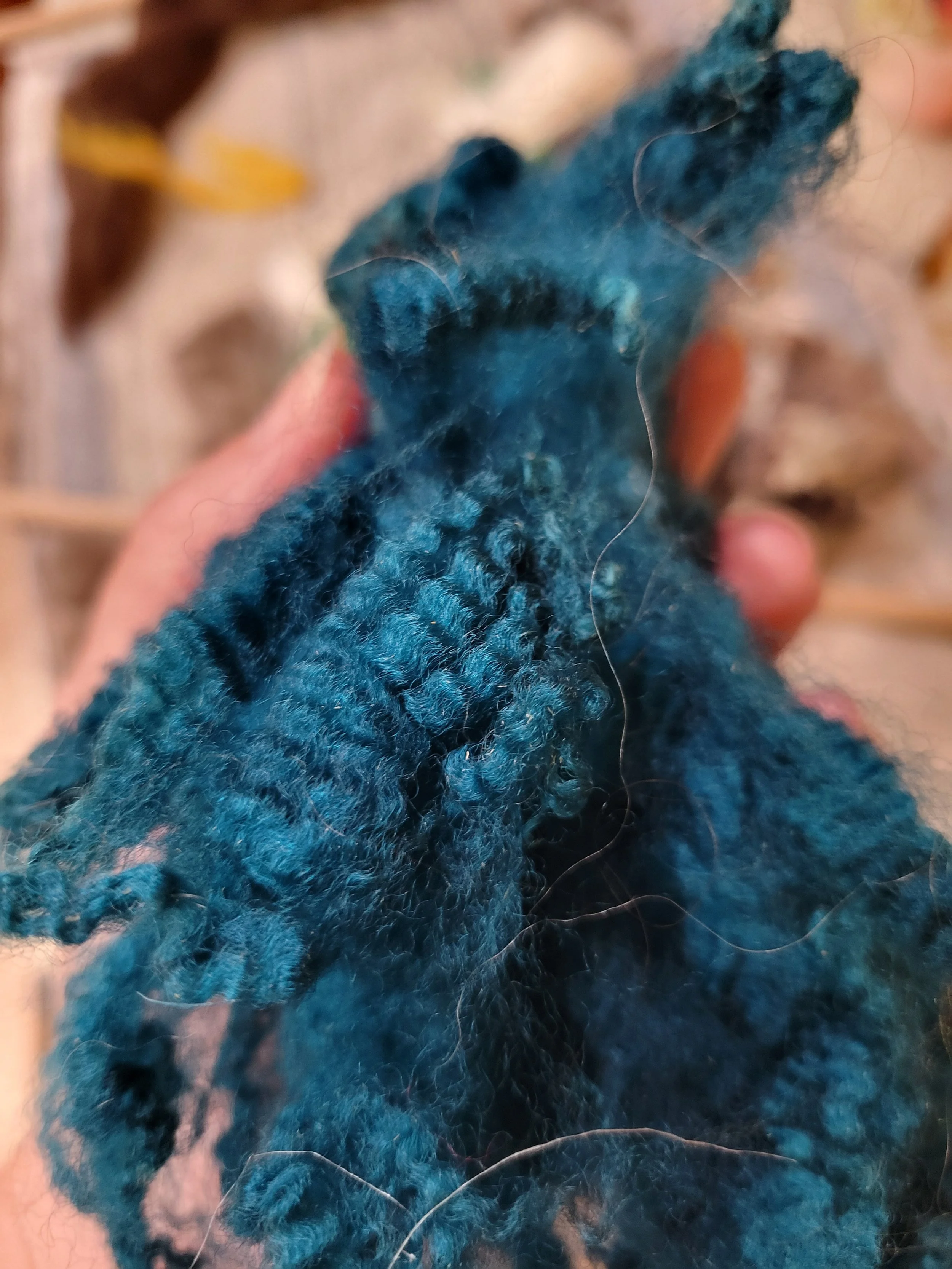
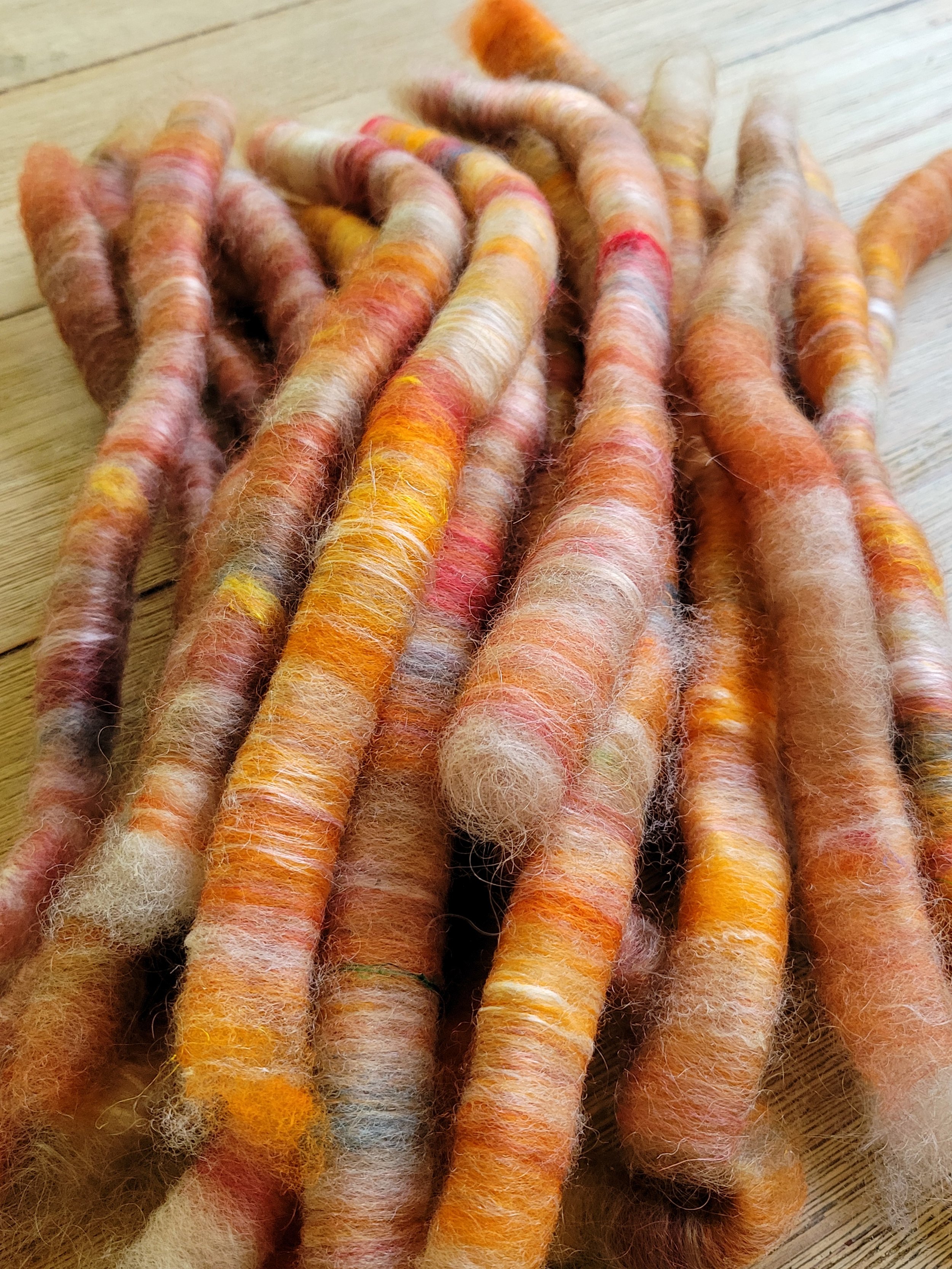
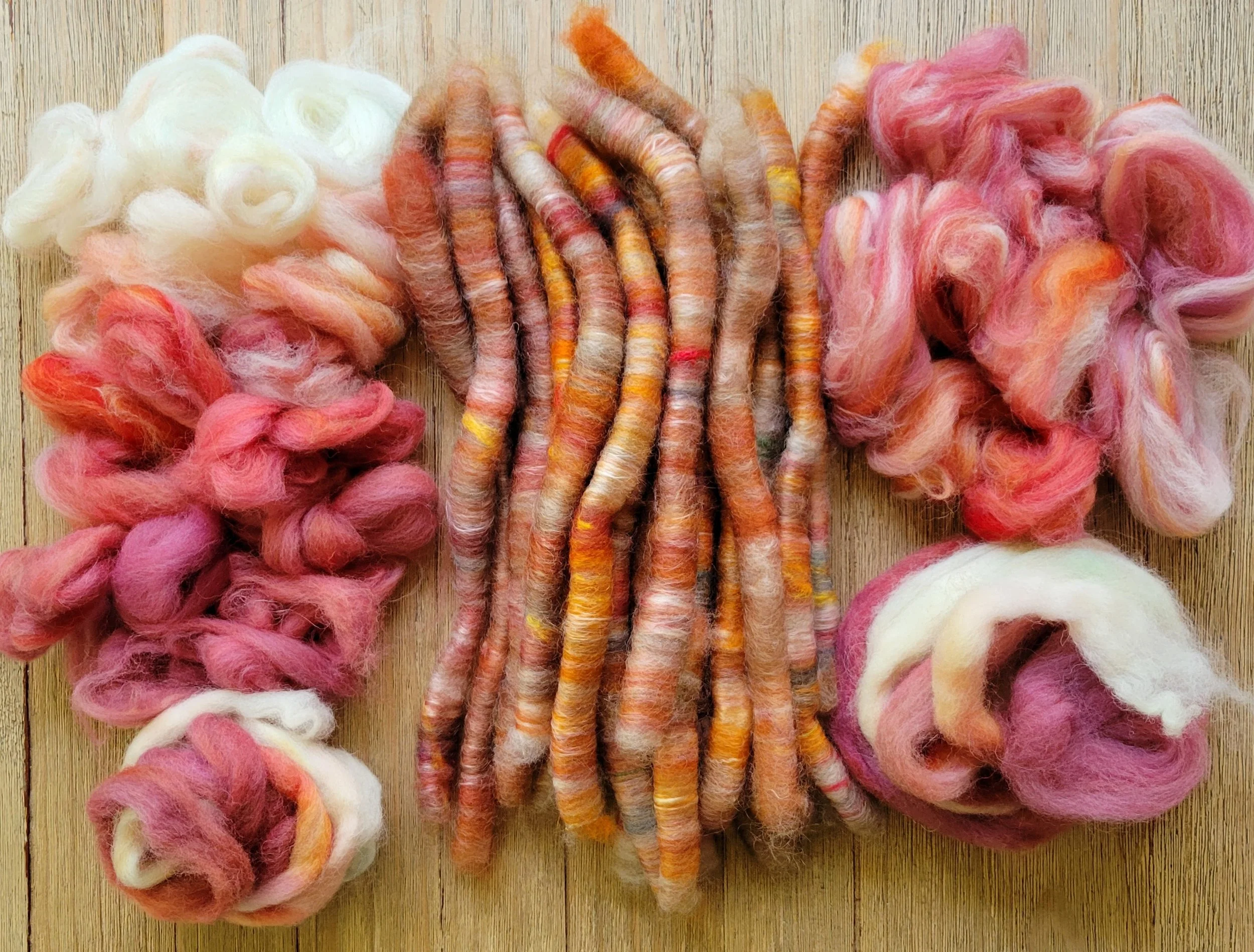
Seeing these orange nests and blue rolags finally gave me an idea of what to do with that hot mess. I separated it into warm and cool piles of fibre, leaving a hint of each in the other, and finished hand carding the unprocessed wool. The blue “hot mess” rolags are very messy and not well blended but they are gorgeous! I know I won’t be wearing these in a garment so I don’t mind at all how they turn out. I’ve been saving messy spins like this to someday work up into an art weave. This yarn will fit that use nicely.
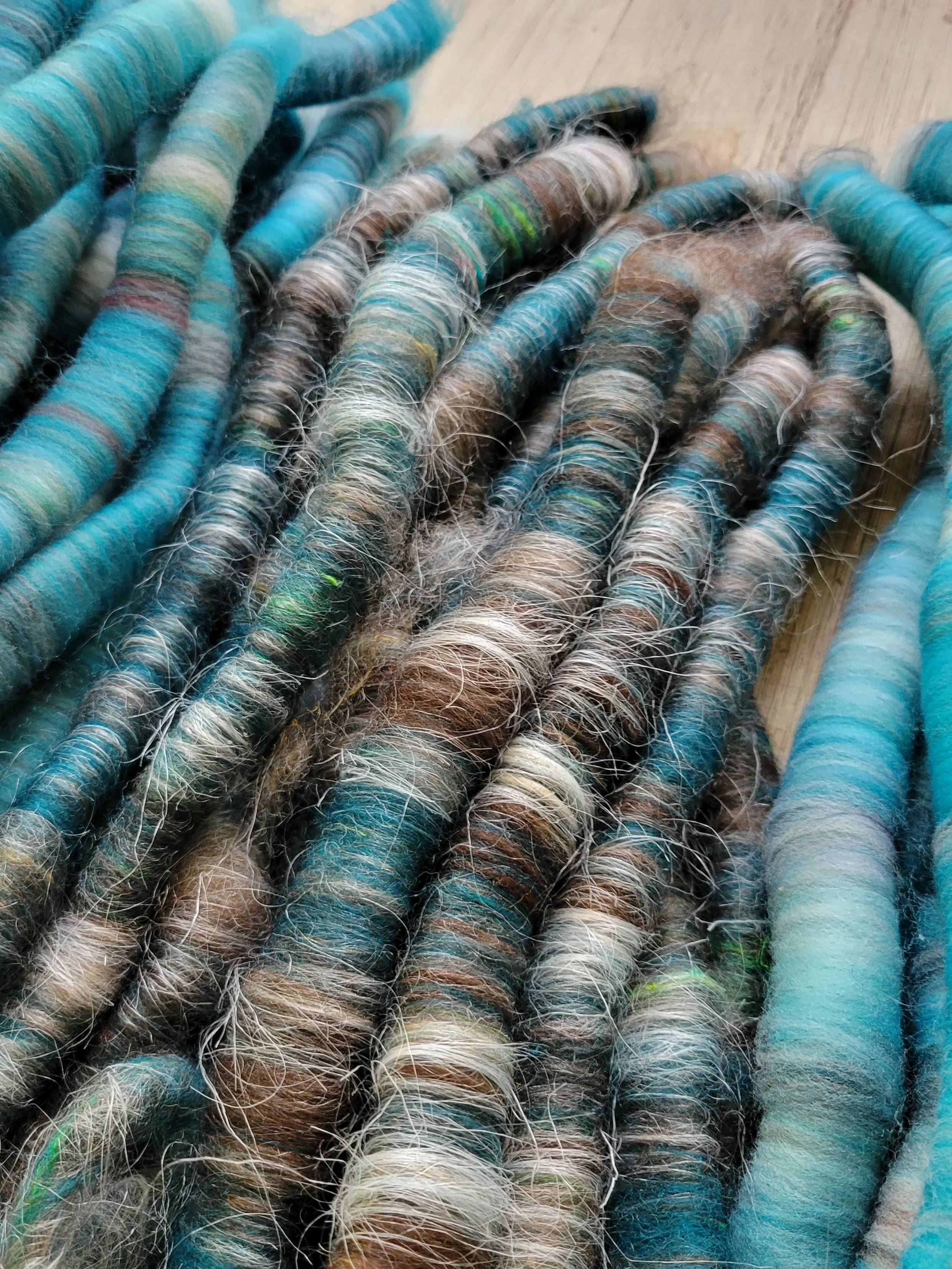
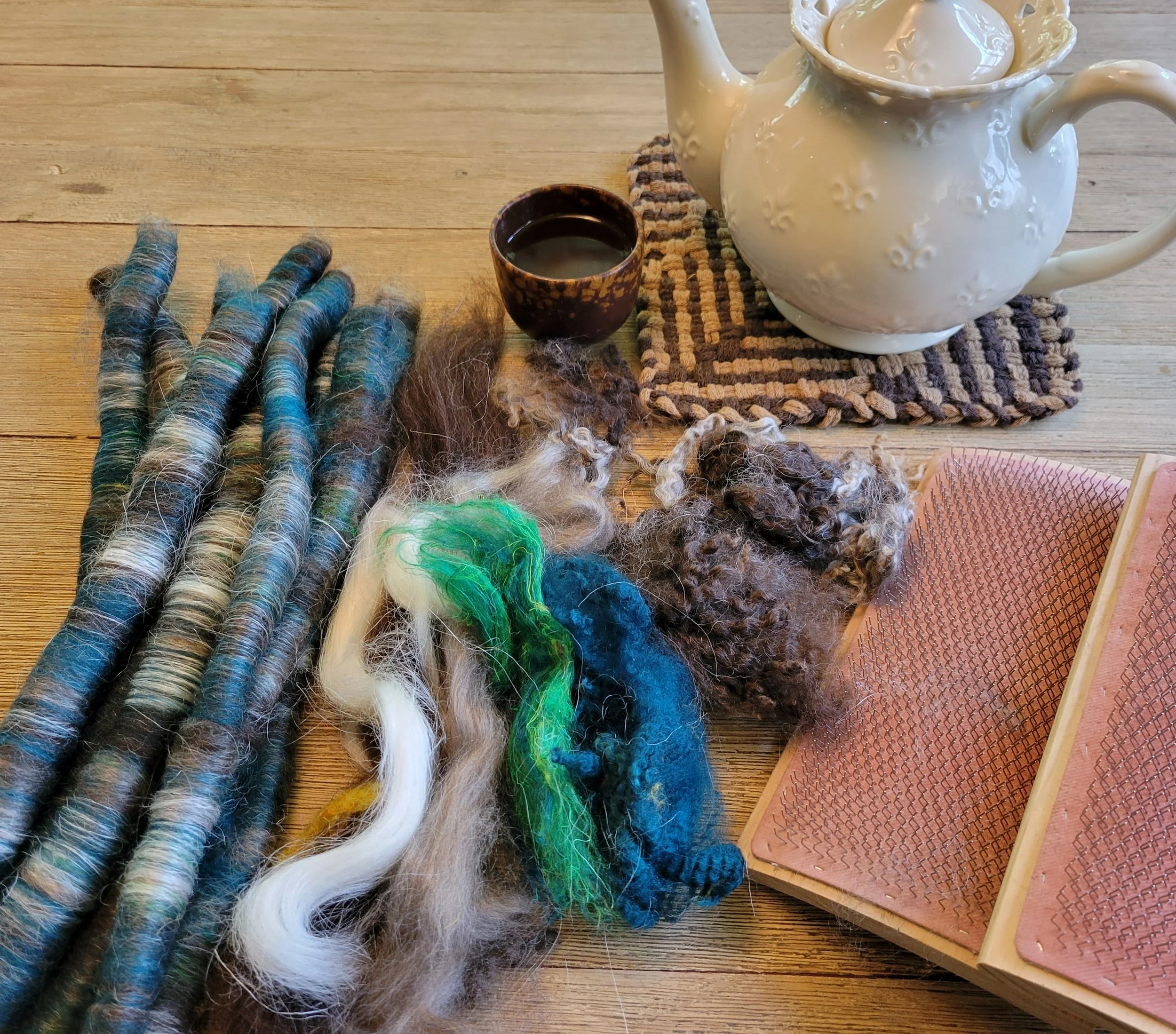
And here are the “hot mess” orange rolags. They work so nicely with the shetland colours. I’m not sure what I’ll do with these yet but they are better blended than the blue ones. I might sample all 3 of these oranges together.
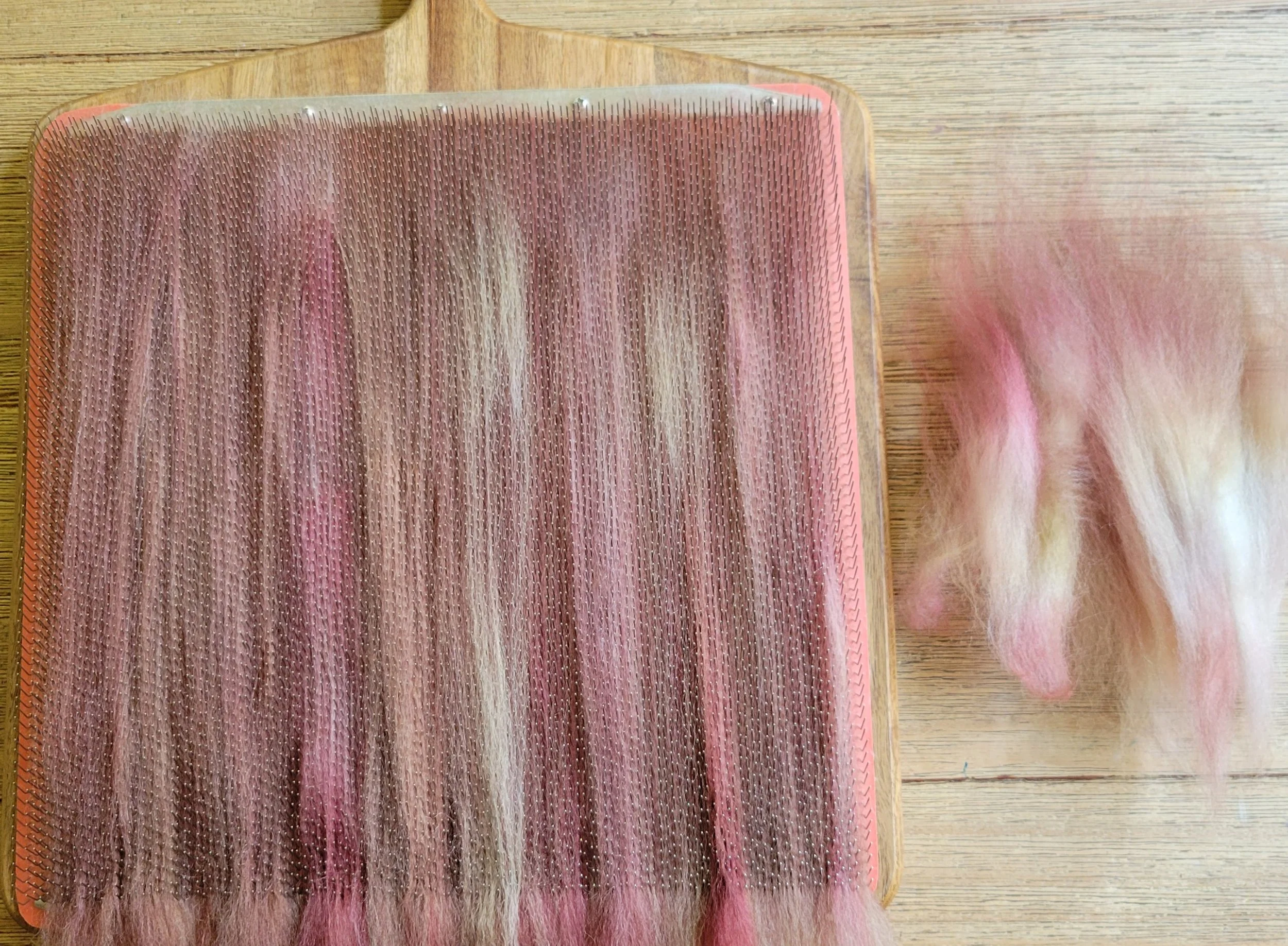
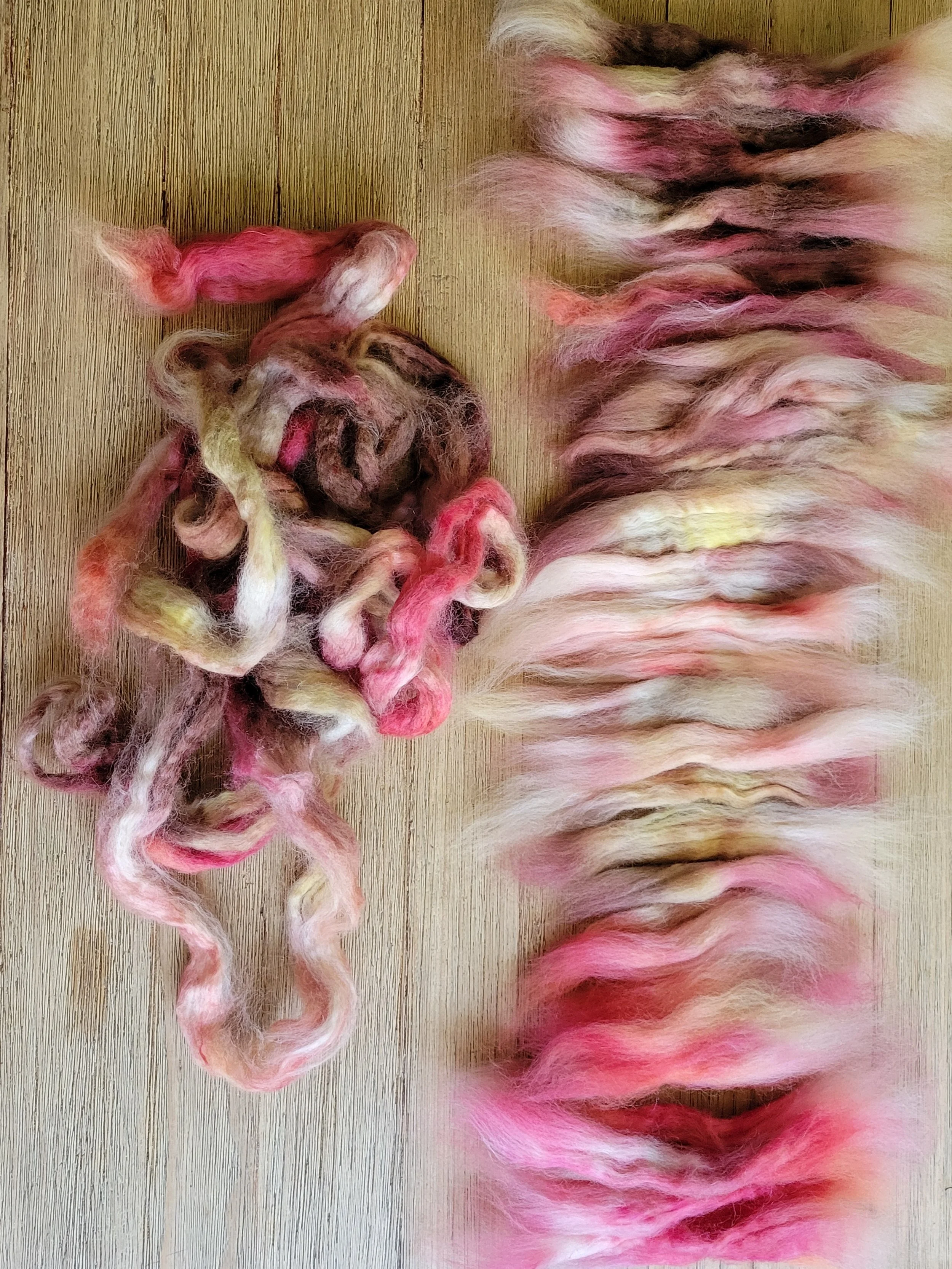
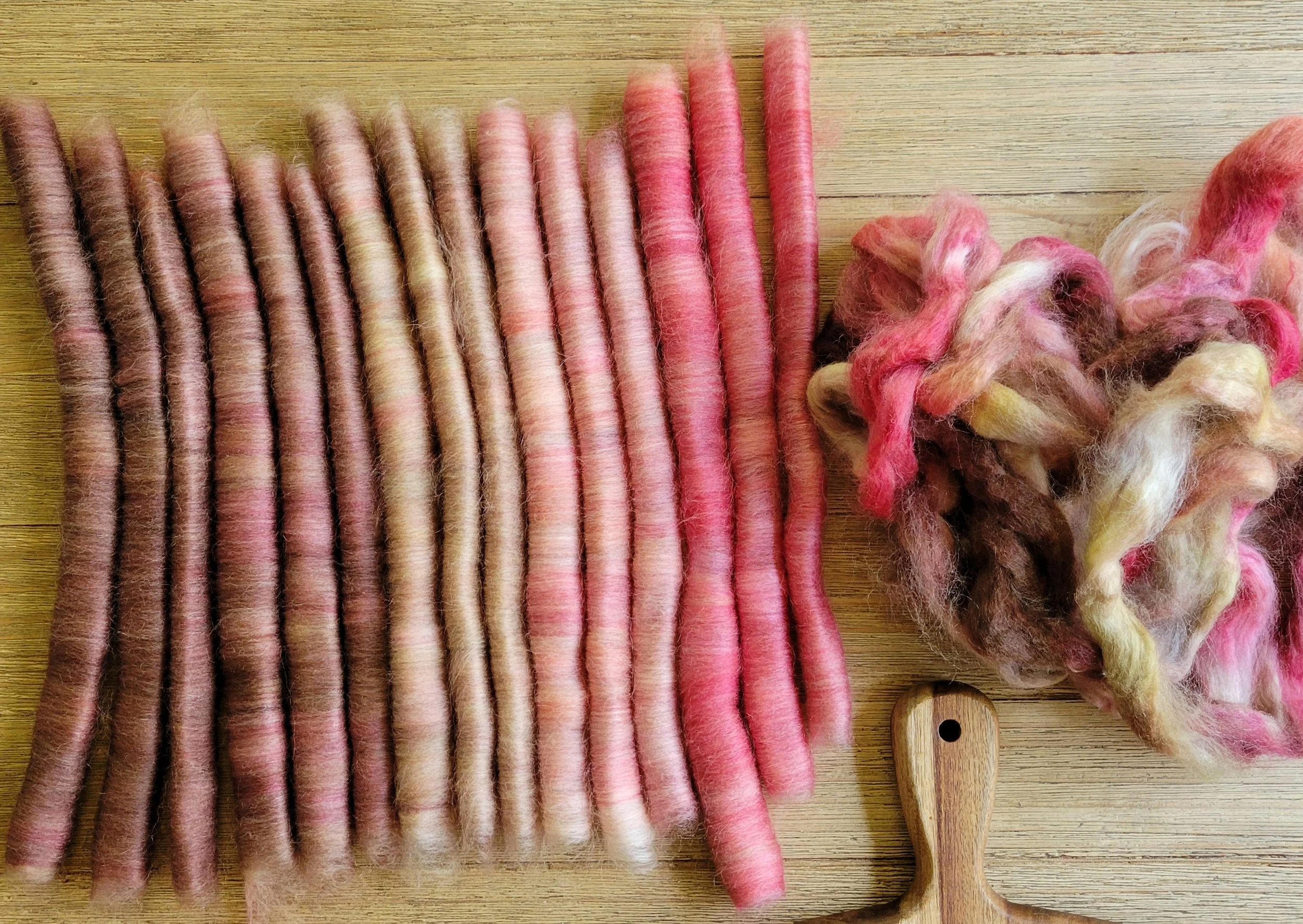
Last but definitely not least is this stunning “apple picking” Trifecta fibre from Sweet Georgia yarns. This was calling out to be a gradient for some colourwork so that’s what it will be. This is another example where much of the colour separation was done at the blending board because there’s only so much colour separation and isolation you can do by pulling the fibre apart. It takes time and patience but, personally, I think this is the funnest part of fibre preparation.
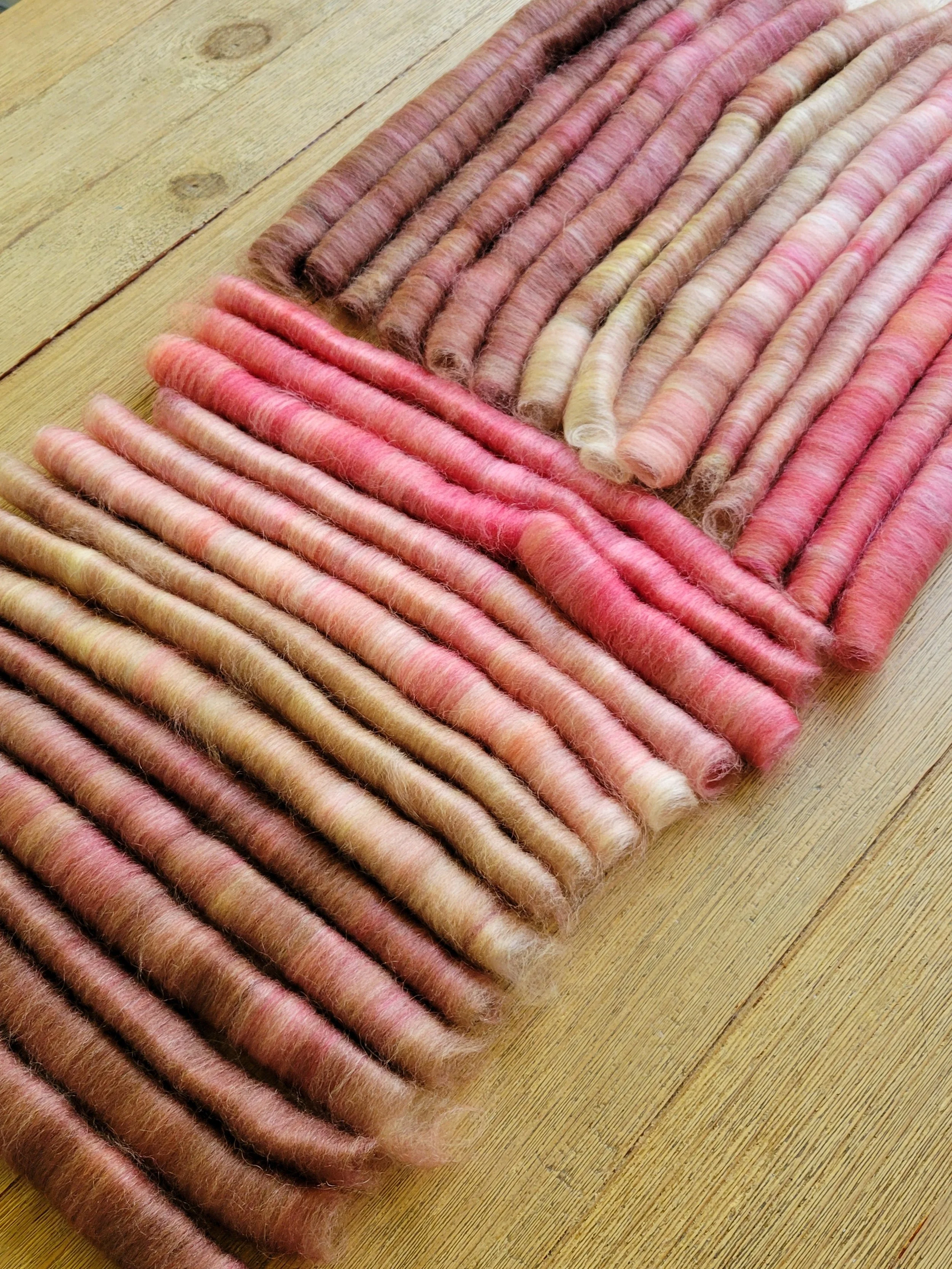
That’s my fibre prep for now. I’m excited to see how these spin up and what projects they’ll eventually find themselves in. As always, if you spin, I encourage you to just play with your fibre. Ideas will follow.
