Learning to Spin Superwash - Part 1
Hi. I’m Leanne, I’m an overspinner, and this is my first meeting. I like to spin fine yarn and I’ve learned that means more twist. I like to spin superwash that I can wear and I know it’s less “sticky” than non-superwash and I think that means more twist. But do I really need more twist and, if so, how much? Sometimes my SW handspun yarns have little to no spring in them. And isn’t that the point of wool? I think I need help.
For reference, I use a Lendrum double treadle with scotch tension. In talking with my friend and spinning teacher, Kim McKenna, she suggested some exercises. The dreaded “count your treadles and drafts” came up immediately. I confess I’m not good at that but I’m getting better at it. And it does become habit after a while. She also suggested making much softer singles and not treadling during bobbin takeup. What? How can I not keep treadling? She knows much more than I do about this so I deferred and tried her suggestions. Here’s how that’s going so far. So far, because learning anything is a process.
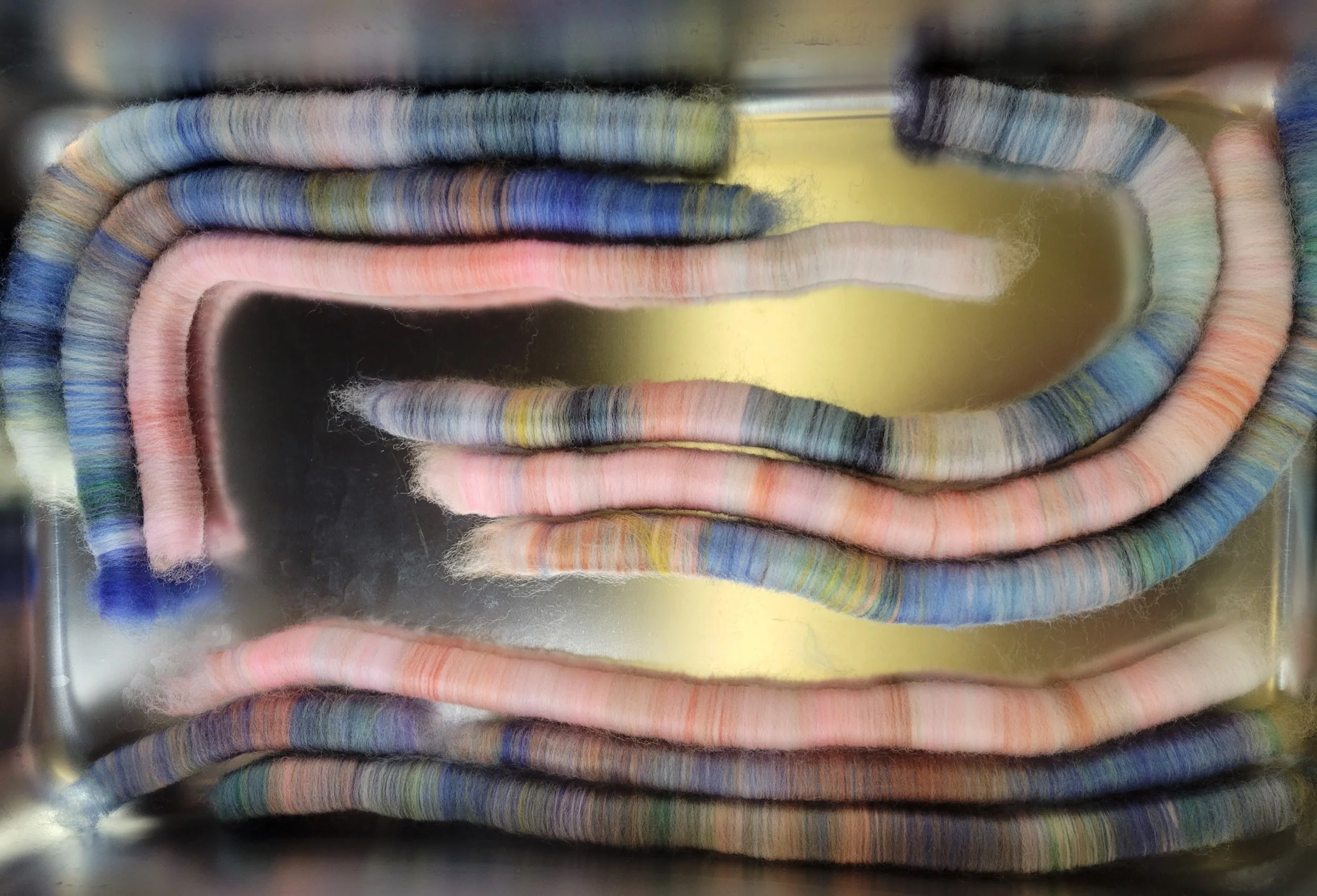
I had some bits of leftover SW merino. I split out the pink and made some rolags, separating them into three sets and staggering the order for spinning.
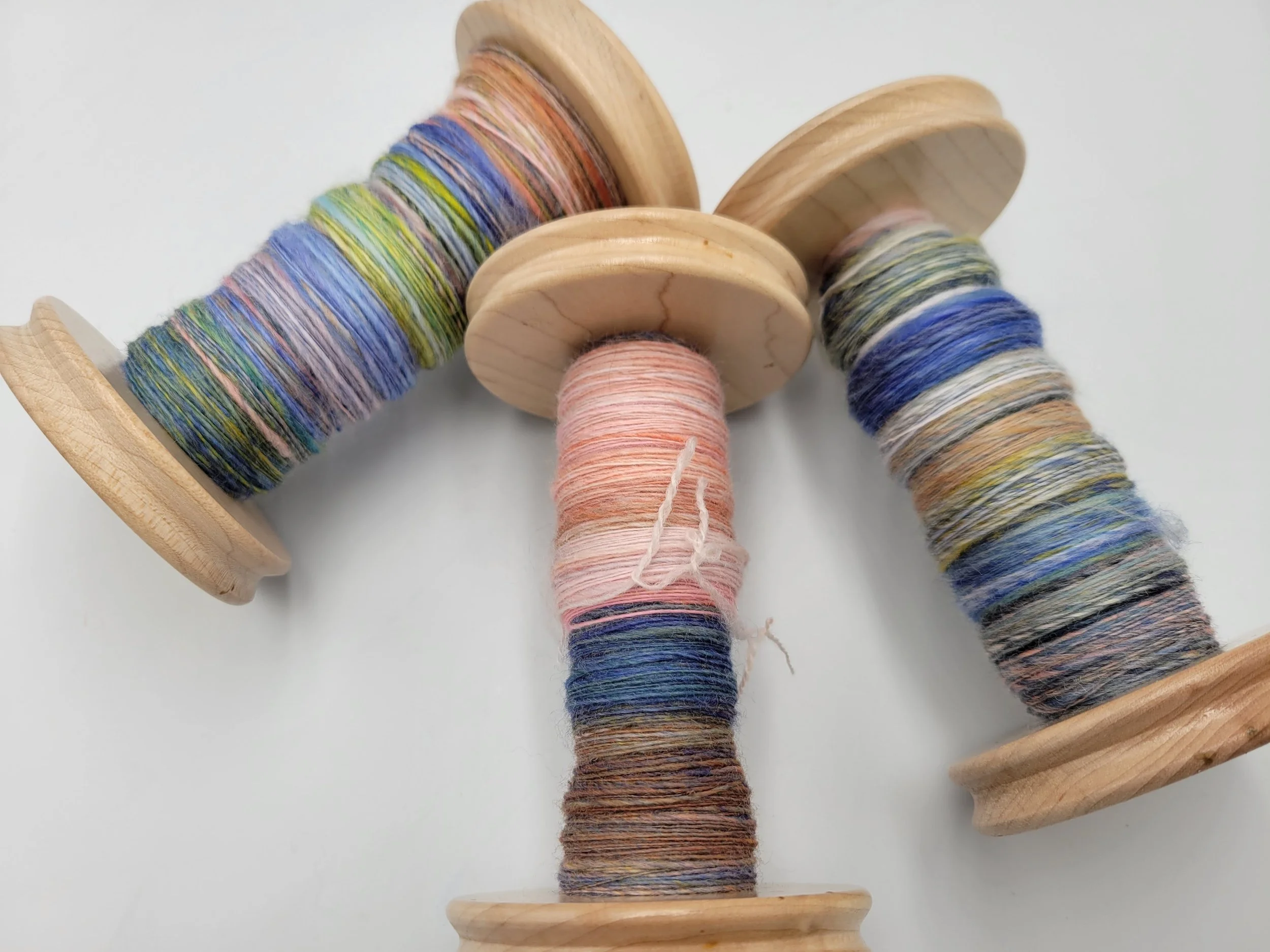
I had already spun one set of rolags in my default, tight spin. Each rolag set has a similar amount of fiber so maybe you can tell which bobbin was my first. If you guessed the middle bobbin, you’re correct. It’s a hard singles, dense and tight but it looks great, doesn’t it! My brain likes that one. Keeping that one in mind, I set about to spin the other bobbins. Using a short forward draft method, I treadled slower, counted and matched my treadles to my drafts, and let the yarn take up quickly before accidentally adding more spin in. And I tried to stop treadling during take up, I really did. I went a little overboard perhaps, trying to spin the softest singles possible without it falling apart. And it did fall apart a few times.
A ply back sample along the way looked about as soft as I was willing to go and it had some decent stretch to it.
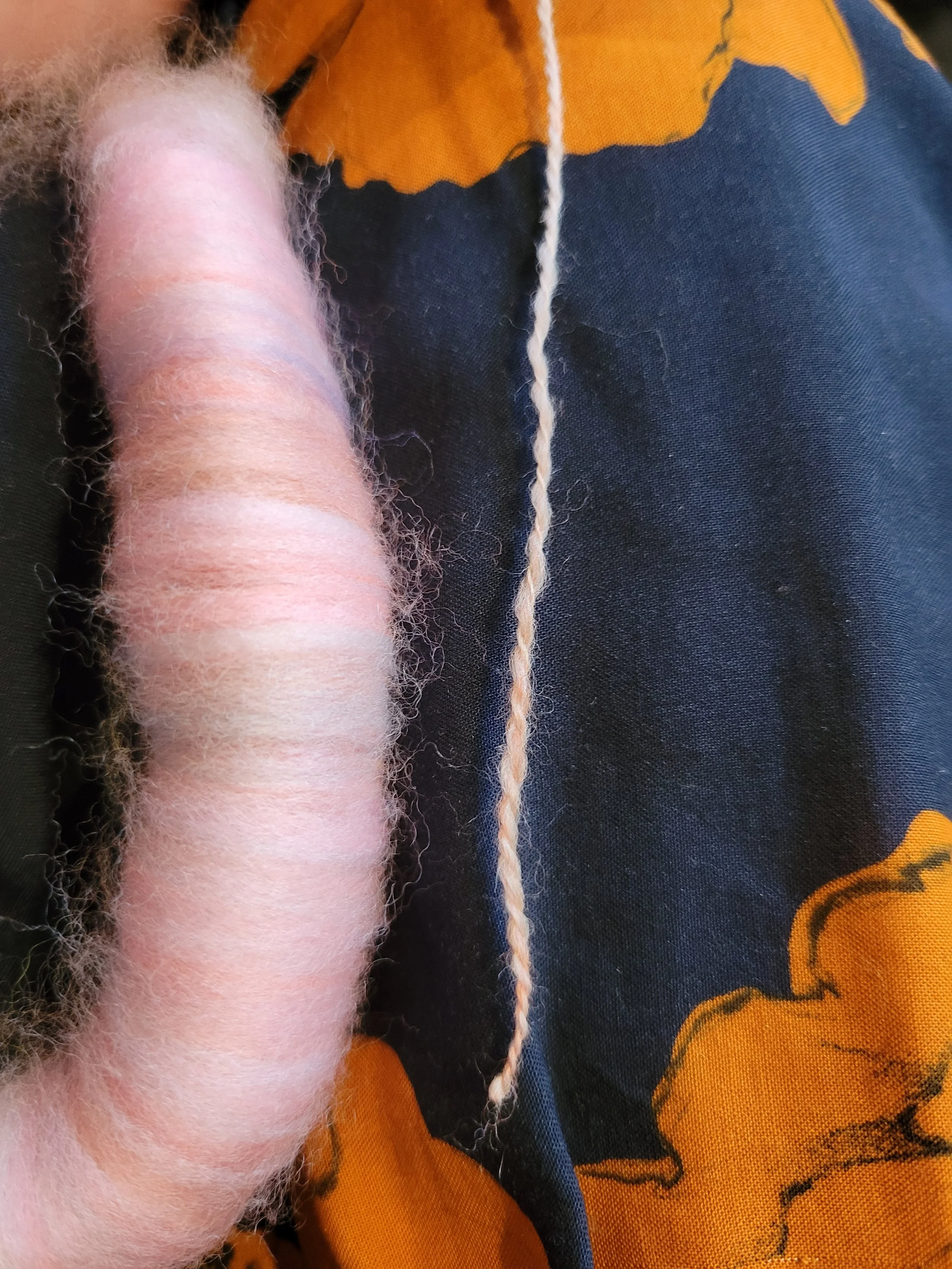
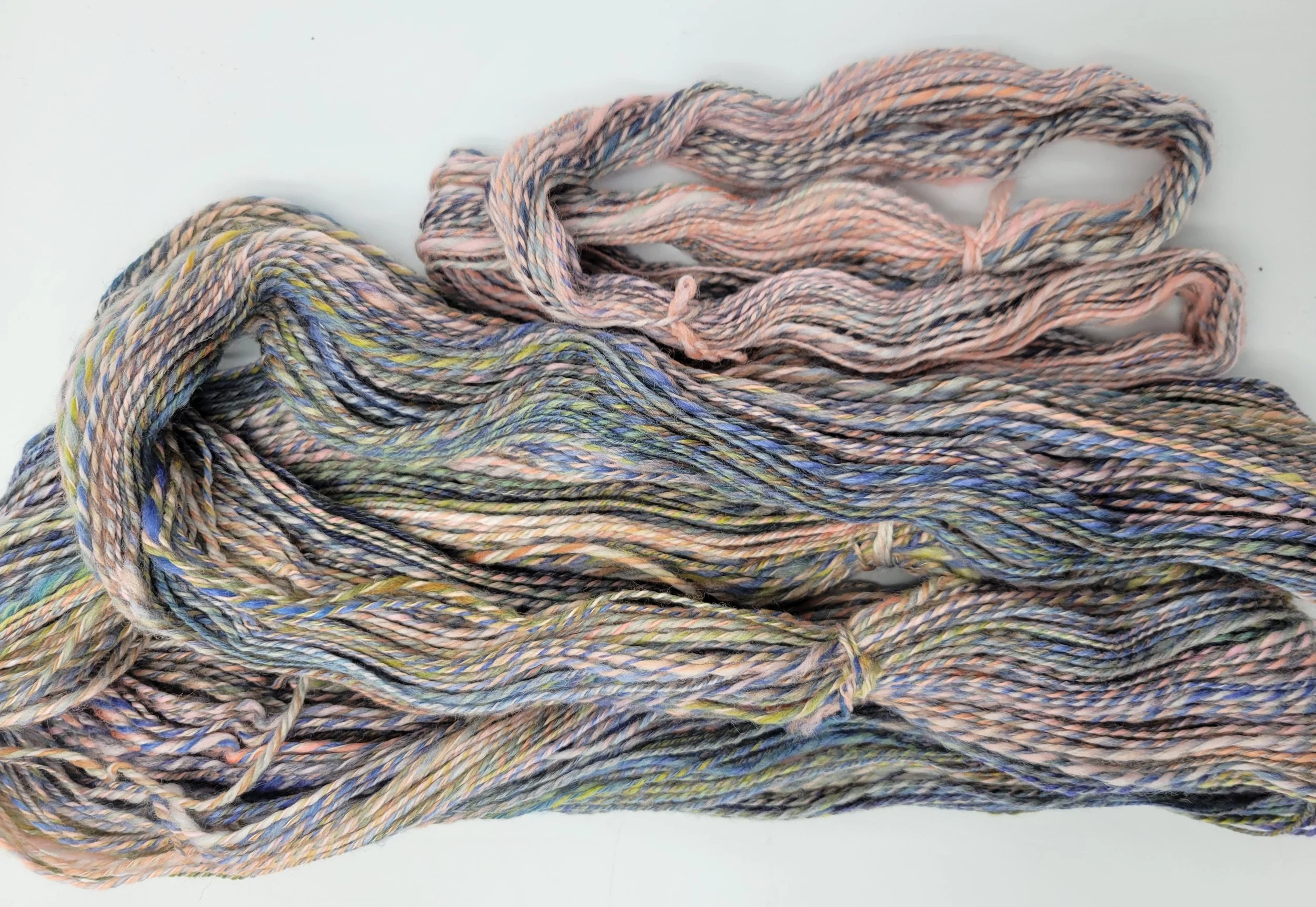
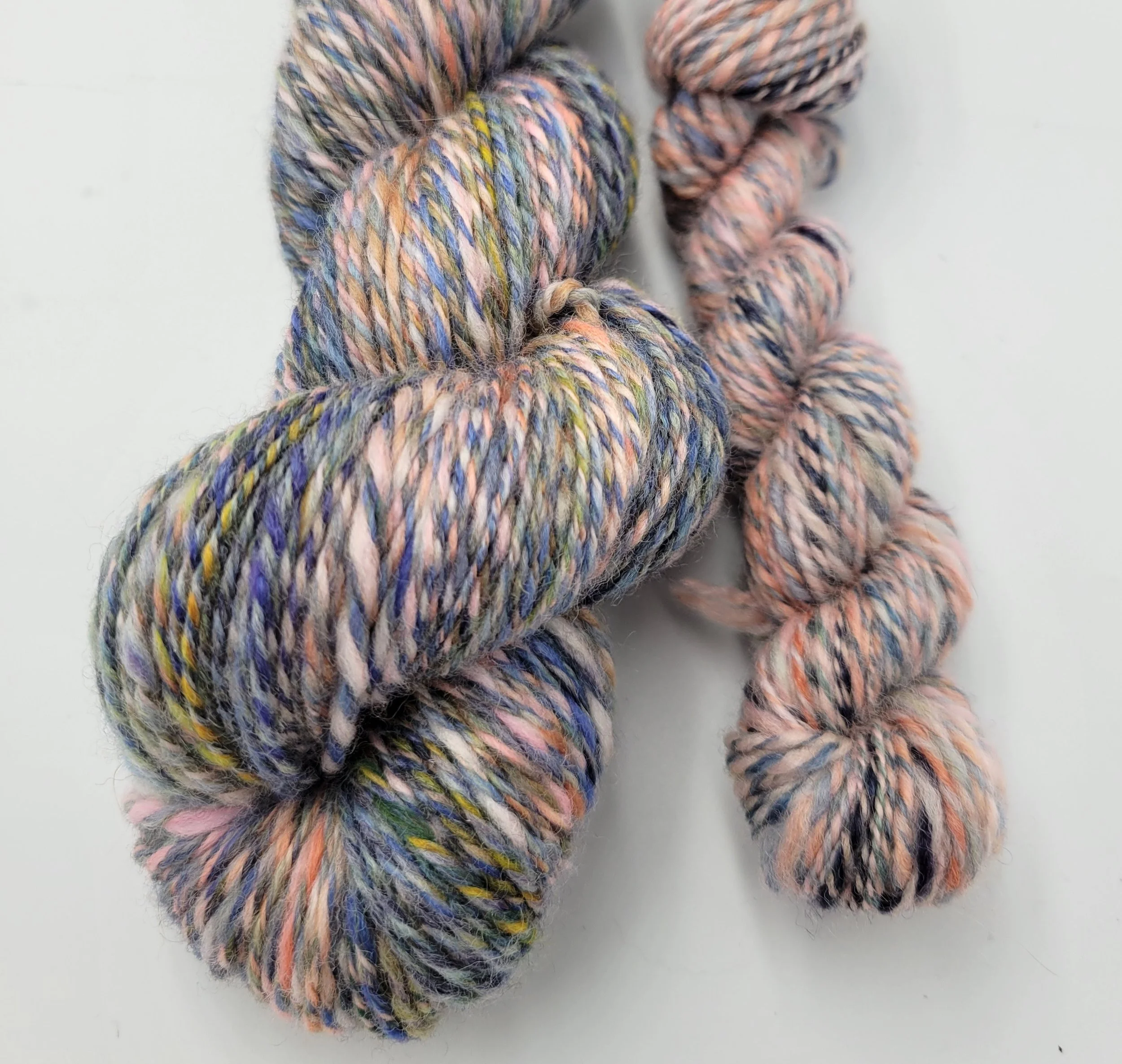
Kim suggests a 3 or 4 ply minimum for a superwash yarn. Even though it’s not as grippy as a non-superwash, the added plies add more contact points and more strength which allows the singles to be softer. I think I’m starting to get it. I plied as much of the three singles together as I could and used the remaining bits for a 2 ply. Here they are prior to washing. They’re much softer than I’m used to and I’m not sure how I feel about that yet.
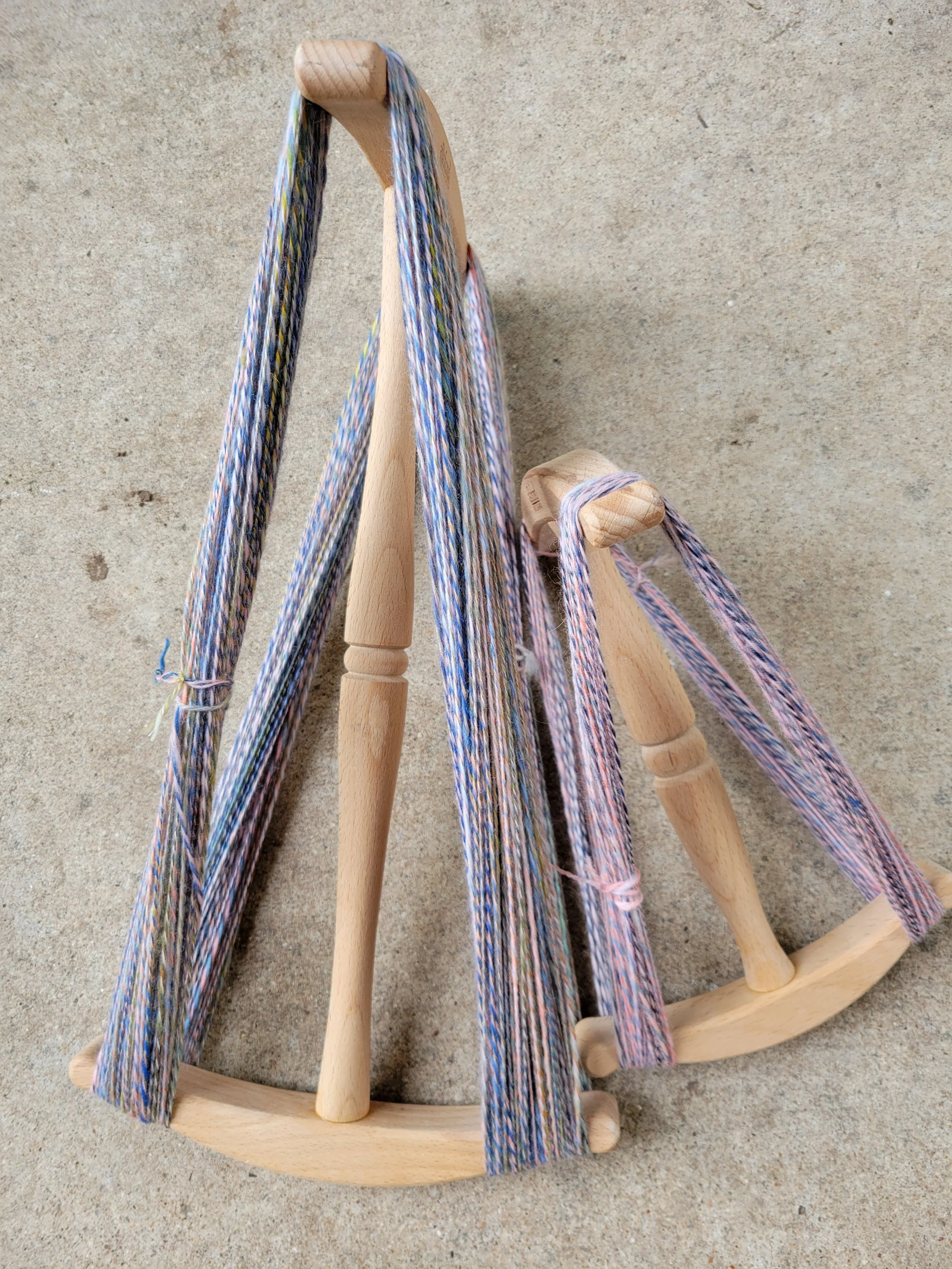
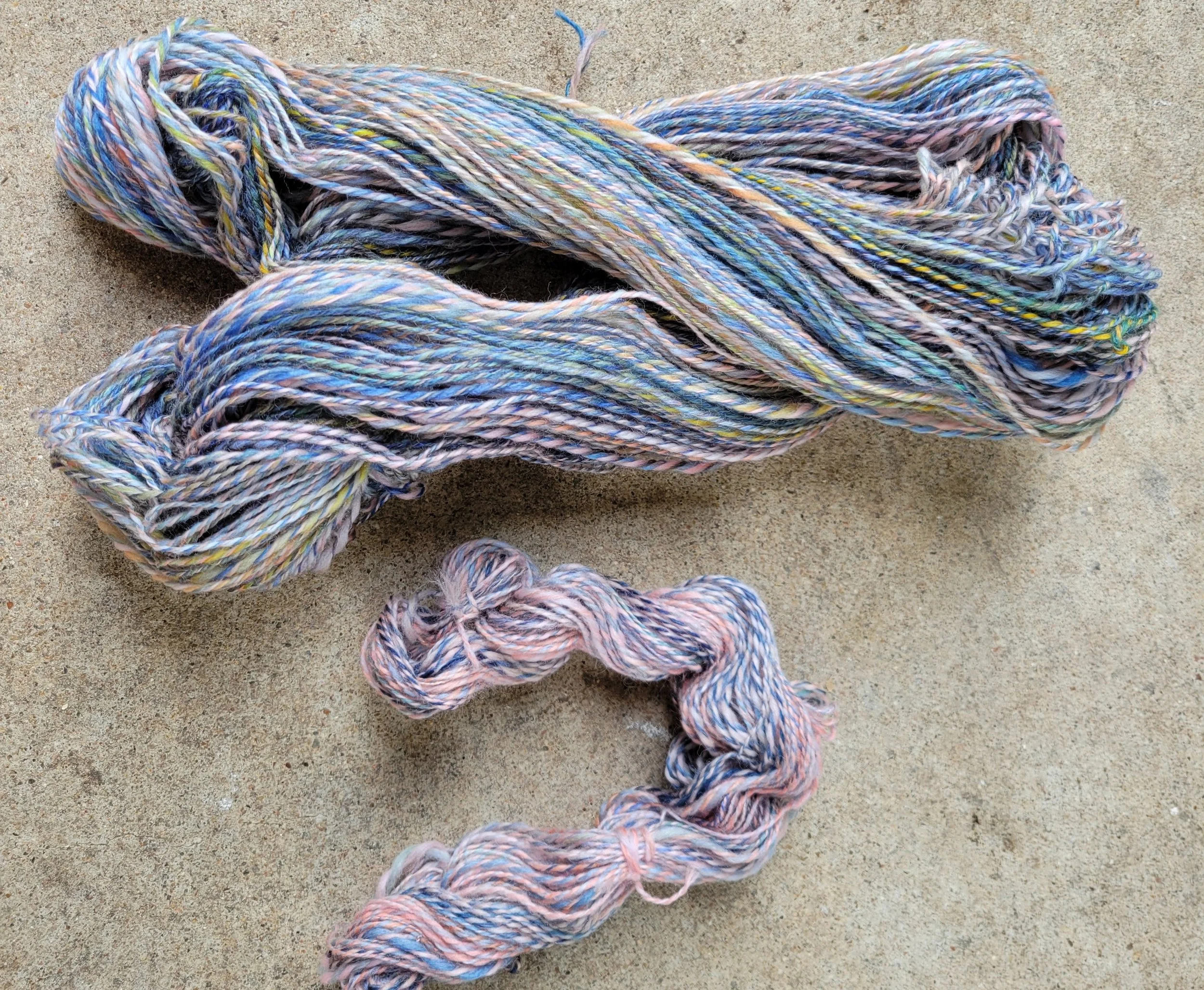
And here are the yarns after a brief soak and laying flat to dry. I didn’t want to hang them to dry and risk losing any of that springiness. They’re soft, a little stretchier than my default but I’m not there yet. Now that I’ve taken as much spin out as possible (for me), maybe it’s time to add just a little back in, maybe in the ply? We’ll see how the next spin goes with all my singles spun softly this time.