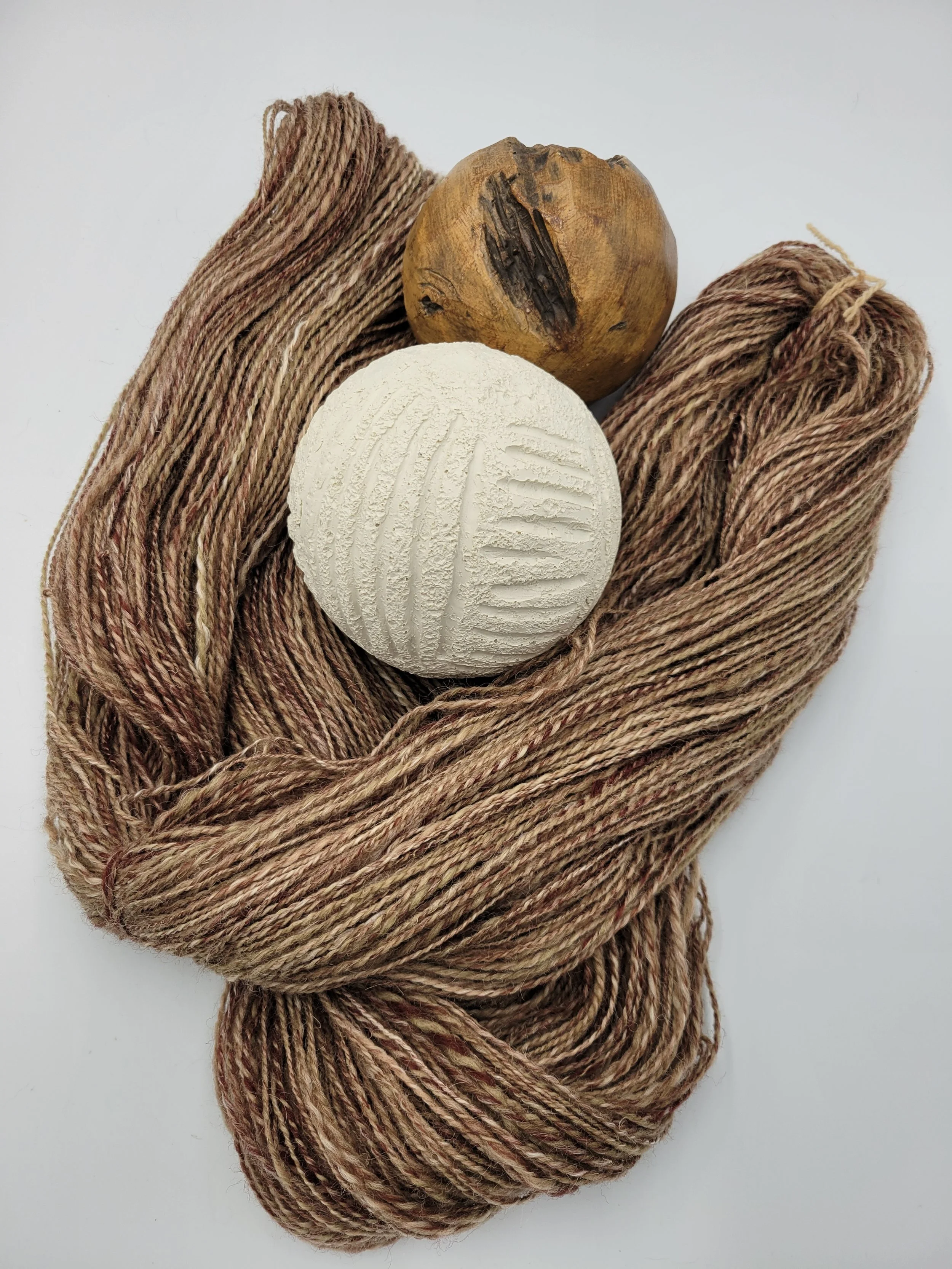
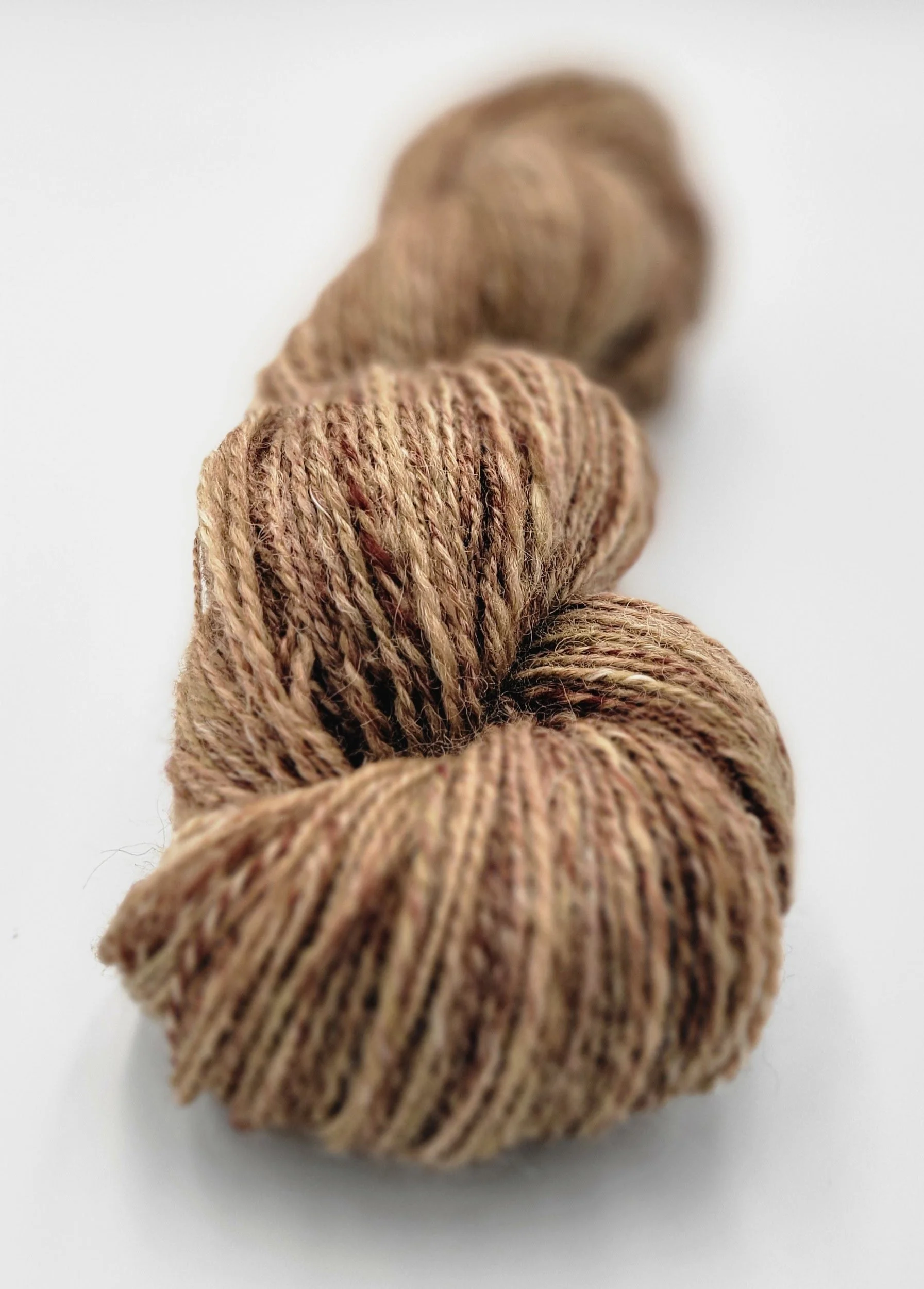
Ramie/Shetland Spin
Facts about Ramie because I did not know a thing about it and maybe you don’t either. Ramie is an Asian cellulose fiber harvested from inside the Boehmeria nivea plant, part of the nettle family. It’s an ancient fiber sometimes called “China grass” or “grass linen”. It’s sustainable, eco-friendly, water-absorbent, resistant to mildew, bugs, and bacteria, and it’s very strong. It has the lustre of silk and a similar feel, though stiffer. I tried spinning a bit on its own and found it quite finicky. It does not like a lot of twist or changes in spin tempo. After some trial and error though, I found it lovely to spin and the samples were silky smooth and fine.
I chose to mix a little Ramie with a variety of Shetland wool colours for no reason other than to give the final yarn a bit of sheen and maybe soften it a bit more.
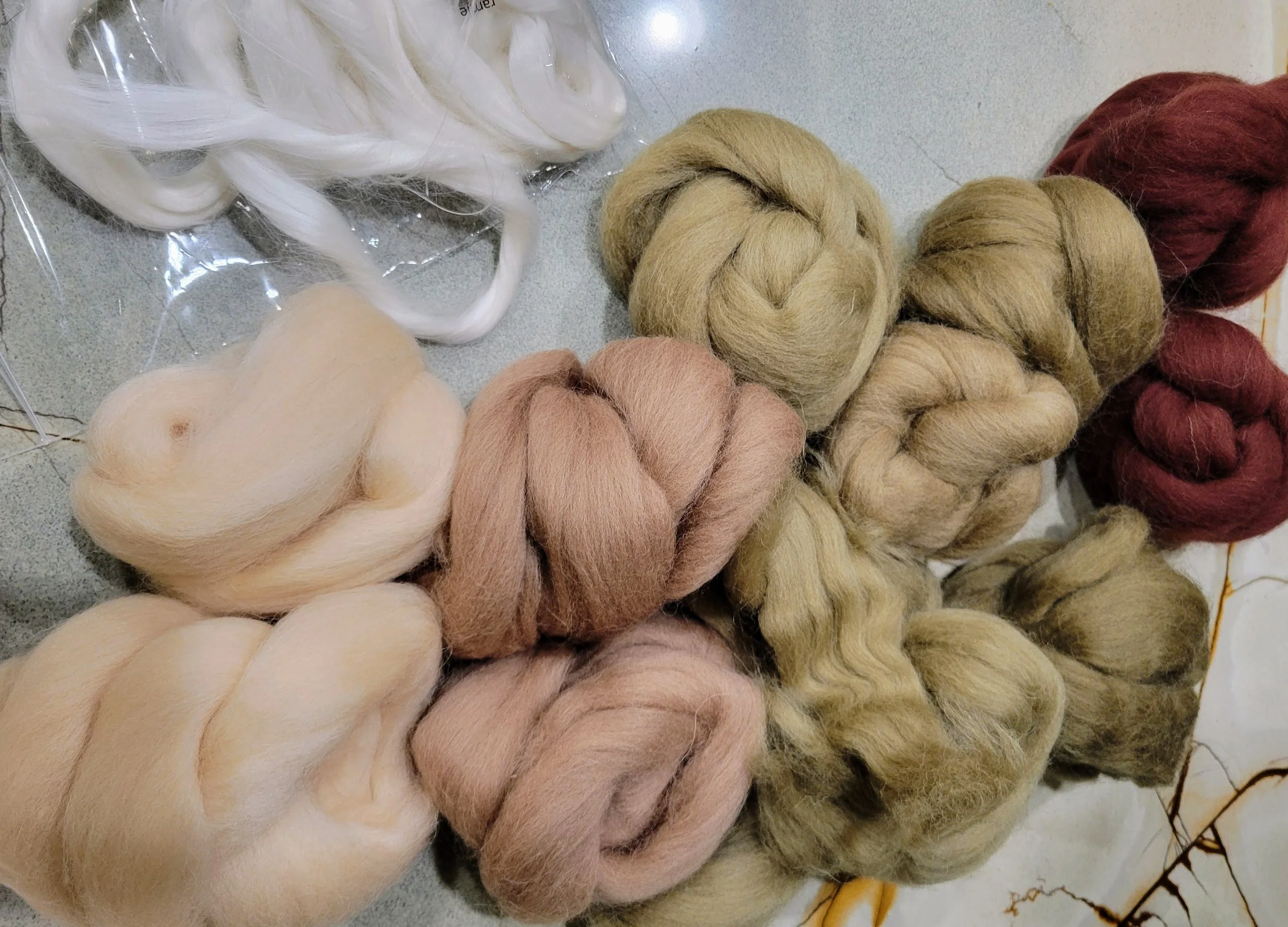
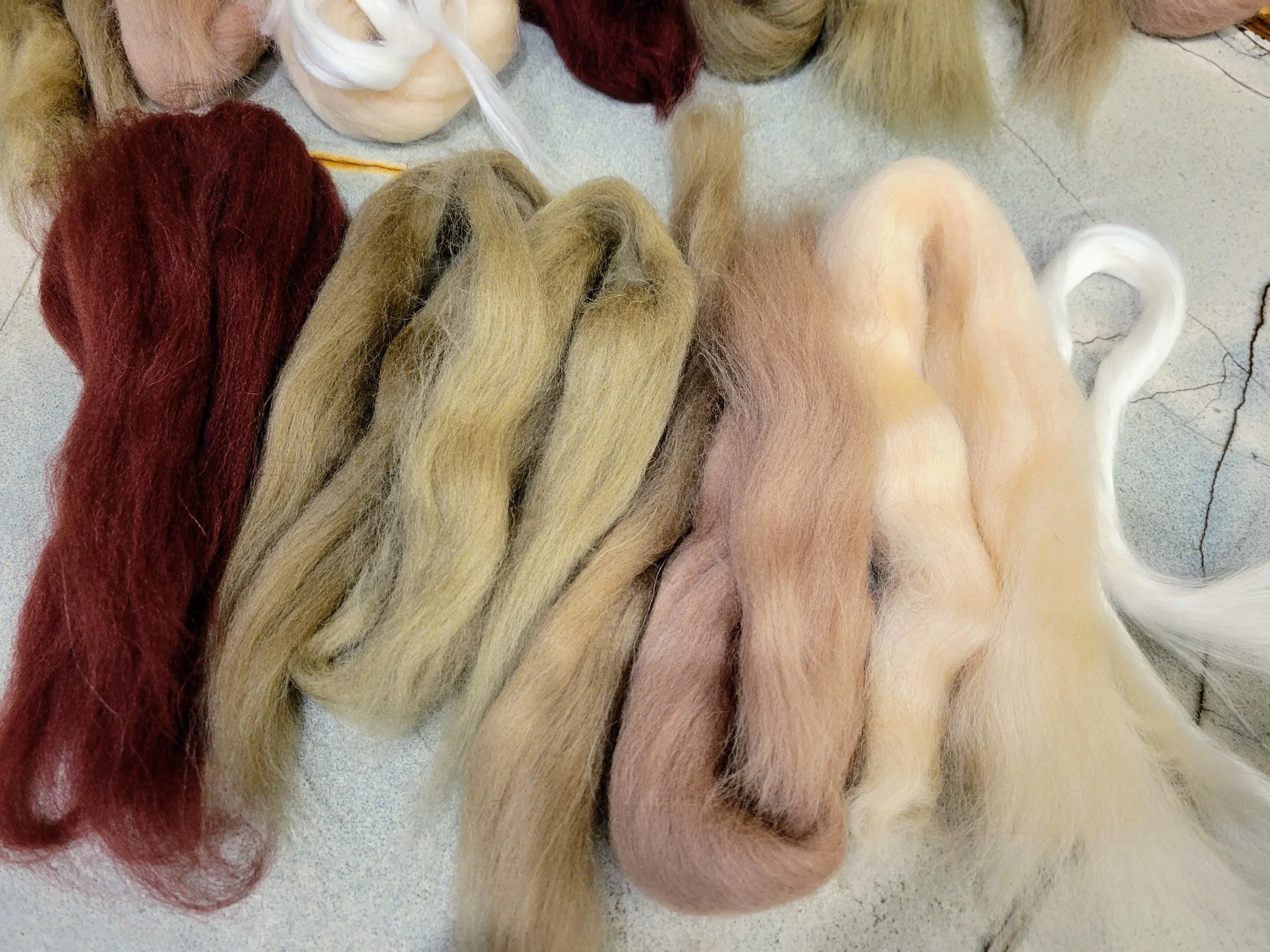
6 colours of Shetland wool and white ramie fiber.
I had 6 colours of shetland, totalling 178 grams. I didn’t love any of the colours on their own so tried blending them all together and made a quick Andean plied 2-ply sample then knit that up into a mini swatch. The marl was lovely so I prepped the rest of the fiber in the same way.
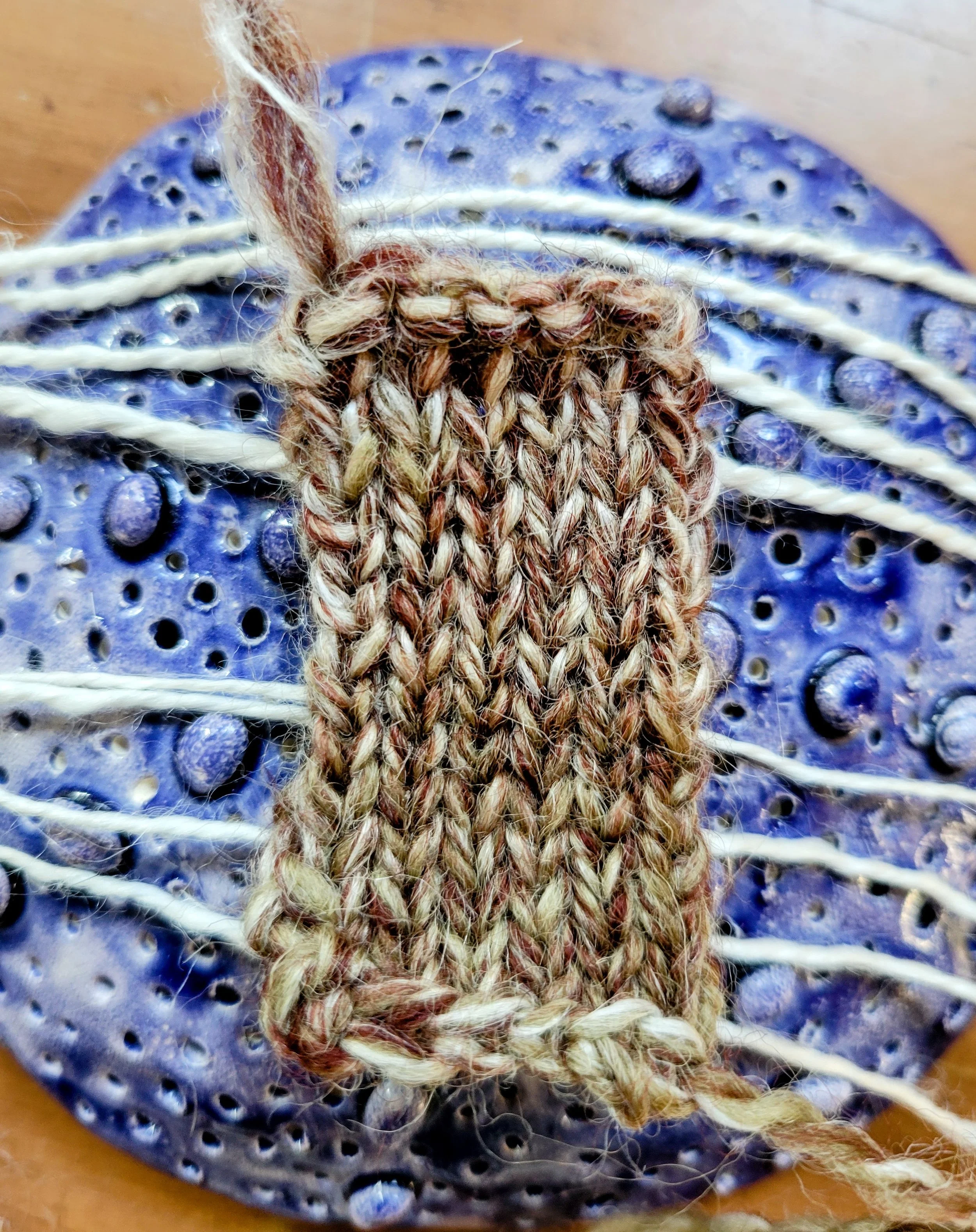
Mini marled swatch atop some ramie sample spins.
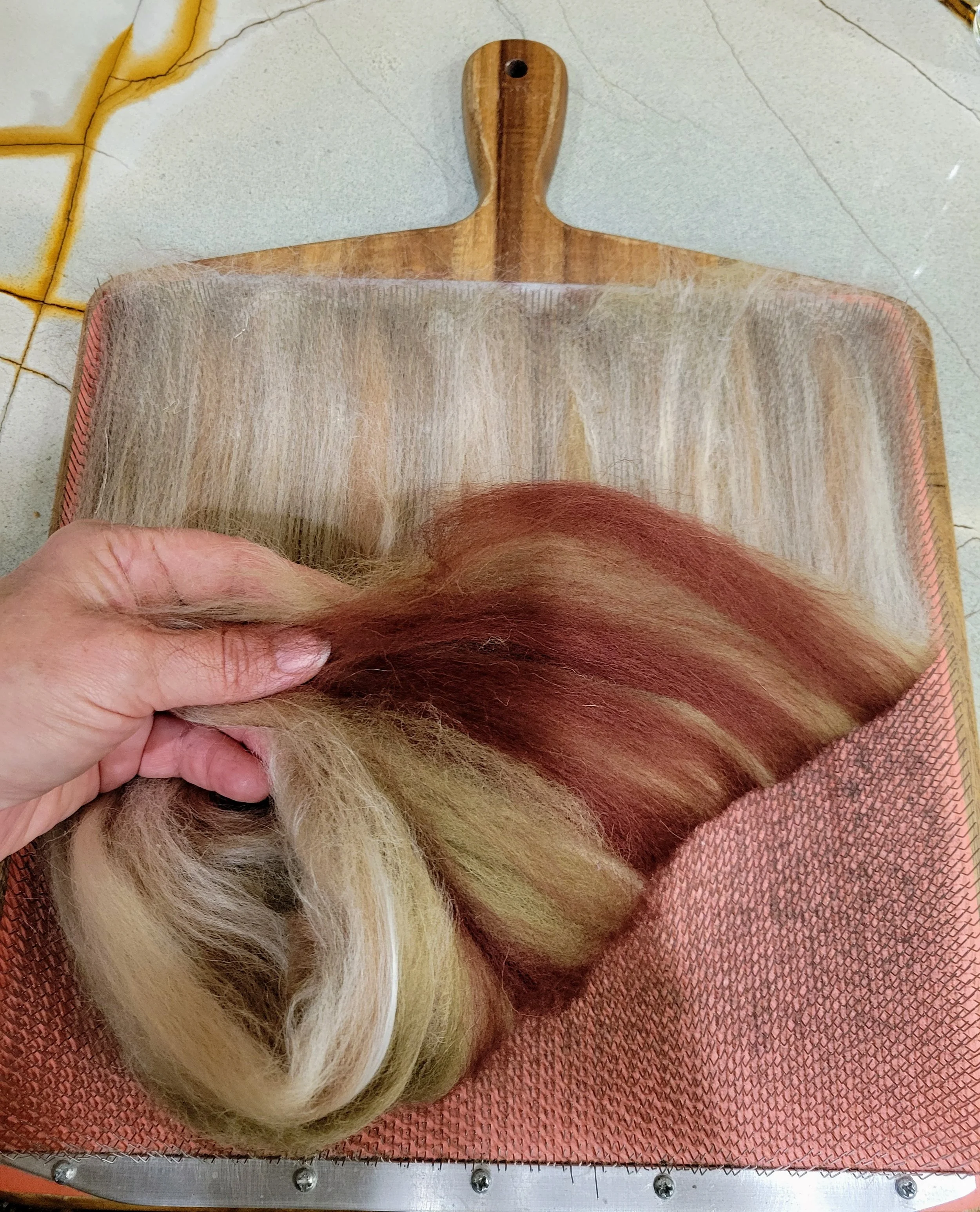
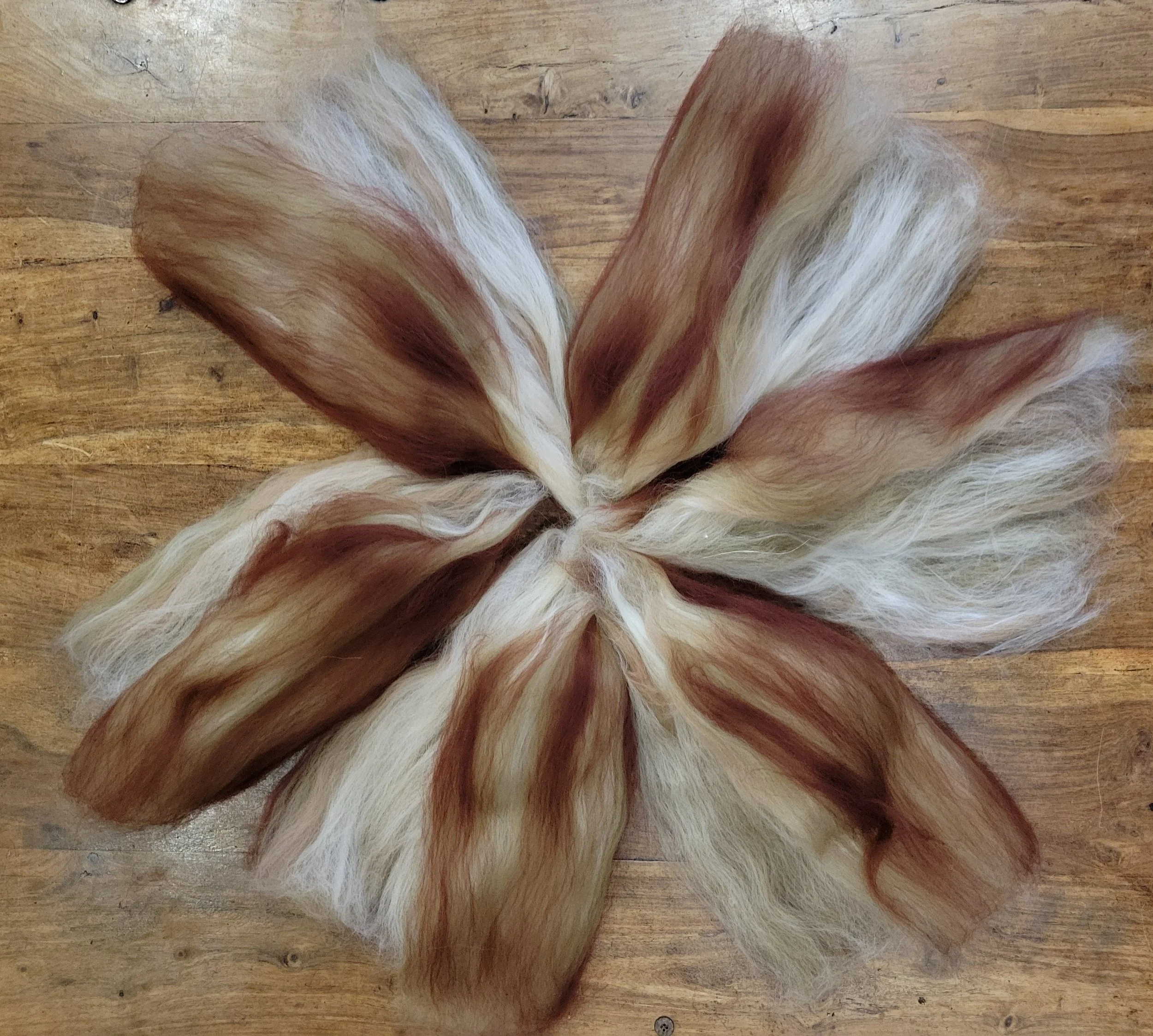
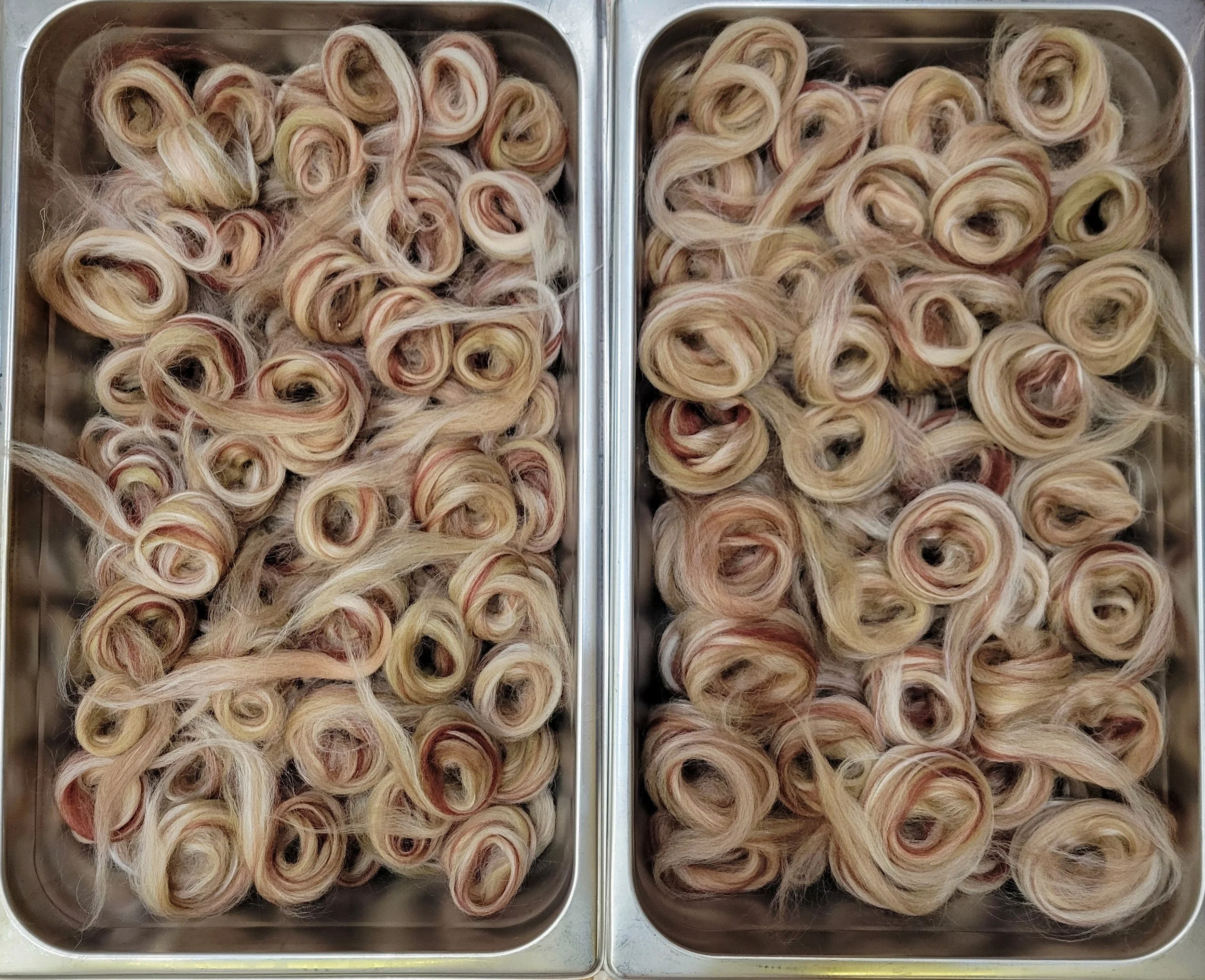
I separated each of the colours by weight into 12 piles and added 2-3 grams of ramie to each. I blended these piles on the blending board first then dizzed them off a hand card, 6 dizzed batts in each catering pan. Separating them really didn’t matter since they were all the same fiber prep but it helps to know there’s about 100g in each pan and, for me, I know that equates to two bobbins from each pan and I know roughly how much my bobbins will be filled.
I spun up one pan of fiber nests. This first DK skein measures 13-14 WPI and is a generous 378 yards. I plan to spin up the second pan during Tour de Fleece. It was a lovely spin, my default at an 8:1 ratio on my Lendrum double treadle. I like how the ramie brightens the skein just a little bit and accentuates the marl. I read that shetland tends to bloom so we’ll see if the brightness stays in a knit garment over time.