A sweater I knit my husband over two decades ago lay at the bottom of a closet, improperly stored in a cardboard bin. Kids and life, you know. Sweater care was far from my mind back then. (I've long remedied this and store all my fiber, knit and otherwise, safely.) I pulled this sweater out recently and discovered some damage along the neckline. Silverfish maybe? Honestly, I’m surprised it wasn’t much worse! I couldn’t find any leftover yarn to repair it but, thankfully, I had recorded the project notes in a binder. This was long before Ravelry. The Rowan yarn was discontinued. I found some resellers but I didn’t need much so I thought I’d try making some myself. Rowan Summer Tweed is a gorgeous, almost papery 70% silk, 30% cotton. I gathered those proportions of natural beige tussah silk and undyed cotton for a total of about 10 grams. Because of the short staple length of cotton, I used just the bottom of my blending board to make small individual rolags. I was hopeful the natural colours would match the Raffia colour of the sweater but they did not. So I dyed the yarn with some leftover dye. I wasn't careful though and dyed it too dark and too gold.I took some deep breaths and started all over again. I had no tussah silk left but I did have some natural beige muga silk. I made more rolags, this time taking the opportunity to distribute the cotton more evenly. The first yarn was a bit more slubby than the original sweater yarn. When I dyed the yarn this time, I wet a sleeve of the sweater and held it beside the yarn in the dye pot and adjusted the colour slowly. This was much more successful. It’s not a perfect colour match but it’s very close.
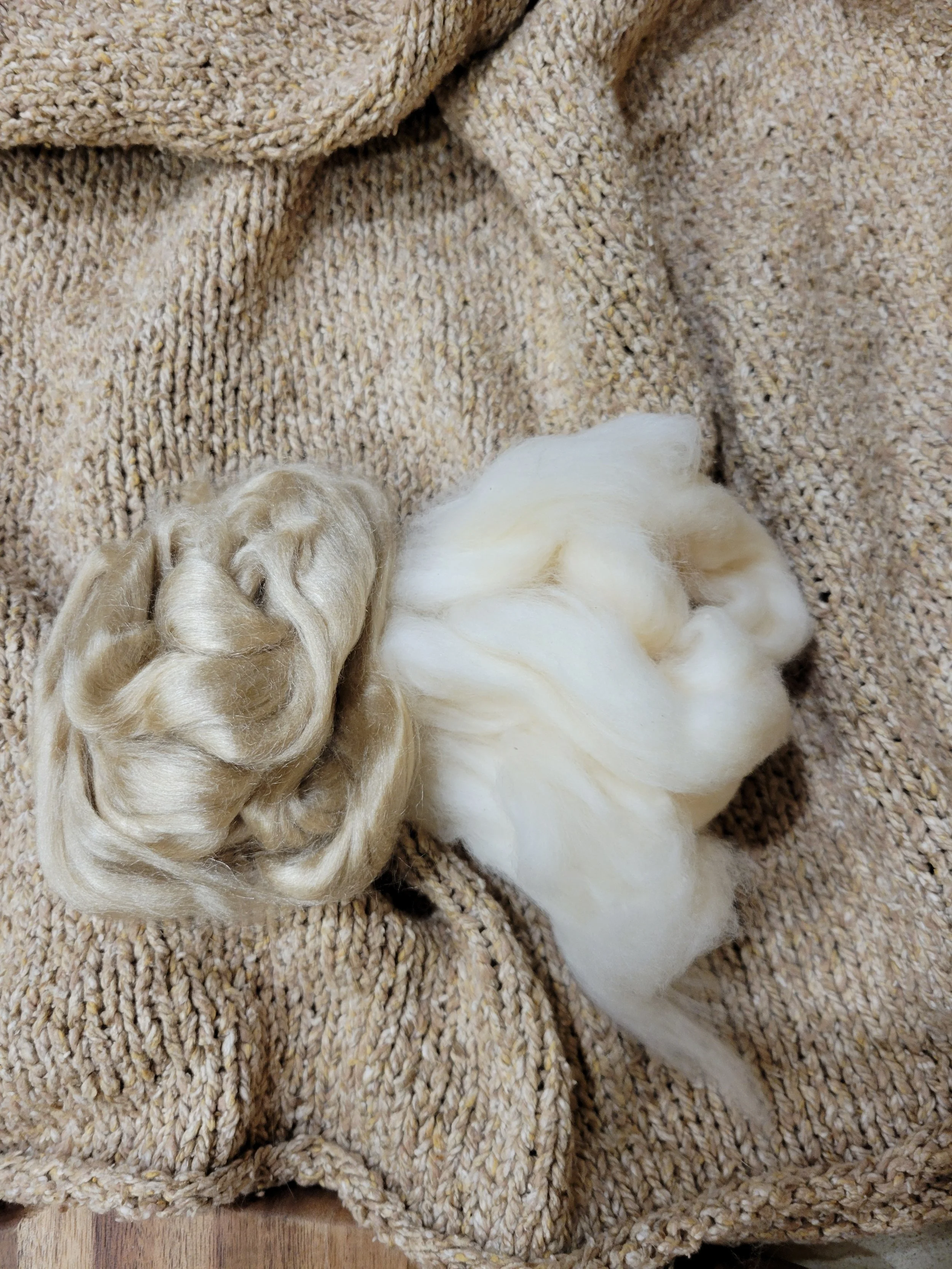
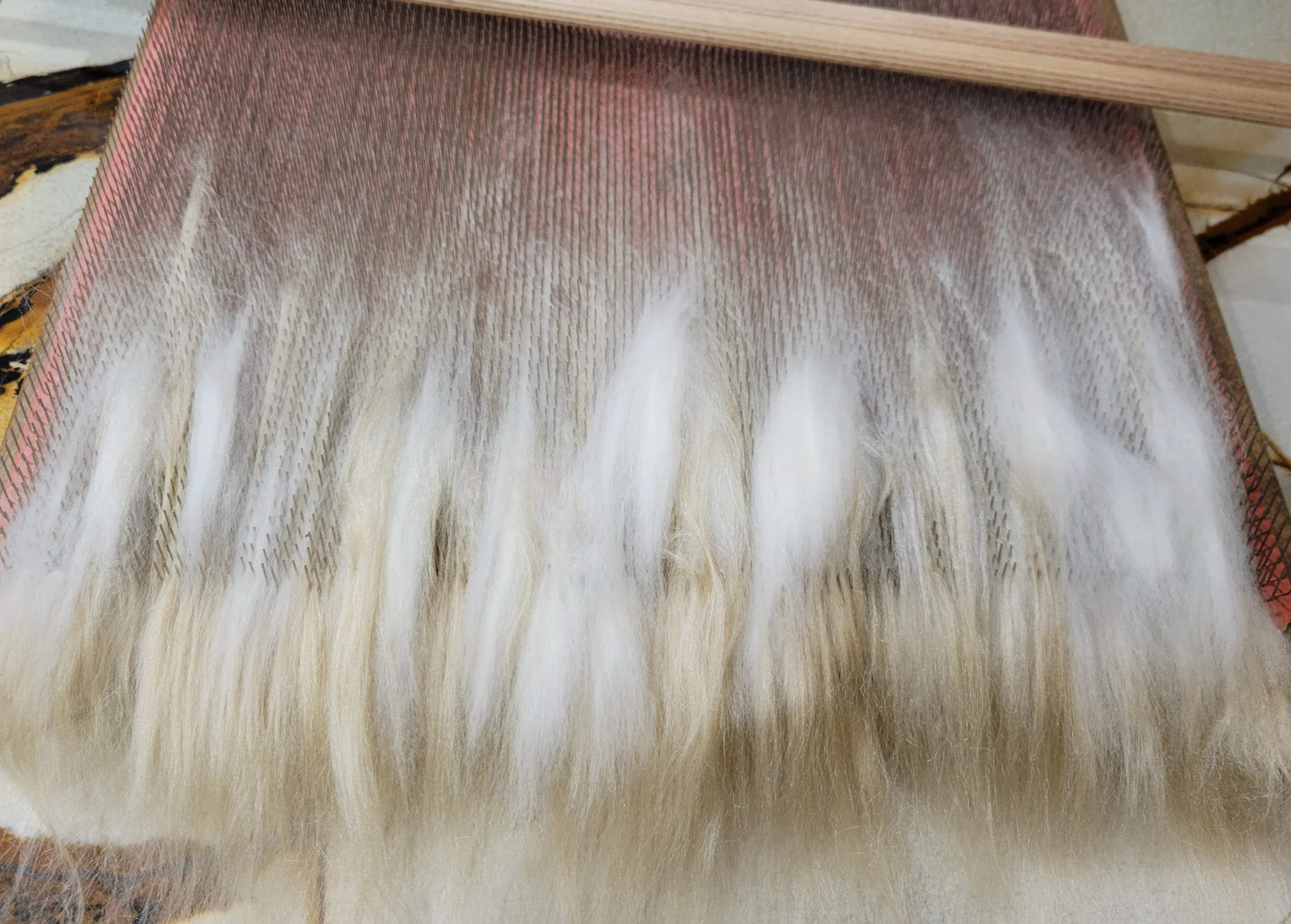
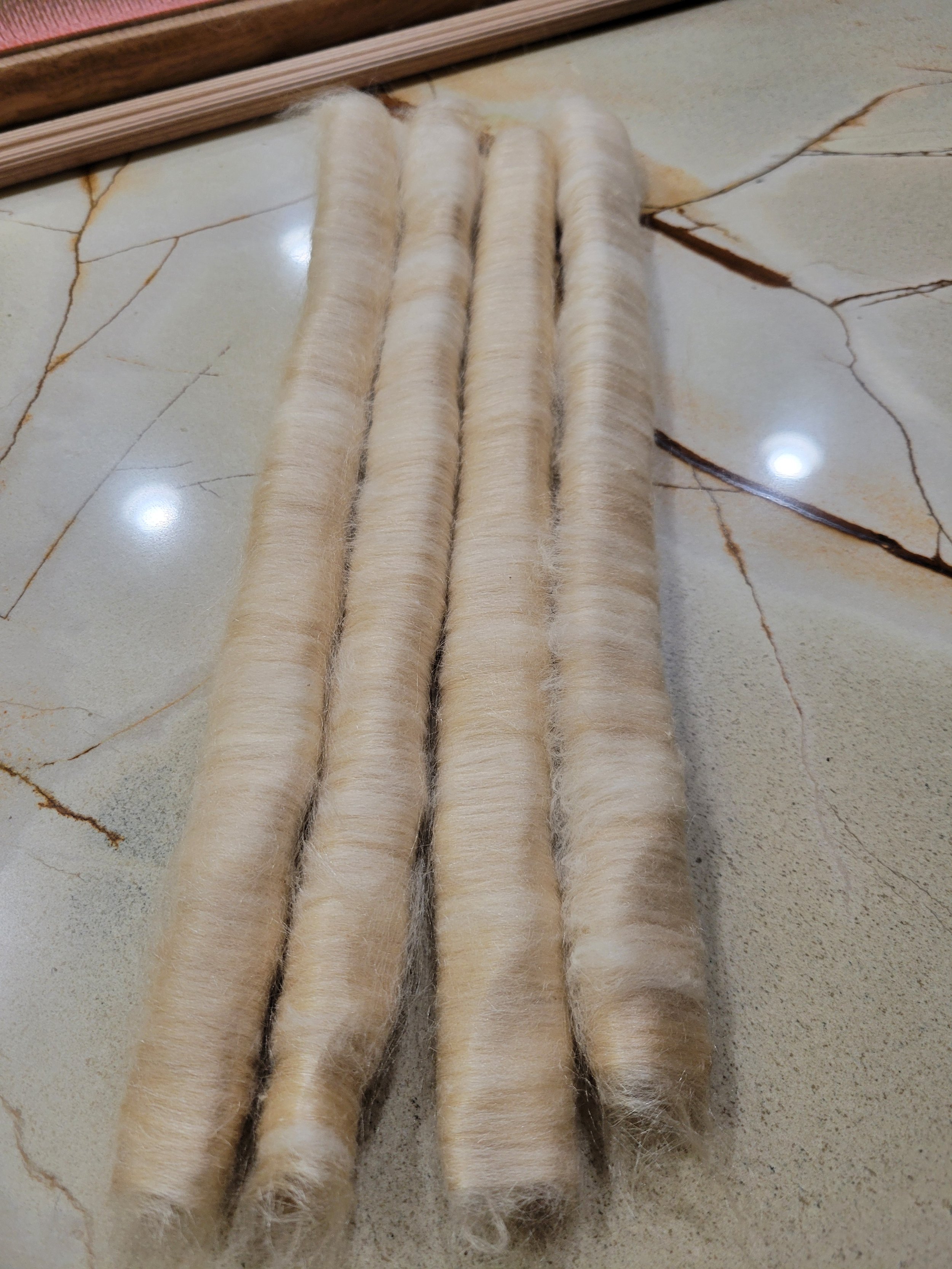
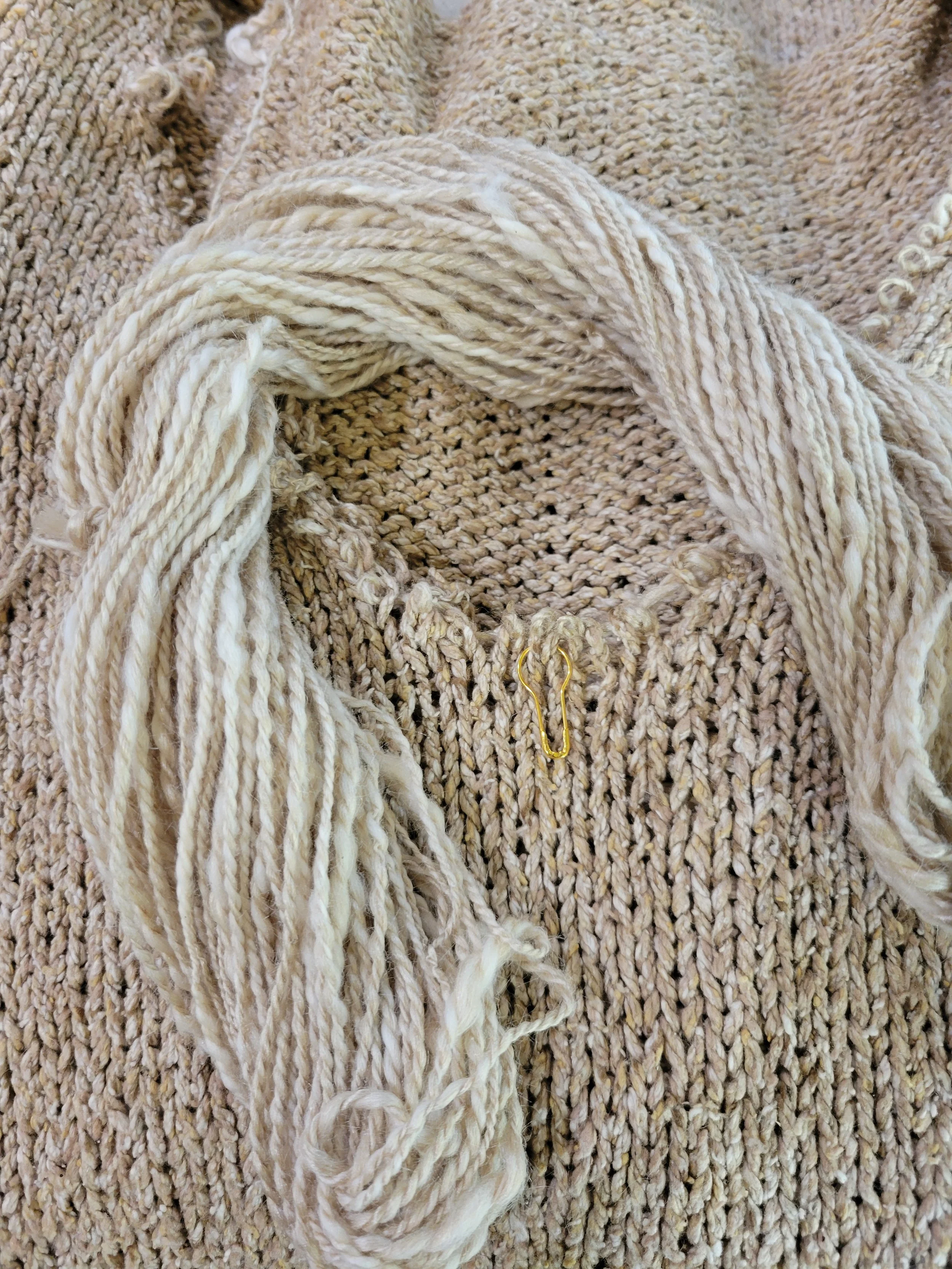
Pictured above: the original tussah and cotton fibers, the original blend of the two on the blending board, muga and cotton rolags, muga/cotton 2-ply before washing and dyeing.
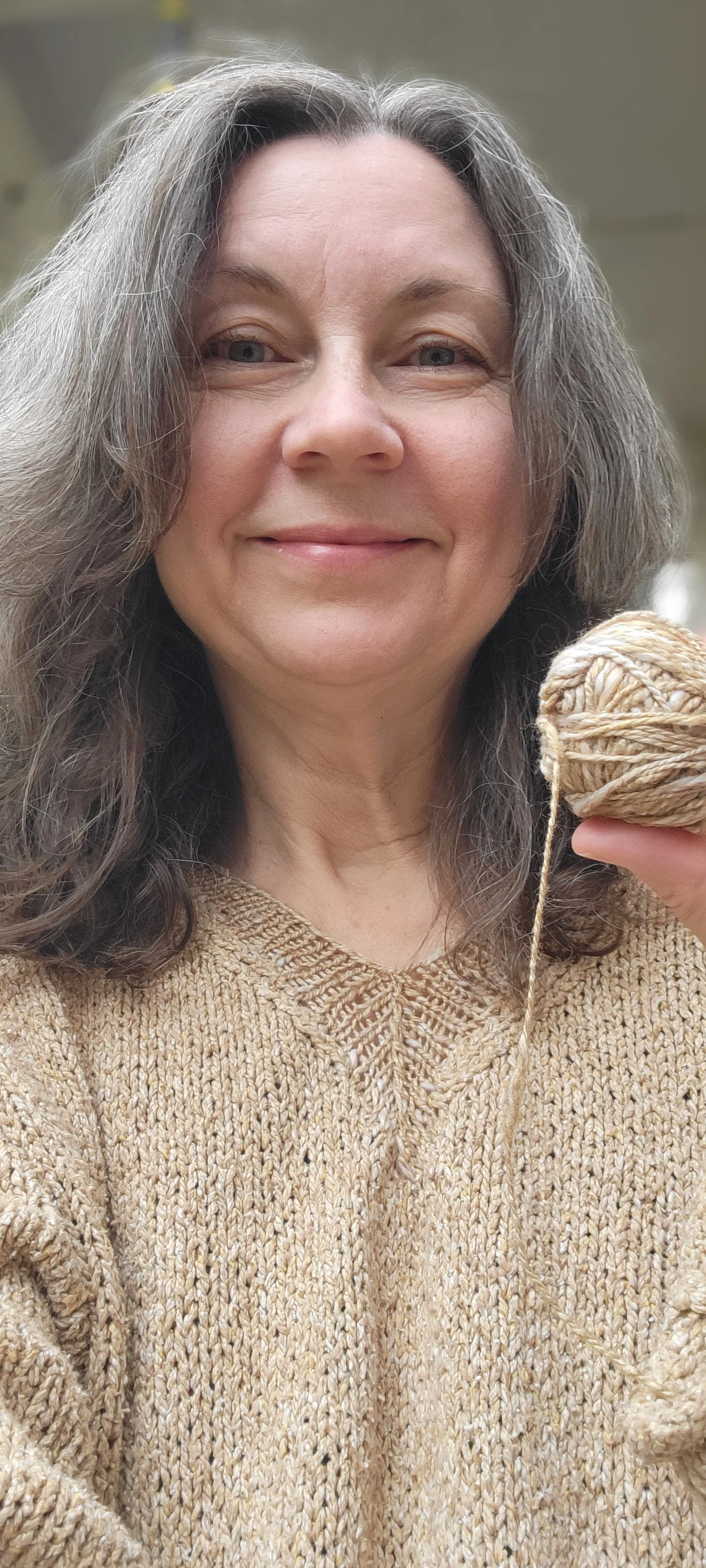
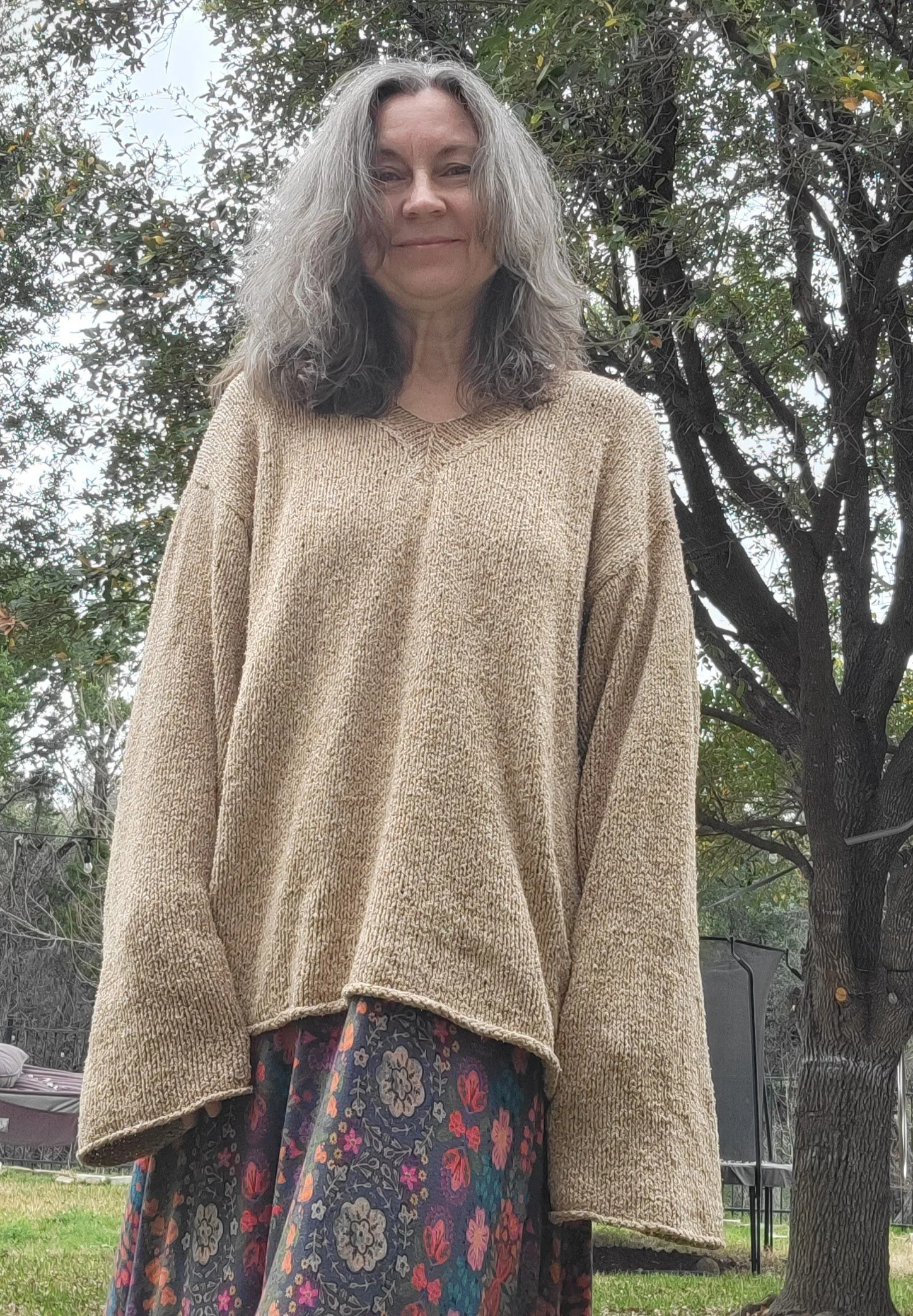
My husband is not much of a sweater wearer, nor is my son, so I took the opportunity to close up the neck a little while repairing it so that I can wear it myself. It’s a true boyfriend sweater now, one that can claim to be handknit and even handspun and handdyed in parts.
