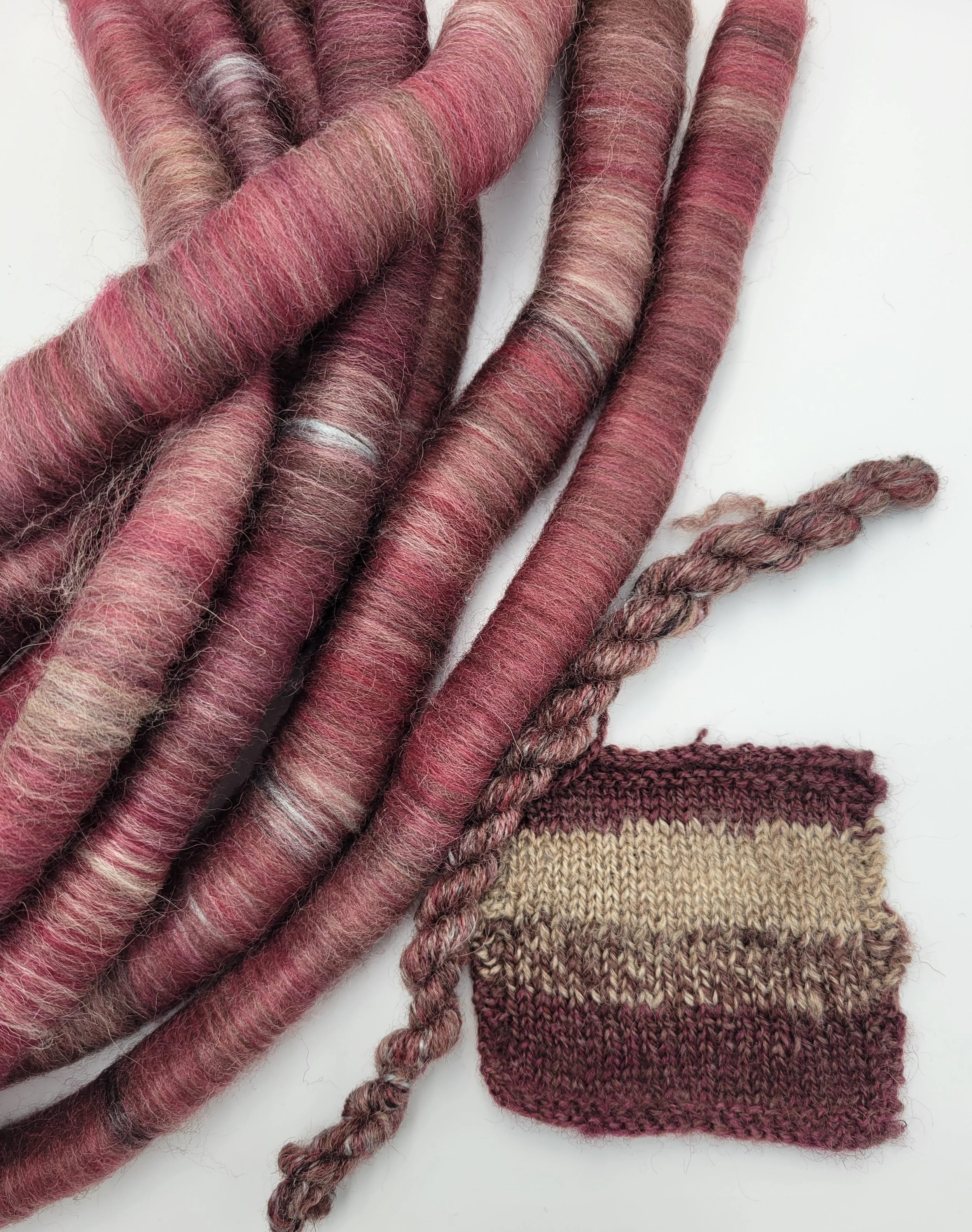
Dark & Moody
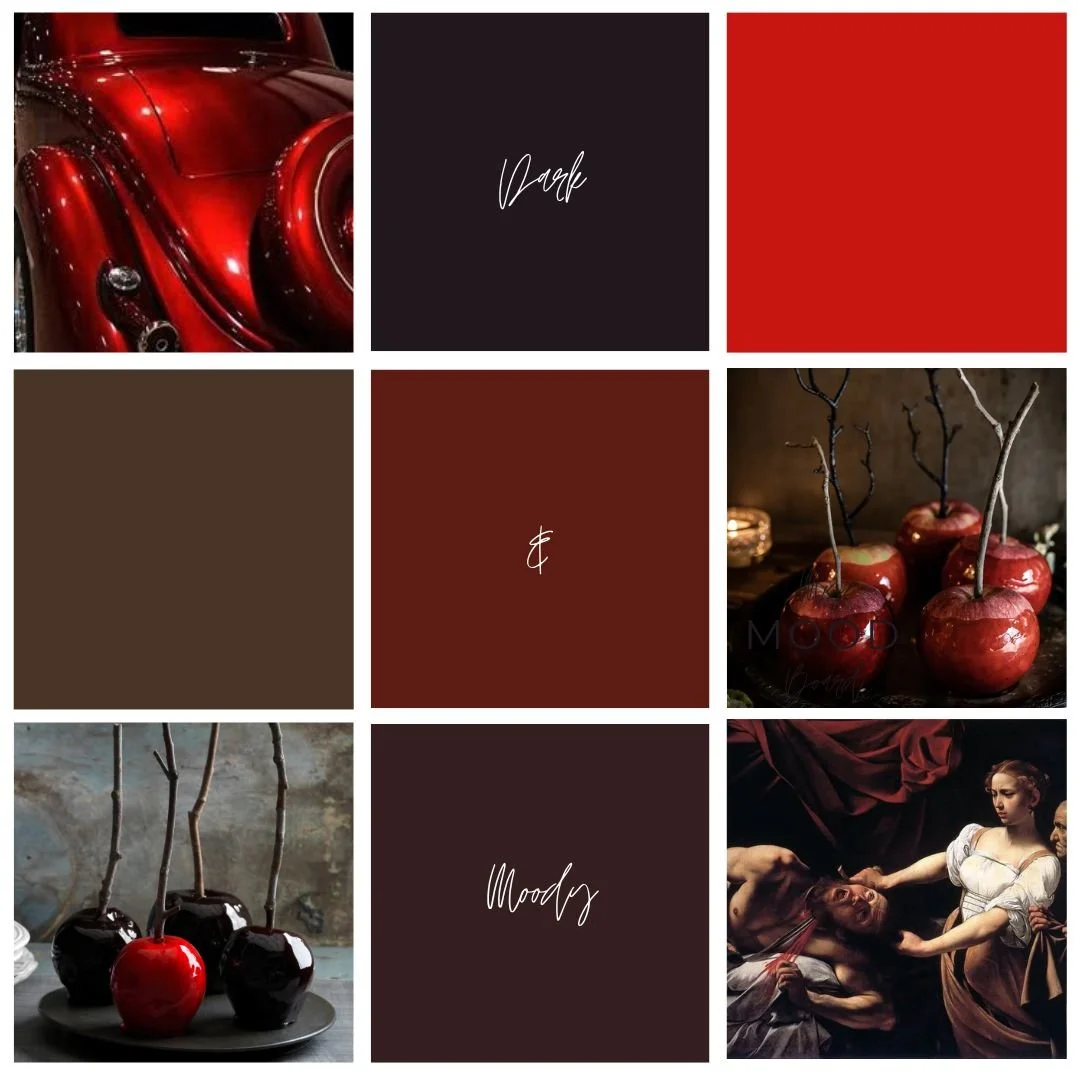
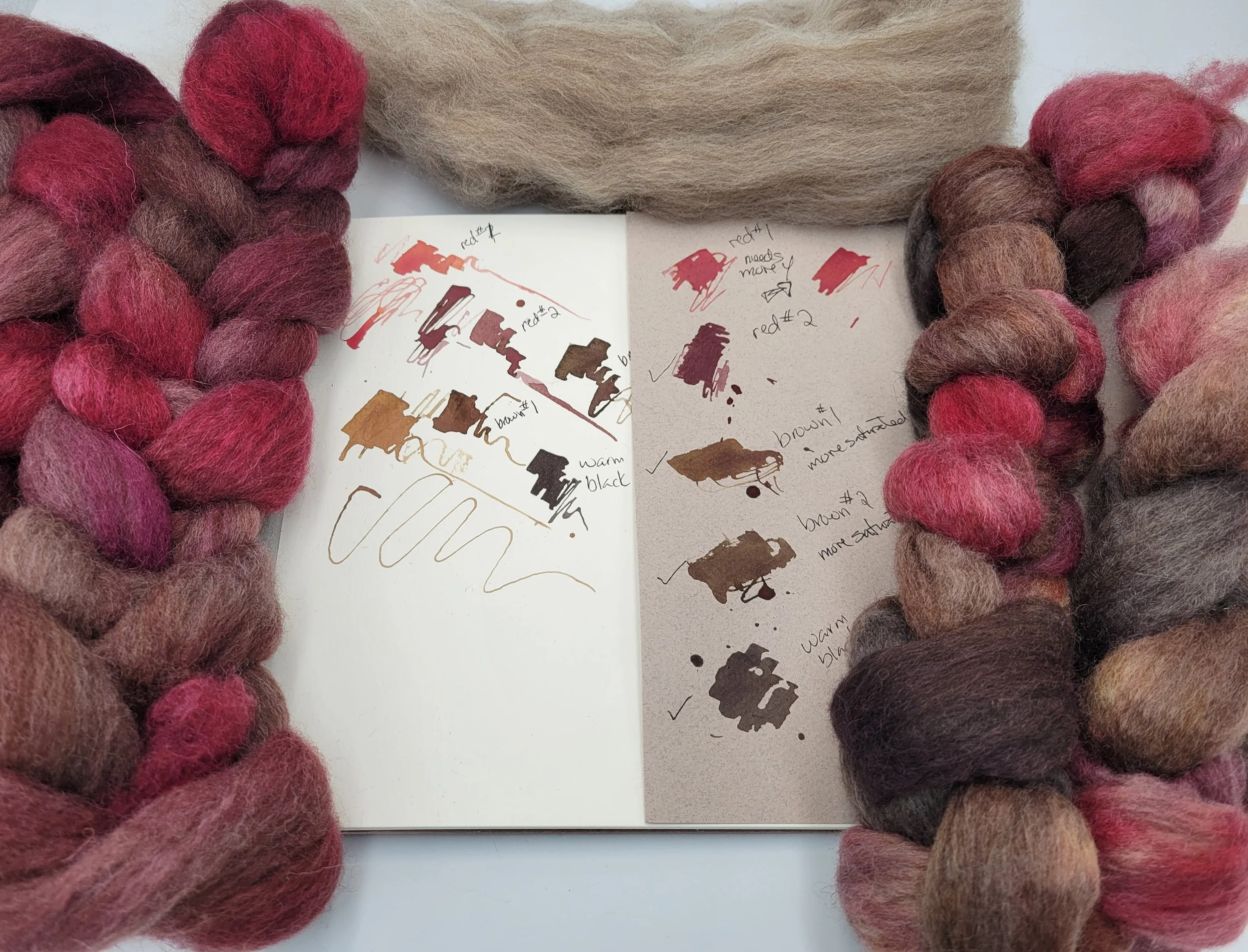
This was a fun colour palette to play with but also a tricky one. The colours are deep and sophisticated, which is fun, but limited in range, which is tricky. My first attempt was a bit flat and uninspired (left braids below). The colours were lovely on white watercolour paper but didn’t translate to the fiber as I’d envisioned. This made sense in one way because the fiber is non-superwash and naturally mutes colour. The other factor I didn’t account for, though, is the natural oatmeal base of the BFL. This muted and altered the colours even more, making the overall vibe more purple than I wanted.
I revisited my dyes on some warm grey mi-teinte paper and tweaked them a little in terms of tint, hue, and saturation. Red #1 needed more yellow to be less purple, for example. The resulting braids on the right have more depth and interest, I think, and better fit my original vision.
I don’t like to waste so I used the original braids I dyed to make a few samples. They have less black and brown overall and lean more purpley-red. The first 2-ply below is the natural BFL spun from an Andean bracelet. It really is a gorgeous colour on its own! The third sample is spun and plied the same way using a pre-drafted length of dyed top. And the middle sample is something I’ve never done before. This is a 4-ply spun from two Andean bracelets at once, one on each wrist. I didn’t know if it would work but it did and was surprisingly easy to do.
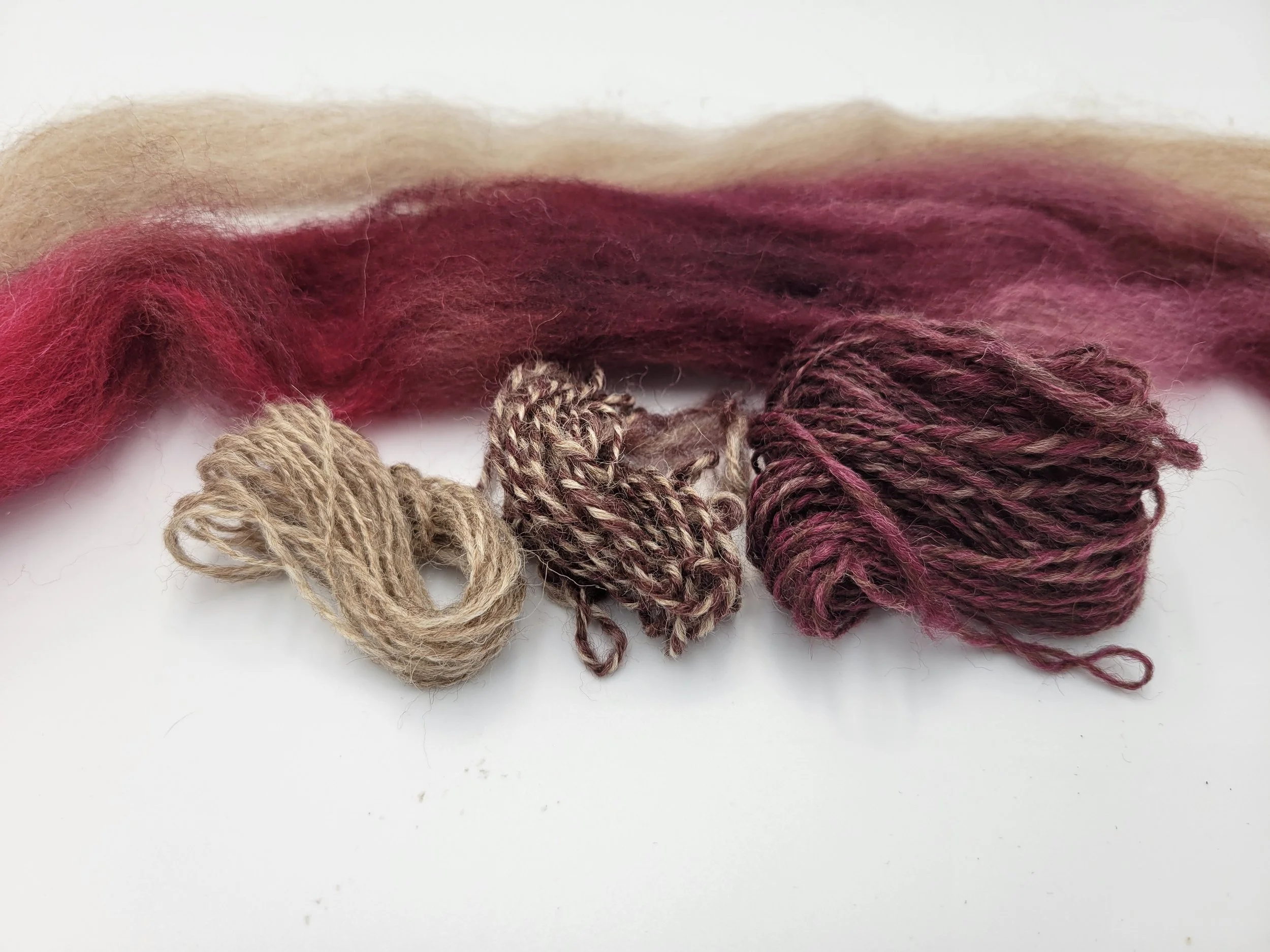
These are all lovely and are just a few simple examples of how you could spin this BFL. Sometimes I like to add a little more light and shadow, as I did with some light blue and black silks on my blending board. You don’t need fiber tools to do this. You can lay a small, and I do mean small, amount of silk or another fiber onto your pre-drafted fiber and spin them together. A little goes a long way.
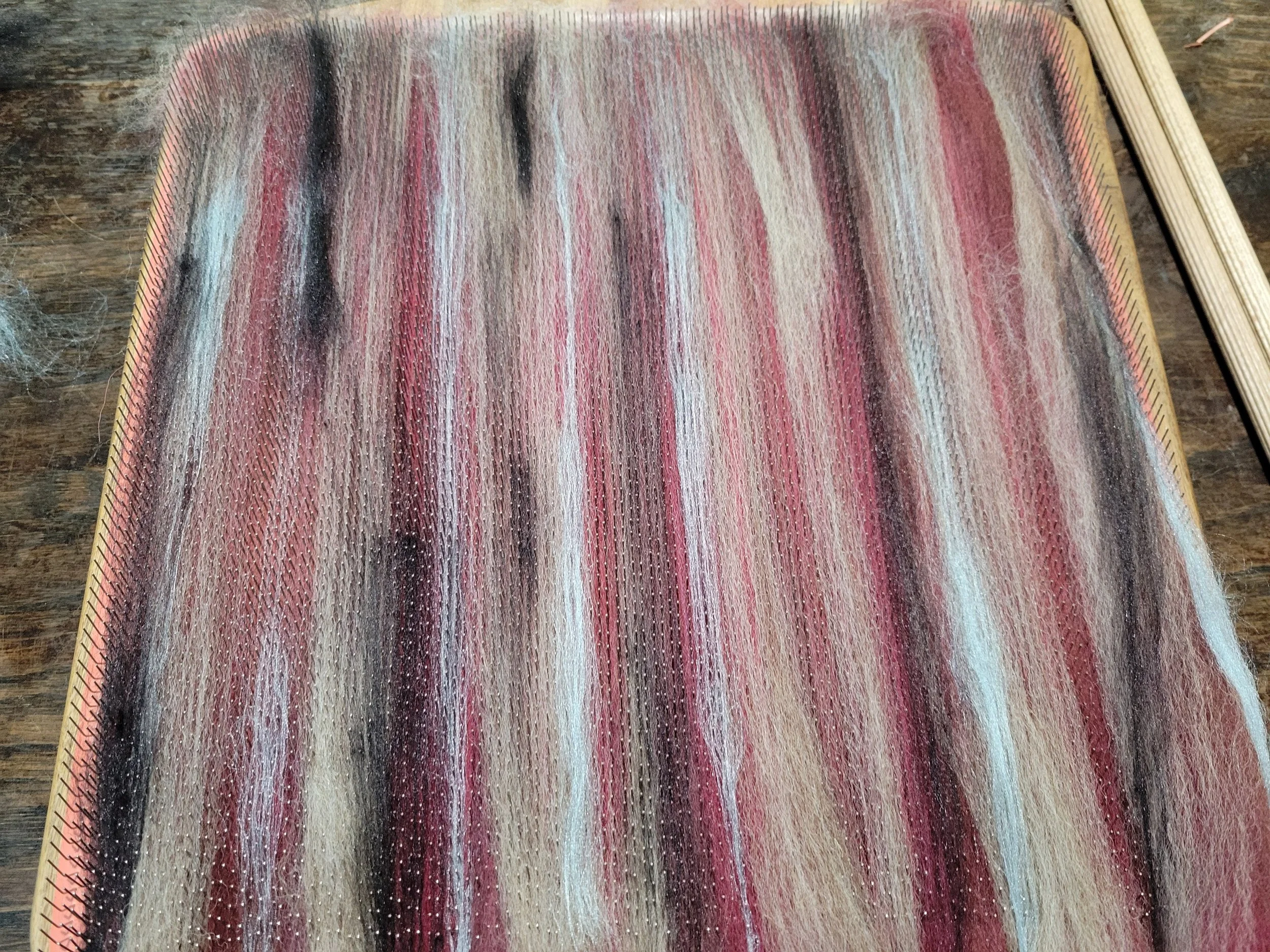
You can see that hint of silk in the rolags and in the tiny yarn sample I made. It doesn’t take much to change the look and feel of a colourway. The knit swatch contains the three yarns from above spun from combed top. It would be interesting to see this fiber spun as a fade or a as a 3-ply with only one of the plies the natural oatmeal colour. So many possibilities. If you play with this colourway, I hope you have some fun and share your experiments!