A Touch of Flax
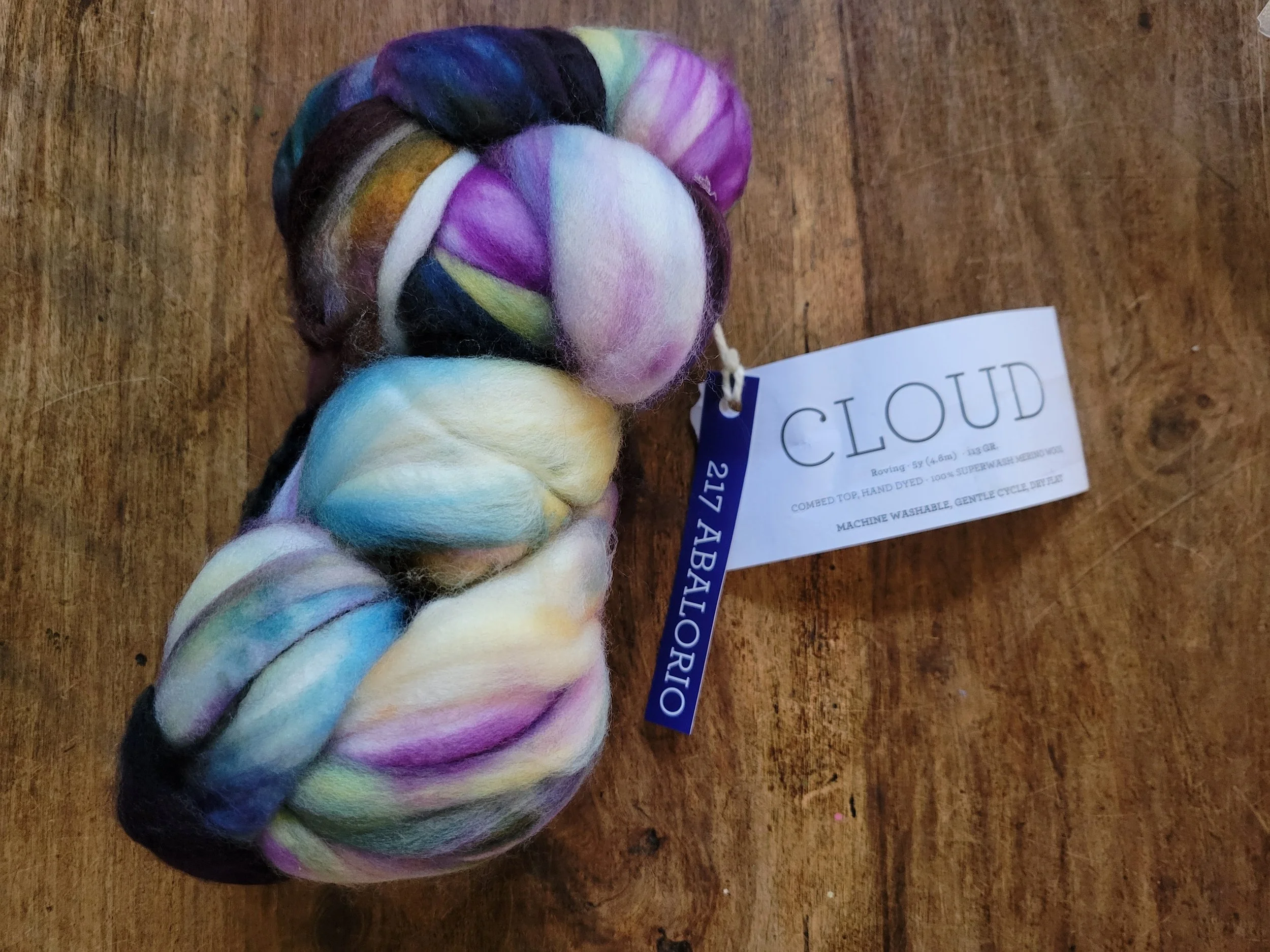
February is fiber prep month at the School of Sweet Georgia. This year, 2026, we’re collectively working through Kim McKenn'a’s course on spinning bast fibers, those long, strong fibers from the inner bark of a variety of plants. We have a lovely selection to choose from; flax, ramie, Himalayan nettle, and hemp. I chose bleached tow flax and a lovely braid of Malabrigo merino for my first spin.
Using an 8:1 ratio on my Lendrum double treadle wheel and a short forward draft, I spun then washed a few samples of tow flax on its own, per Kim’s instructions. I was quite surprised how nice it was to spin. Naively, I expected a rough spin with a thousand tiny paper cuts. While there were a few short, rough fibers that I pulled out as I spun, the result is a pretty smooth yarn that feels like paper.
I separated the Malabrigo braid in two to blend one 50 gram half with 10 grams of flax on the blending board. It was lovely to see how the sections of fiber I pulled off the braid and blended into batts were so different from each other.
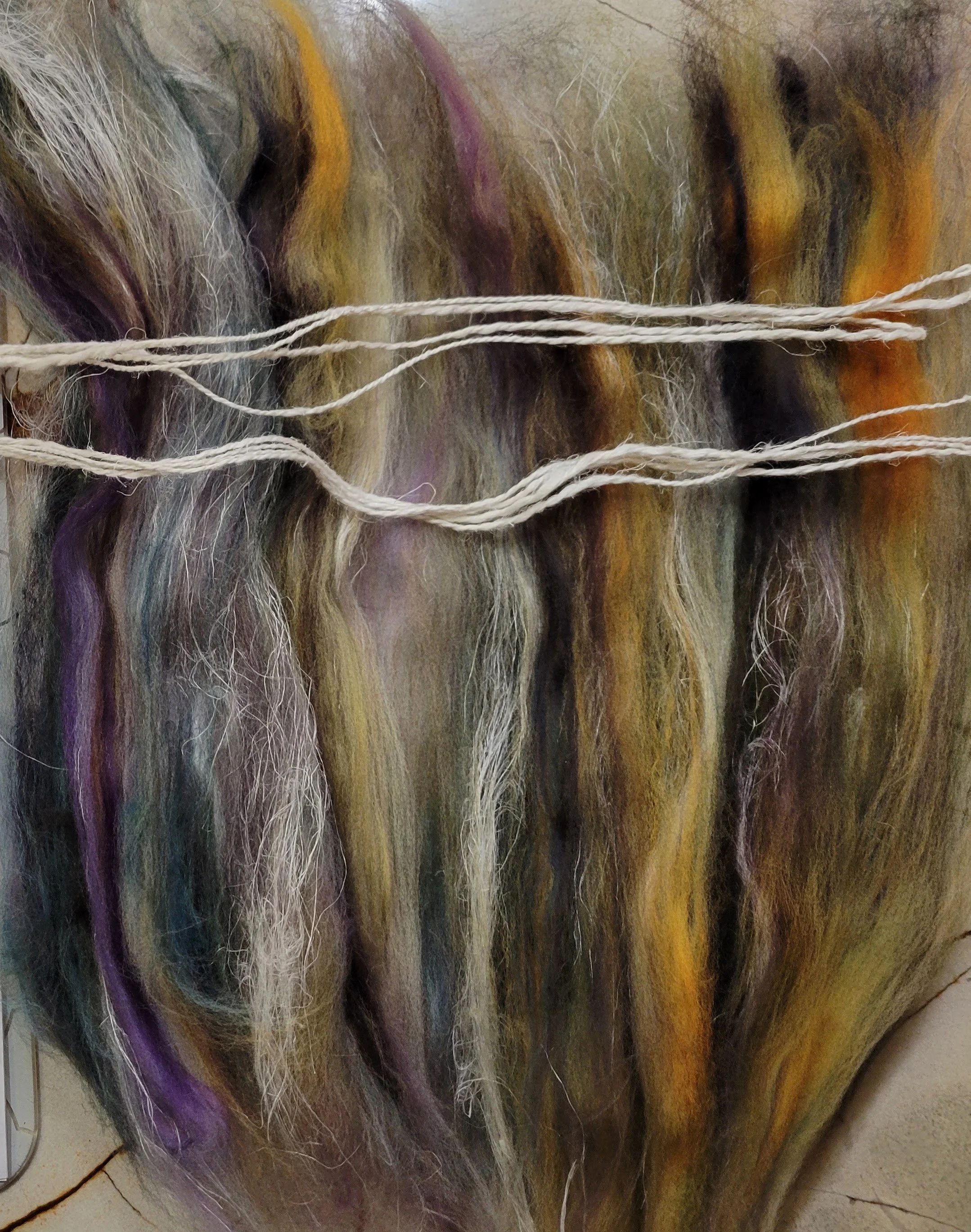
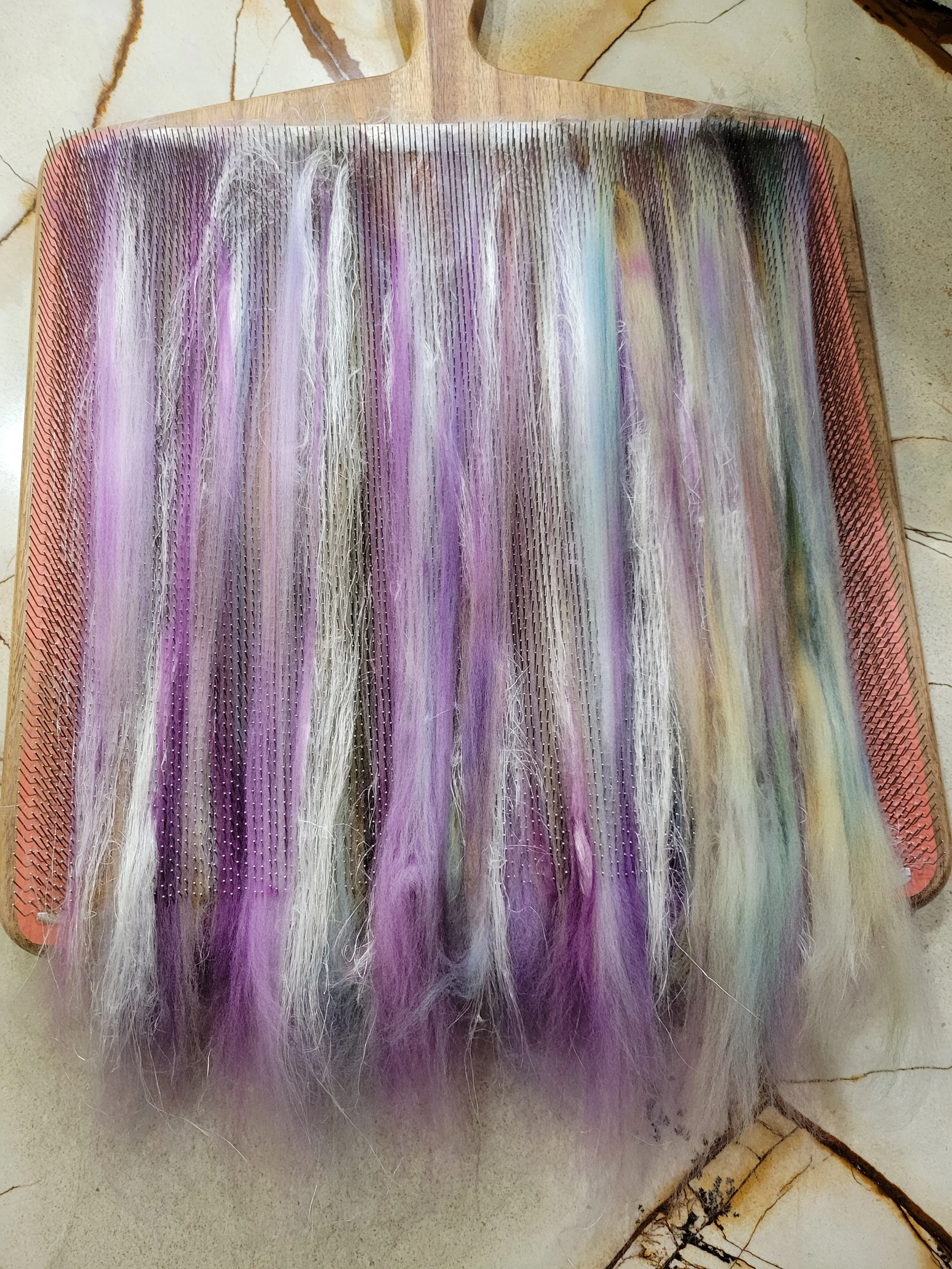
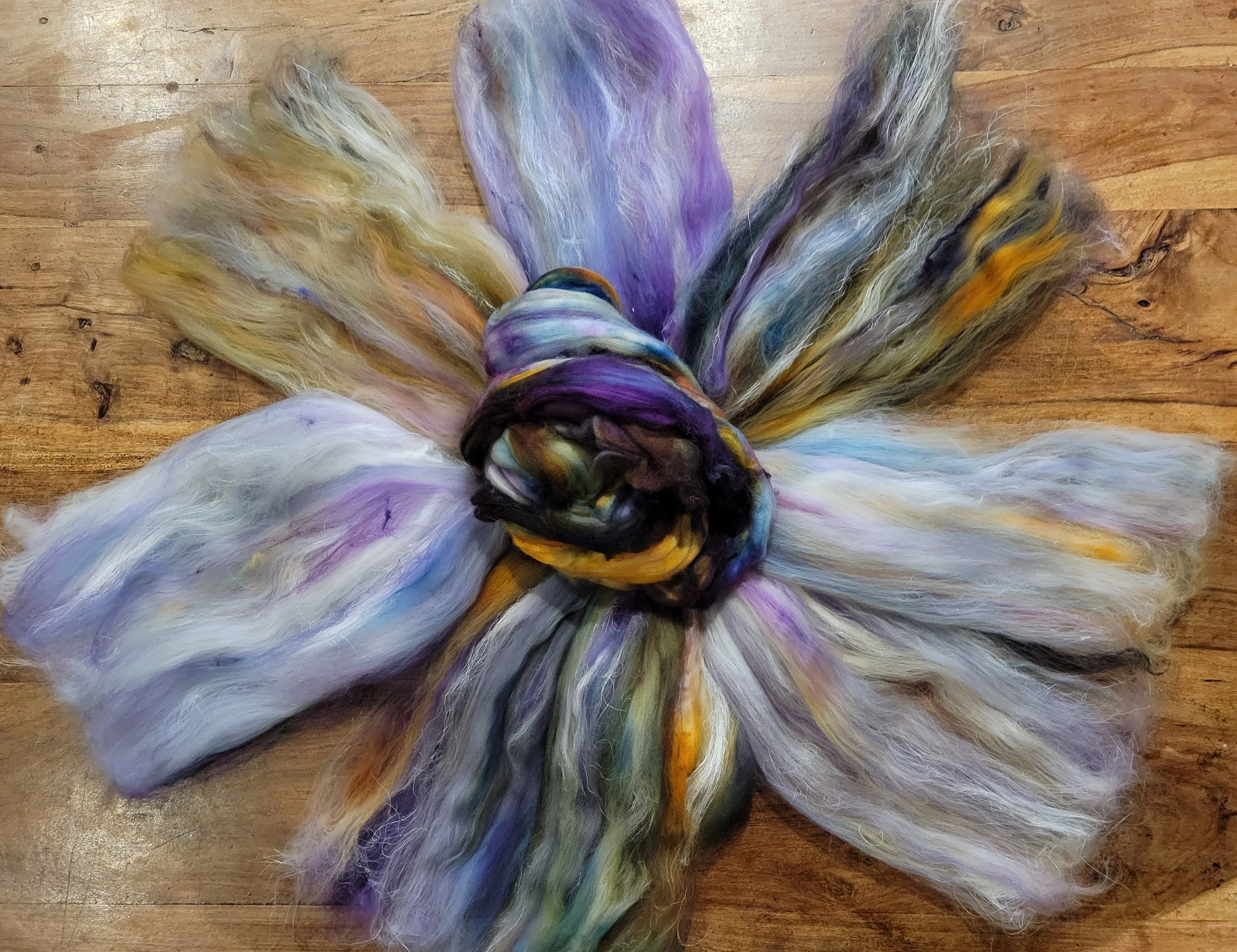
Seven batts from the blending board from the first 50 grams of fiber and the second, unprocessed 50 grams in the center.
Until this point, I didn’t really have a plan for this spin. Seeing the separation of colours in these batts gave me one. I decided to spin these two singles as a gradient and add in a third singles, which I’ll describe in a moment. As you can see from the batts, the flax is not well integrated. It’s still in clumped strands in some places and would make spinning unpleasant. So, the next step was to blend them again, this time on a hand card, and to diz them off that.
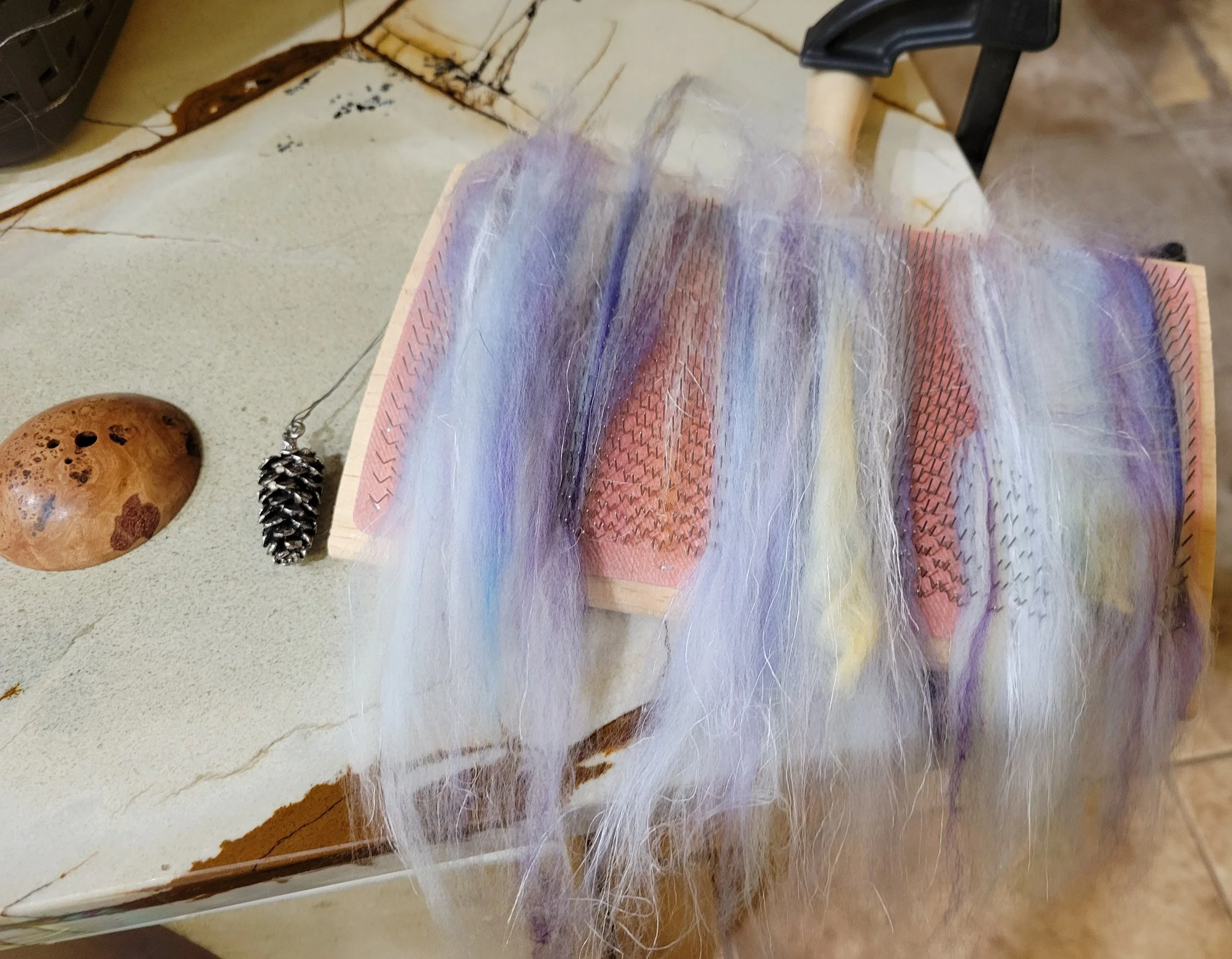
Taking each batt to the hand card and blending the fiber again before dizzing into tiny nests of colour, pictured below.
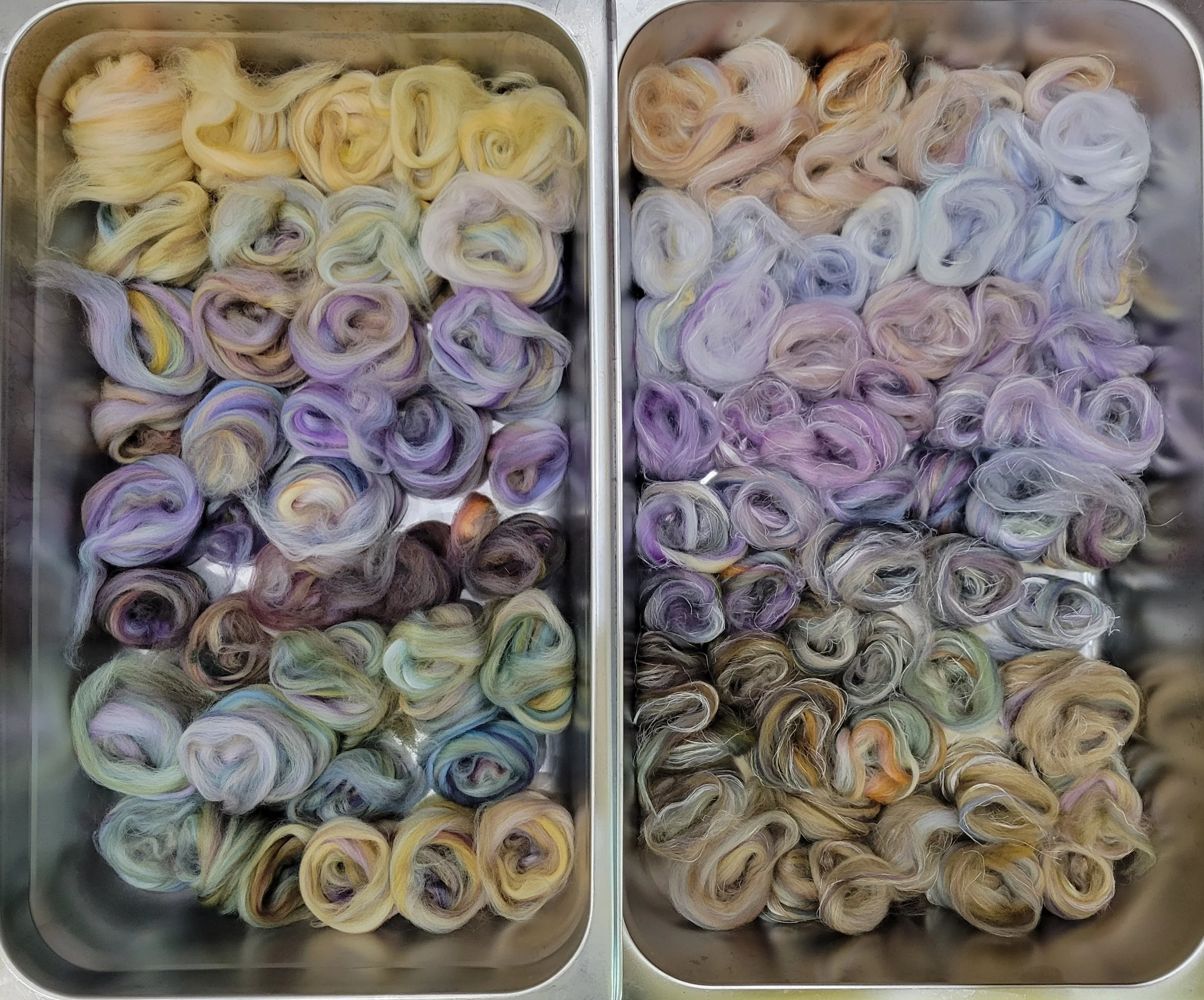
Dizzing the fiber off the hand card into strips separated those colours even more. I placed each length of fiber into a dye pan, winding them in a way so that I’d be spinning in the same direction they came off the card. Fyi, catering pans with lids make perfect fiber prep storage and keep cats out! I made a few small adjustments but, for the most part, I was happy with the order of the colours. You can see the flax in the middle pan of nests.
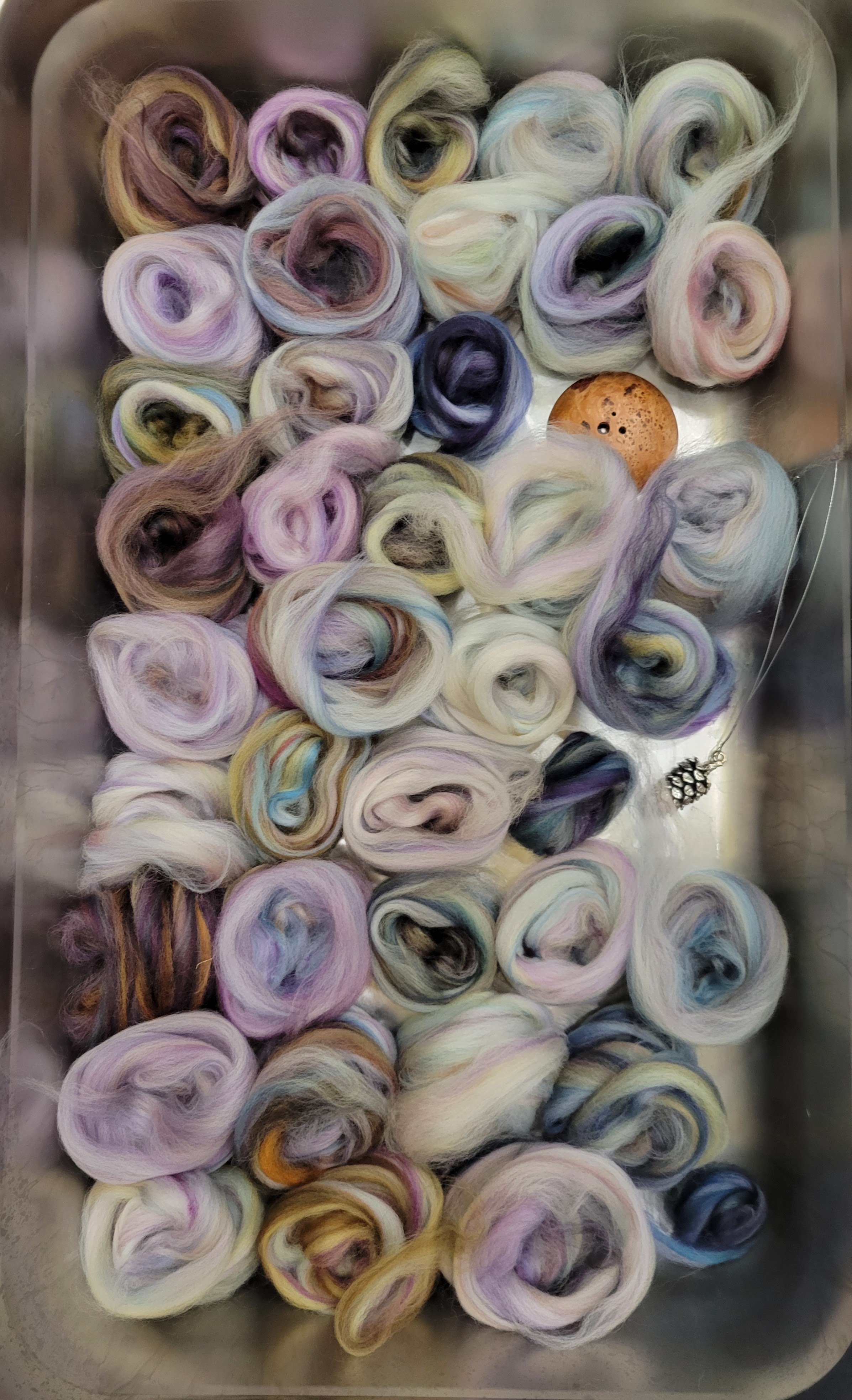
For the second singles prep, I skipped the batt process. There was no need for that since I wasn’t adding flax. But I did diz it all off the hand card. Malabrigo fiber, while lovely in colour, often has slubs and odd bits of fiber that need a little more processing than other merino I’ve worked with and dye myself. The first photo below is the result of this process.
I mentioned adding a third singles. The first two singles form roughly a gradient of colour and I thought it would be fun to add a third, different colour progression. I had a second braid of this Malabrigo so I split that in half and dizzed another 50 grams. This time, I rearranged the colours to have three repeating stripes. I tried to delineate them in the right photo with my dizz and threader at the end of the first two stripes. It was easy to make three sets of colours since I was dizzing three strips at a time off the card.
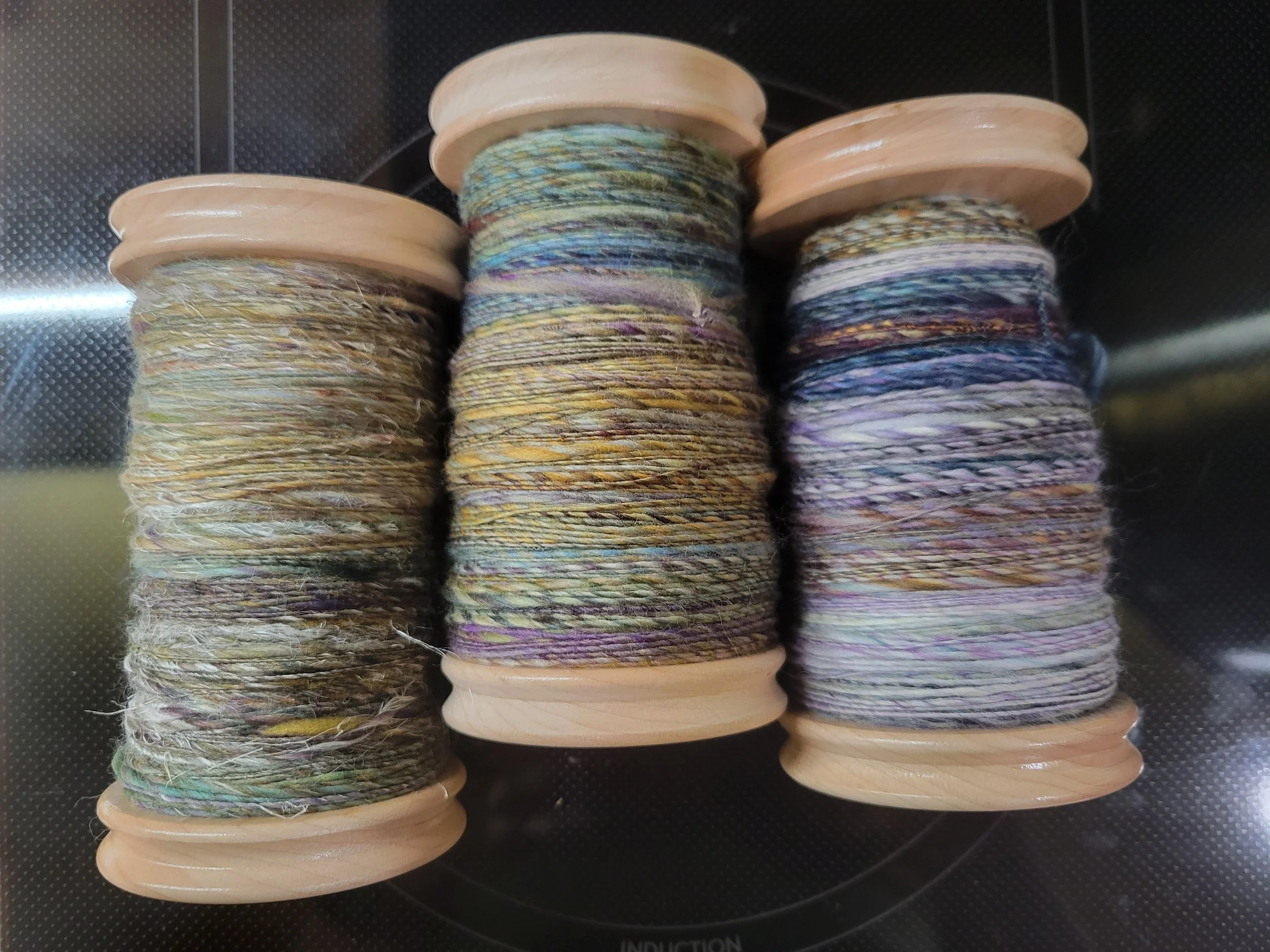
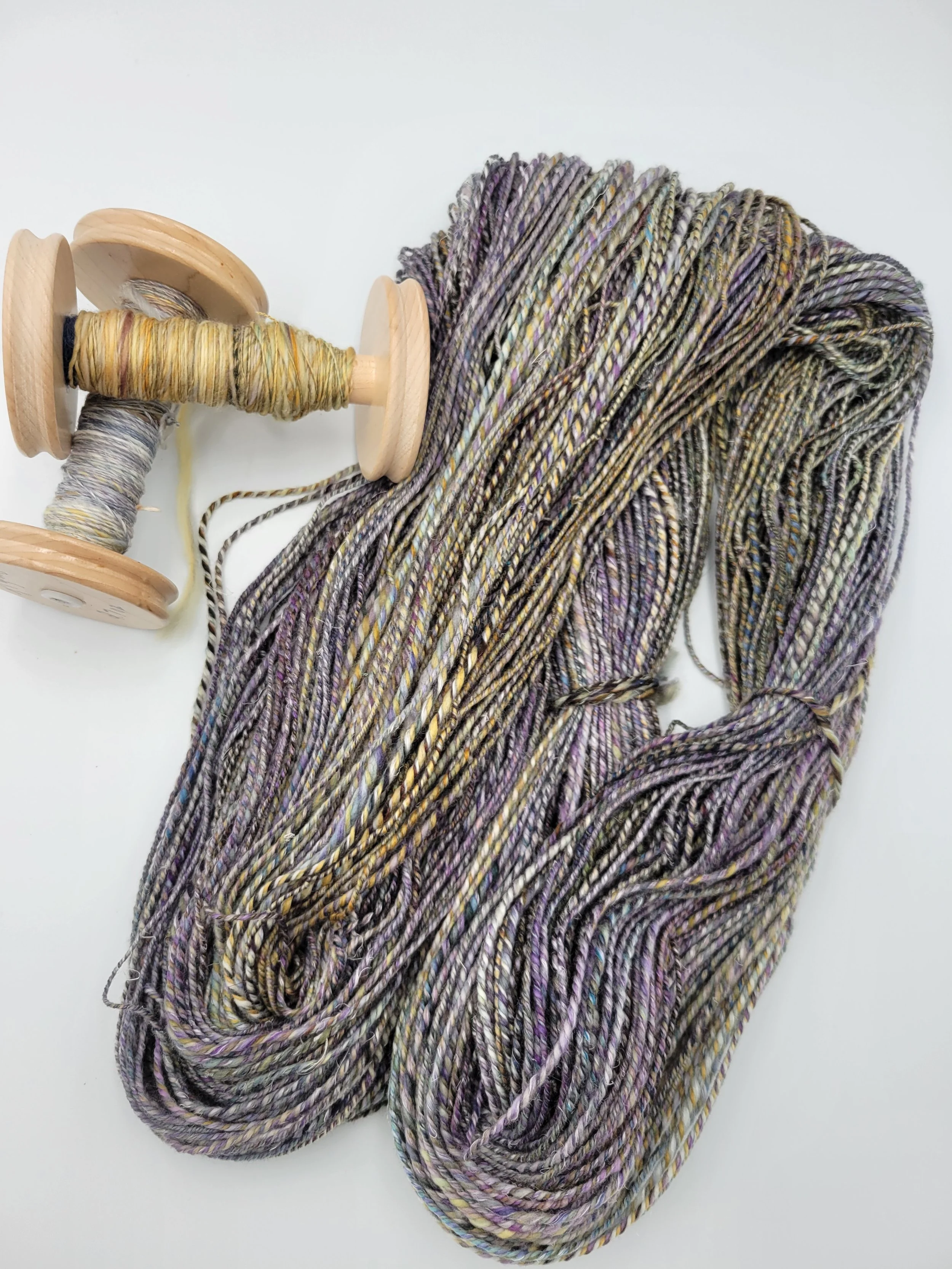
And here are the finished singles and yarn. Singles were spun with my default backward draft on my Lendrum with an 8:1 ratio. I plied the singles “through the rings”, as Kim recommends, using the metalwork on the back of a stool. This really helped keep them separate and smooth. I typically ply standing to break up all that sitting with my EEW electric wheel on the kitchen bar at arm level. I’ve not been getting along well with this wheel lately so I might reconsider this plying set up. I’m struggling with the take up of the yarn, the speed of the ply, the machine migrating around, all of it. It’s just gotten worse over time too. It’s probably me but, if a tool’s not working and I can’t fix why that is, it might be time to move on.
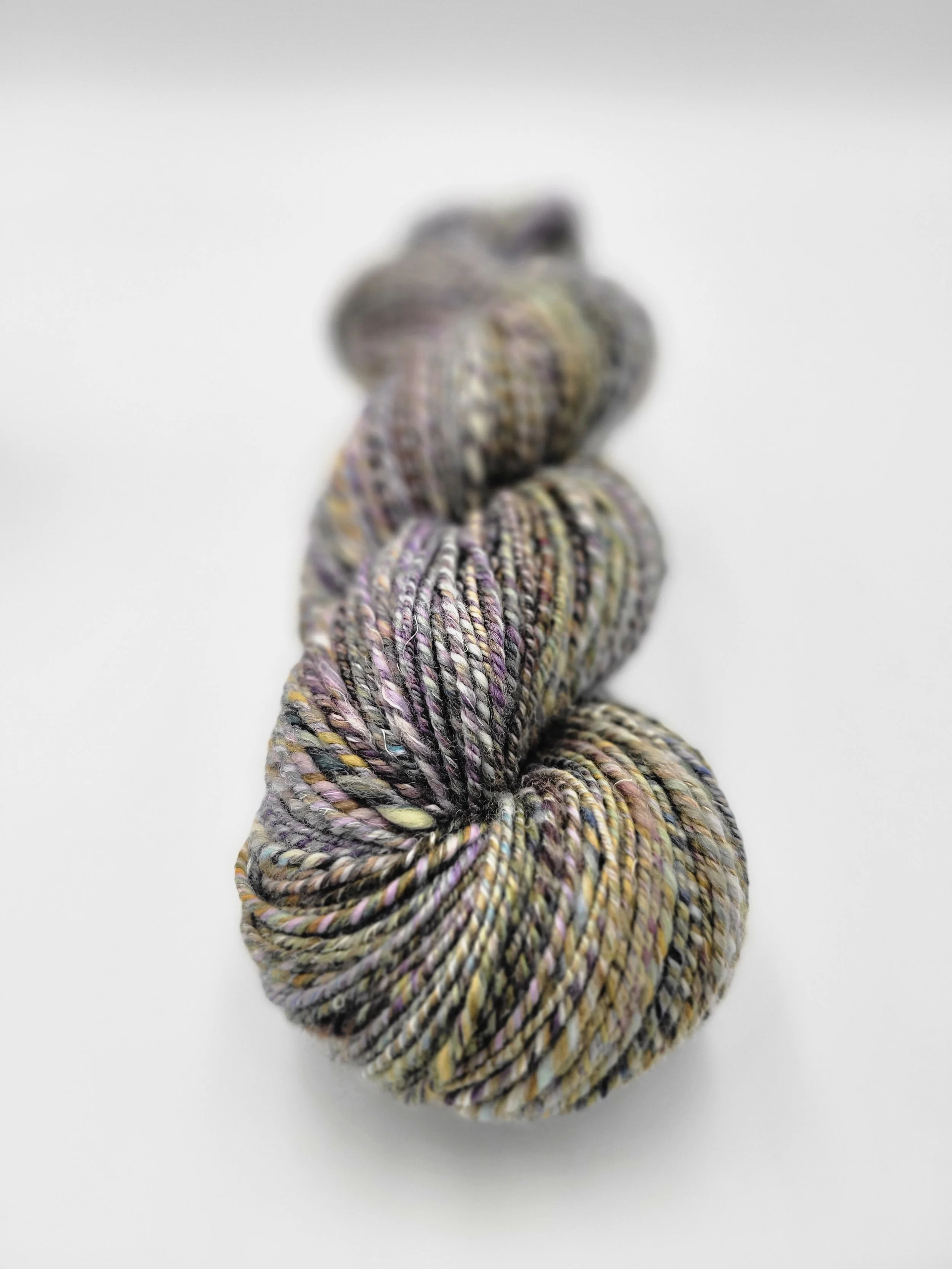
The final skein of yarn is about 238 yards of DK/light worsted at 10-11 wraps per inch. I think it’s gorgeous! The flax is there and adds some strength and visual interest but it’s not overwhelming at all and hasn’t impacted the softness of the merino. Now, what to do with it? If I find a project that needs just a little more than this, I’ll work up that last 50 grams in the same way.